
Brown patches appearing out of nowhere? Birds suddenly treating your lawn like the local buffet? Or perhaps the turf feels strangely spongy and lifts away from the soil?
You could have lawn grubs.
But before reaching for a bottle of anything, there’s something worth knowing:
“Lawn grub” isn’t one specific pest.
In Australia, the name gets thrown around for several very different lawn pests. True curl grubs and African black beetle larvae live below the soil and attack roots, while pests such as lawn armyworm and sod webworm feed above ground on the grass itself.
They can create similar-looking brown patches, but what’s actually happening — and how you deal with it — can be completely different.
So don't nuke the lawn first and ask questions later.
Let's work out what's actually munching on it.
Table of Contents
-
Quick Answer: What Are Lawn Grubs?
-
What Do Lawn Grubs Look Like?
-
Lawn Grubs vs Curl Grubs: What's the Difference?
-
7 Signs You May Have Lawn Grubs
-
How to Check Your Lawn for Grubs: The Turf-Lift Test
-
Are All Curl Grubs Bad?
-
Curl Grub vs Witchetty Grub
-
When Are Lawn Grubs Active in Australia?
-
How to Get Rid of Lawn Grubs in Australia
-
Curl Grubs Beyond the Lawn
-
What to Do After Lawn Grub Damage
-
How to Prevent Lawn Grubs
-
Lawn Grubs: Frequently Asked Questions
-
The Dr Greenthumbs Approach: Find the Bug Before You Fight the Bug
-
Next Reads for Keeping Lawn and Garden Pests under Control
Want the quick pest-control toolkit? Start with products that help build a targeted IPM approach:


Quick Answer: What Are Lawn Grubs?
In Australia, lawn grubs is a common catch-all term for several insect larvae that can damage turf.
The main suspects are:
- Curl grubs / white curl grubs: C-shaped larvae of scarab beetles that generally live in the soil and feed on organic matter and, depending on species and life stage, plant roots.
- African black beetle larvae: A particularly important scarab pest of Australian lawns. Its larvae live below ground and can damage turf roots.
- Lawn armyworm: Caterpillars that feed mainly on grass leaves and stems above the soil.
- Sod webworm: Another caterpillar-type lawn pest that feeds around the turf surface.
Identify first. Treat second. The sections below will help you tell these pests apart by appearance, feeding location and the damage left behind.
What Do Lawn Grubs Look Like?
It depends entirely on which “lawn grub” you've got.
Curl Grubs and Scarab Beetle Larvae
A typical curl grub — sometimes called a white curl grub — is reasonably easy to recognise once you dig one up.
Look for a grub that is:
- Creamy white to pale in colour
- Curled into a distinctive C shape
- Soft and fairly chunky
- Equipped with a darker brown or tan head
- Sporting three pairs of small legs near the head
- Found in soil, potting mix or immediately beneath turf
They can vary considerably in size because “curl grub” is a broad common name used for the C-shaped larvae of various scarab beetles rather than one single species. African black beetle larvae fit within this broader scarab-larva group, but they are discussed separately below because they are a significant turf pest in Australia.
African Black Beetle Larvae
African black beetle larvae are also scarab larvae, so they have the familiar white, C-shaped body, brown head and six legs near the front.
Adult African black beetles are shiny, dark beetles commonly encountered in turf.
The important bit for your lawn is what happens underground: the larvae can feed around the root zone, weakening the turf's connection to the soil.
Lawn Armyworm
Armyworms are completely different beasts.
Rather than fat white C-shaped grubs, they're caterpillars. You'll generally see an elongated body with stripes running along it.
Instead of sitting underground chewing roots, armyworms move through the turf and feed on grass blades and stems.
A significant outbreak can move quickly, which is why apparently healthy lawn can suddenly look like someone's given it a terrible haircut.
Sod Webworm
Sod webworms are also caterpillar-type pests rather than true curl grubs.
They're usually associated with damage around the lawn surface rather than the classic underground root damage caused by scarab larvae.
So if you're Googling what do lawn grubs look like?, don't stop after finding a picture of one white grub. Where the insect is feeding is just as useful as what it looks like.
|
What you find |
Likely pest group |
Typical damage clues |
|---|---|---|
|
White, C-shaped larvae in the soil |
Curl grubs and other scarab beetle larvae |
Weak roots, turf lifting easily, brown or yellow patches, wilting despite moisture and birds digging |
|
Striped or caterpillar-like larvae in the grass canopy |
Lawn armyworm, sod webworm or another surface feeder |
Chewed blades, rapid thinning, visible caterpillars, moth activity and damage moving across otherwise rooted turf |
Use appearance, feeding position and damage together. None of these signs should be treated as proof on its own.
Lawn Grubs vs Curl Grubs: What's the Difference?
A curl grub is the C-shaped larval stage of a scarab beetle. It lives in soil and may feed on organic matter or plant roots, depending on the species and life stage.
Lawn grub is a broader Australian gardening term. It may refer to curl grubs and African black beetle larvae below the soil, or caterpillar pests such as lawn armyworm and sod webworm above it.
|
Term |
What it means |
Where to look |
|---|---|---|
|
Curl grub |
A C-shaped scarab beetle larva |
In the soil and around the root zone |
|
Lawn grub |
A loose name used for several turf-damaging larvae |
In the soil, root zone or grass canopy, depending on the pest |
The practical difference is simple: confirm which insect is present rather than choosing a treatment from the common name alone.
7 Signs You May Have Lawn Grubs
You don't necessarily need to see the pest first. Often the lawn tells you something is wrong.
1. Irregular Brown or Yellow Patches
Damaged turf may start yellowing before developing brown or straw-coloured areas.
Don't immediately blame grubs, though.
Heat, drought, poor irrigation, fungal problems, nutrient issues and soil compaction can all create brown lawn.
2. Your Turf Lifts Up Easily
Turf that peels back unusually easily — almost like lifting carpet — is a classic clue for significant root-feeding grub damage. Damaged roots may no longer anchor the grass firmly to the soil.
Use the turf-lift test below to inspect the edge of the affected area before deciding grubs are responsible.
3. The Lawn Feels Spongy
Walk across the affected area.
An unusual soft or spongy feeling beneath your feet can warrant a closer look at what's happening in the root zone.
4. Birds Are Suddenly Very Interested
Magpies, ibis and other birds digging through the lawn aren't proof of lawn grubs, but they're a handy clue.
They're not aerating your lawn out of generosity.
If bird activity suddenly increases, inspect the soil and turf rather than immediately treating the area.
5. The Lawn Is Wilting Despite Watering
Root damage can interfere with the lawn's ability to access water.
That means turf may appear drought-stressed even though the soil contains moisture.
6. Grass Is Being Chewed Above Ground
Missing or chewed blades point you in a different direction.
Instead of curl grubs, start looking for armyworm, sod webworm or another surface-feeding pest.
7. You Actually Find Grubs
Finding white C-shaped larvae beneath damaged turf confirms that scarab larvae are present. It does not automatically prove they caused every symptom, so compare what you find with the root damage and the condition of the surrounding lawn.
How to Check Your Lawn for Grubs: The Turf-Lift Test
Before applying anything, spend five minutes doing some detective work.
Choose the edge of the damaged patch, where unhealthy turf meets healthy turf.
That's often more useful than digging straight into the completely dead centre.
Cut or carefully lift a small section of turf and inspect underneath.
Look through the root zone and upper soil for:
- White C-shaped grubs
- Damaged or reduced roots
- Adult beetles
- Caterpillars around the soil surface
- Other obvious insects
- Moisture or drainage problems
- Signs that the brown patch has another cause entirely
Then gently return the turf and water it back in if appropriate.
What About the Soapy-Water Lawn Grub Test?
You've probably seen the old bucket-of-soapy-water trick.
A diluted soapy-water flush can help bring surface-dwelling caterpillar-type pests out of the turf, making them easier to spot.
But don't treat it as a magic test for every pest called a lawn grub.
Curl grubs and African black beetle larvae live in the soil, so physically checking beneath the turf is generally the more direct way to find them.
Again, the trick is matching your test to the pest you're looking for.
Are All Curl Grubs Bad?
No — and this bit matters.
Australia has an enormous diversity of beetles and other soil-dwelling insects.
Finding a fat white grub in the garden does not automatically mean you've discovered a pest that needs to die.
Some larvae are simply part of a functioning soil ecosystem, feeding on decaying organic material and becoming food for birds and other wildlife.
The question isn't:
“Is there a grub in my soil?”
It's:
“Is this grub actually causing unacceptable damage?”
A few larvae in healthy soil are very different from extensive root feeding beneath a lawn that's rapidly collapsing.
This is particularly important in garden beds, compost-rich areas and native gardens where plenty of harmless or useful critters may be living underground.
Curl Grub vs Witchetty Grub
White curl grubs are sometimes confused with witchetty grubs, another name used for the larvae of certain Australian moths and beetles.
Colour alone isn't enough for identification.
Curl grubs are typically scarab beetle larvae with a distinctive C-shaped body, darker head and three pairs of legs close to the head.
If you've uncovered a large white larva in a garden bed or around native vegetation but aren't seeing plant damage, don't assume it's a lawn pest purely because it's pale and chunky.
When in doubt, get a proper identification before reaching for insecticide.
When Are Lawn Grubs Active in Australia?
There's no single lawn-grub date that works perfectly from Darwin to Hobart.
Australia is a big place, and activity varies with:
- Pest species
- Local climate
- Soil temperature
- Rainfall and irrigation
- Lawn type
- Life-cycle stage
As conditions warm, beetles and moths become active, eggs are laid, larvae emerge and feeding can become more noticeable.
Warm-season lawn owners should therefore pay particular attention through spring and summer and after favourable warm or wet conditions, while recognising that timing varies around Australia.
The more useful question isn't “What month do lawn grubs arrive?”
It's:
“Which pest is active in my lawn right now?”
How to Get Rid of Lawn Grubs in Australia
Here's the bit everyone wants.
Unfortunately, the answer isn't one magic bottle.
The best lawn grub treatment depends on what you've actually found.
Step 1: Identify the Pest
Before doing anything else, establish whether you're dealing with:
- Curl grub or another scarab beetle larva
- African black beetle
- Lawn armyworm
- Sod webworm
- Another insect entirely
- Or a lawn problem that isn't insect-related
Take clear photos if necessary: one of the entire pest, another showing the head and legs, and a third showing where you found it.
That little bit of homework can prevent a completely unnecessary treatment.
Step 2: Decide Whether You Actually Need to Treat
Finding one grub isn't the same as having an infestation. Look at the whole picture:
- Are plants or turf actually declining?
- Are roots being damaged?
- Is the affected area expanding?
- Are you repeatedly finding the same pest?
Treat when the evidence points to damaging pest pressure, not simply because one soil-dwelling larva is present.
Step 3: Match the Treatment to the Pest
This is where identification pays off.
A product intended for exposed caterpillars doesn't automatically make sense for beetle larvae buried in the root zone.
Likewise, a soil treatment isn't necessarily the answer when armyworms are chewing through the foliage above it.
When using any pesticide or insecticide, check the current product label for the target pest, plant or turf situation and application method before using it.
Don't assume that because something kills insects, it is registered or appropriate for every insect in every part of the garden.
How to Get Rid of Lawn Grubs Naturally in Australia
If you'd prefer to start with a lower-intervention approach, you've got several options.
Hand Removal
For small numbers of exposed curl grubs, control doesn't need to be complicated. If you uncover larvae that are associated with active root damage, physically remove them.
Pot-specific inspection and repotting steps are covered under “Curl Grubs in Pots and Potting Mix” below.
Encourage Natural Predators
Birds and other predators naturally feed on many lawn and garden insects.
A garden with some biological diversity is very different from trying to maintain an insect-free green carpet.
The aim is balance rather than scorched earth.
Beneficial Nematodes
Certain species of beneficial nematodes are used as biological controls against susceptible soil-dwelling insect larvae.
The important words there are certain species and susceptible larvae.
Biological controls are living organisms, so matching the nematode to the pest and providing suitable soil moisture and temperature conditions matters.
Treating Lawn Armyworm and Other Surface Feeders
If inspection shows caterpillars feeding above ground rather than curl grubs underground, you're dealing with a different problem.
Surface-feeding pests are more exposed, which changes how they're monitored and controlled.
Inspect the lawn during periods when the insects are active, check the edges of advancing damage and look carefully down into the turf rather than only inspecting the grass from standing height.
If treatment is needed, choose a product whose current label specifically covers the pest and intended lawn use.
Contact products also need contact.
Spraying something vaguely in the direction of the lawn isn't a pest-management strategy.
When to Treat Lawn Grubs
Correct identification is half the job. Timing is the other half.
Young larvae can be easier to manage than large, established ones, and caterpillar outbreaks can become considerably more damaging if they're allowed to spread unchecked.
Monitor the lawn when conditions favour the identified pest rather than waiting until half the yard is brown. After treatment, keep checking: one application does not necessarily mean the pest's entire life cycle has disappeared.
Where Do Neem, Pyrethrum and Other Garden Pest Products Fit?
This is where it's worth resisting the urge to make one product do every job.
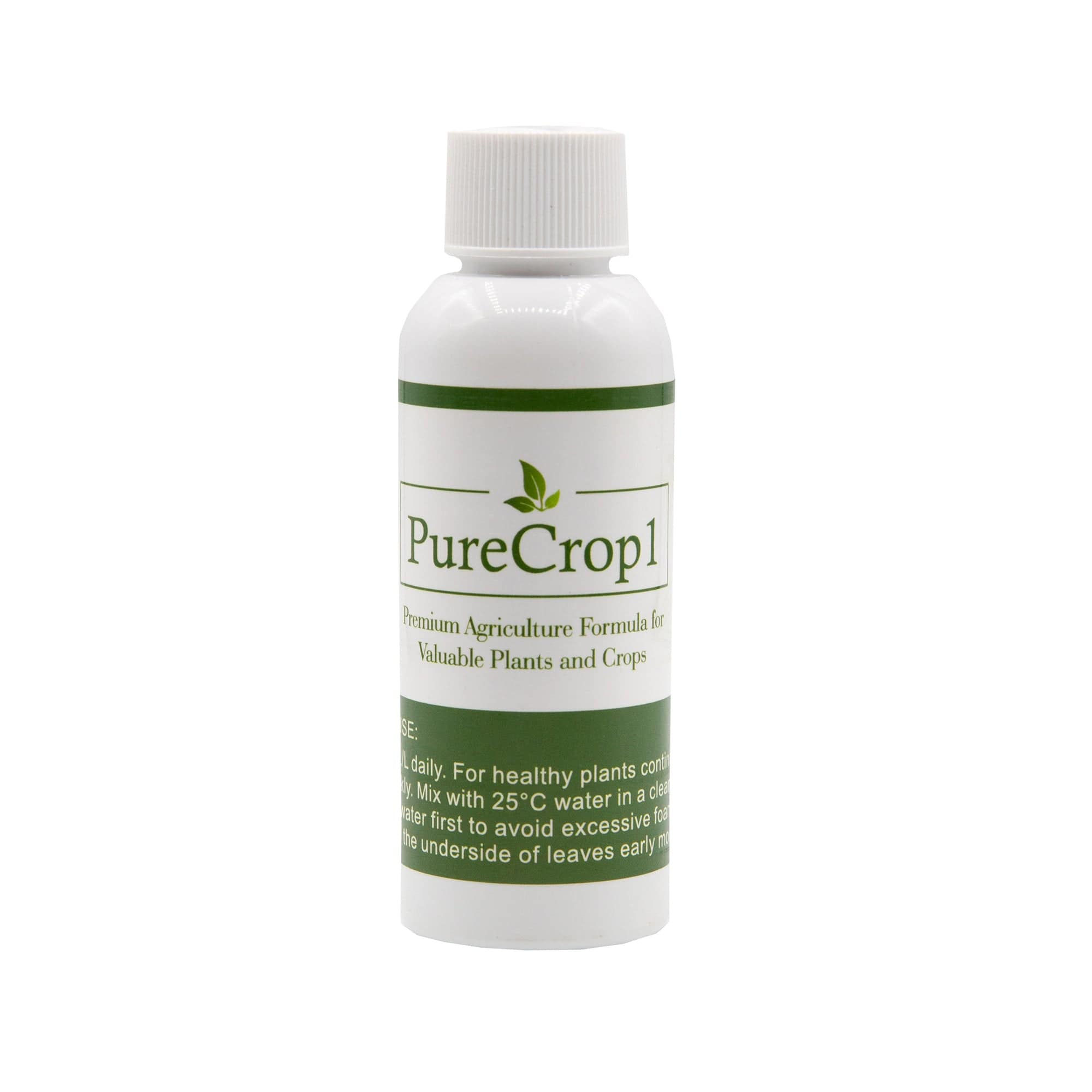
Dr Greenthumbs carries several pest-management options, including Neem + Karanj Oil, Pyrethrum Concentrate and PureCrop1.
They're useful products to know about when building a broader garden integrated pest management (IPM) toolkit — but that doesn't mean you should automatically pour or spray one over a lawn because you've spotted something called a grub.
- Pyrethrum Concentrate is a contact insecticide intended for targeted applications where its current label confirms the pest and plant are suitable.
- Neem + Karanj Oil is a garden-focused plant-care oil blend used as part of plant maintenance and pest-management routines where its directions allow.
- PureCrop1 is a plant protectant used within broader IPM programs, particularly around plant pests, fungi and plant health.
For lawn grubs specifically, use a product only when its current label covers the identified pest, turf or other application site and the intended application method. That's far better than treating first and wondering why nothing happened.
Curl Grubs Beyond the Lawn
Curl Grubs in Pots and Potting Mix
Yep — curl grubs can turn up in pots too.
Adult scarab beetles can lay eggs in suitable growing media, leaving larvae to develop within the pot.
Possible signs include:
- A plant declining without an obvious above-ground reason
- Root damage
- Loose or disturbed potting mix
- White C-shaped larvae appearing during repotting
Pots are also one of the easiest places to deal with curl grubs manually.
Remove the plant carefully, inspect the potting mix and root ball, pick out visible grubs and replace badly degraded growing media where necessary.
Be particularly careful with edible plants.
Never assume a garden insecticide is suitable for edible crops, potting-mix drenches or root-zone application. Follow the current product label and its withholding, application and safety directions.
Curl Grubs in Garden Beds
Scarab larvae can also occur in garden beds, compost-rich soil and other areas containing organic matter.
If plants look healthy and you find only the occasional grub while digging, identify it and check for damage before intervening. Significant root damage, wilting plants and repeated numbers of the same larva around affected roots provide much stronger evidence that control may be justified.
What to Do After Lawn Grub Damage
Killing or removing the pest doesn't instantly repair the lawn. If roots or foliage have already been damaged, give the turf a chance to recover.
- Water appropriately without keeping the area permanently soggy.
- Avoid scalping stressed turf.
- Reduce heavy foot traffic over damaged areas.
- Address serious compaction, poor drainage or other soil problems.
- Once active damage has stopped, feed according to the lawn's needs to support new growth.
- Repair thin or bare areas where the remaining turf cannot recover on its own.
Severely damaged areas may need patching, plugging, overseeding or replacement depending on the turf variety and extent of the damage.
The goal isn't merely dead grubs. It's healthy lawn again.
How to Prevent Lawn Grubs
You probably can't make an outdoor lawn completely grub-proof — nor should an insect-free garden be the goal. The practical aim is to maintain resilient turf and catch damaging populations early.
Make a habit of:
- Mowing at an appropriate height rather than scalping the lawn
- Watering deeply and sensibly instead of constantly watering the surface
- Managing excessive thatch
- Relieving serious soil compaction
- Fixing poor drainage
- Feeding according to the lawn's needs
- Repairing thin areas that are more vulnerable to stress
- Watching for unusual bird activity
- Investigating new brown patches
- Checking turf that suddenly becomes loose or spongy
- Looking for caterpillars when foliage is disappearing
- Inspecting the soil when root damage is suspected
- Recording when outbreaks occur each year
After a couple of seasons, you may start seeing patterns specific to your own garden. That's more useful than blindly treating the entire lawn on the same date every year.
Think of pest management as part of lawn management — not something that starts and finishes with a spray bottle.
Lawn Grubs: Frequently Asked Questions
Will lawn grubs kill my lawn?
Heavy feeding by a damaging species can severely weaken or kill sections of turf. Smaller populations may cause limited or no noticeable damage. The outcome depends on the pest, its numbers, lawn health and environmental conditions.
Do birds digging in the lawn mean I have lawn grubs?
Not automatically. Birds feed on plenty of insects and worms. A sudden increase in birds digging at a damaged lawn is a useful clue, but you still need to inspect the turf and soil before blaming lawn grubs.
Does neem oil kill lawn grubs?
Do not assume a neem product is suitable simply because neem is widely used in garden pest management. Formulation, target pest, application site and label directions all matter. Check the current product label for the identified pest and intended use before applying it.
The Dr Greenthumbs Approach: Find the Bug Before You Fight the Bug
A brown lawn makes it tempting to grab the strongest thing in the shed and go to war. That's how you end up treating the wrong pest — or treating something that wasn't causing damage in the first place.
Inspect the lawn, identify the pest, decide whether the damage warrants intervention and then choose the least disruptive control that realistically does the job.
Because the goal isn't soil with nothing living in it. It's a healthy garden where the right things thrive — and the troublemakers don't get to run the joint.
Next Reads for Keeping Lawn and Garden Pests under Control
Still working out what’s chewing your lawn or when to act? These guides will help you identify pest timing, manage caterpillars and build a more targeted IPM approach.
-
Which Pest When? Australia
-
Caterpillar Pest Control Australia Guide
-
Pest Control IPM Stack: Top 10 Organic Solutions
-
Diatomaceous Earth Australia Guide
About the Author