
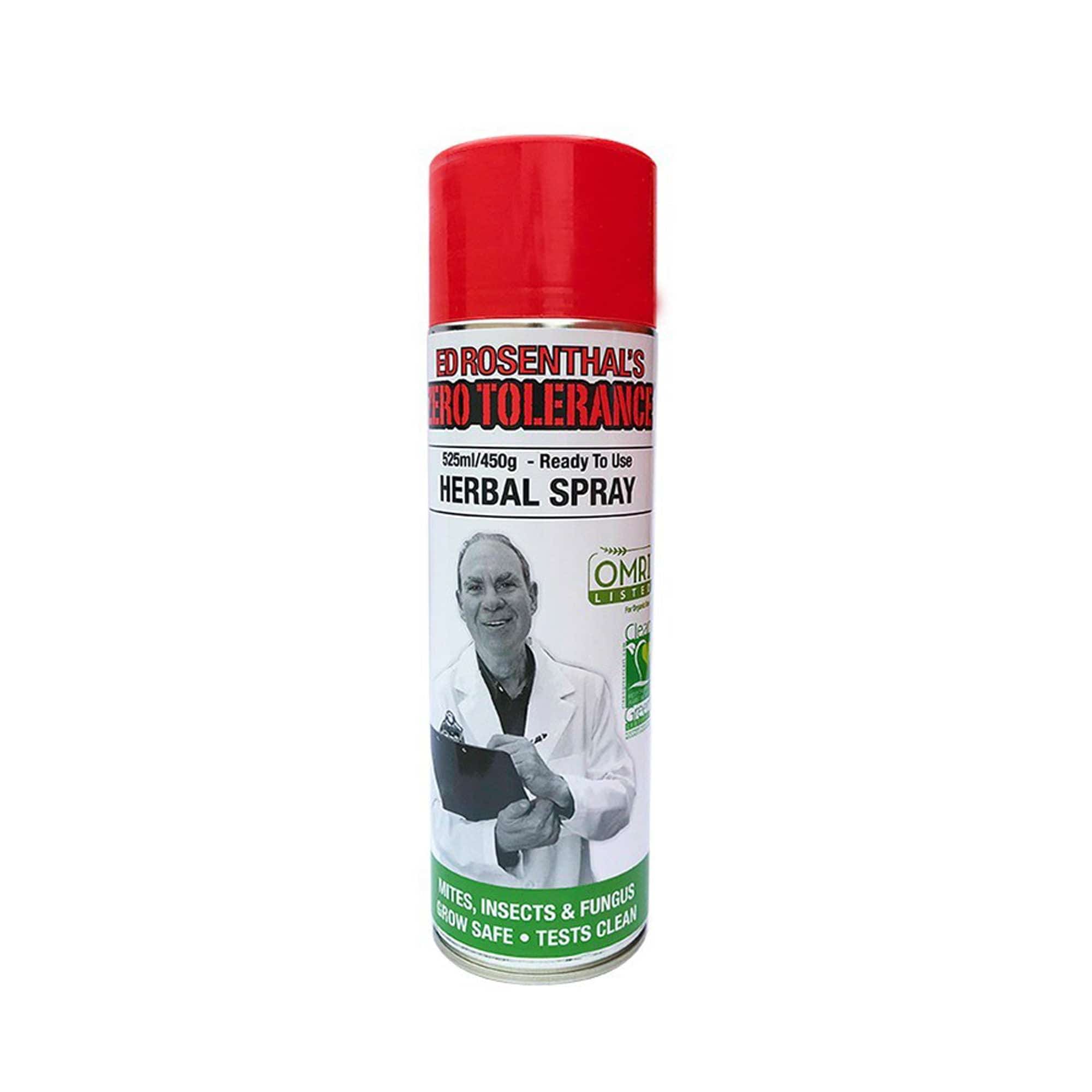
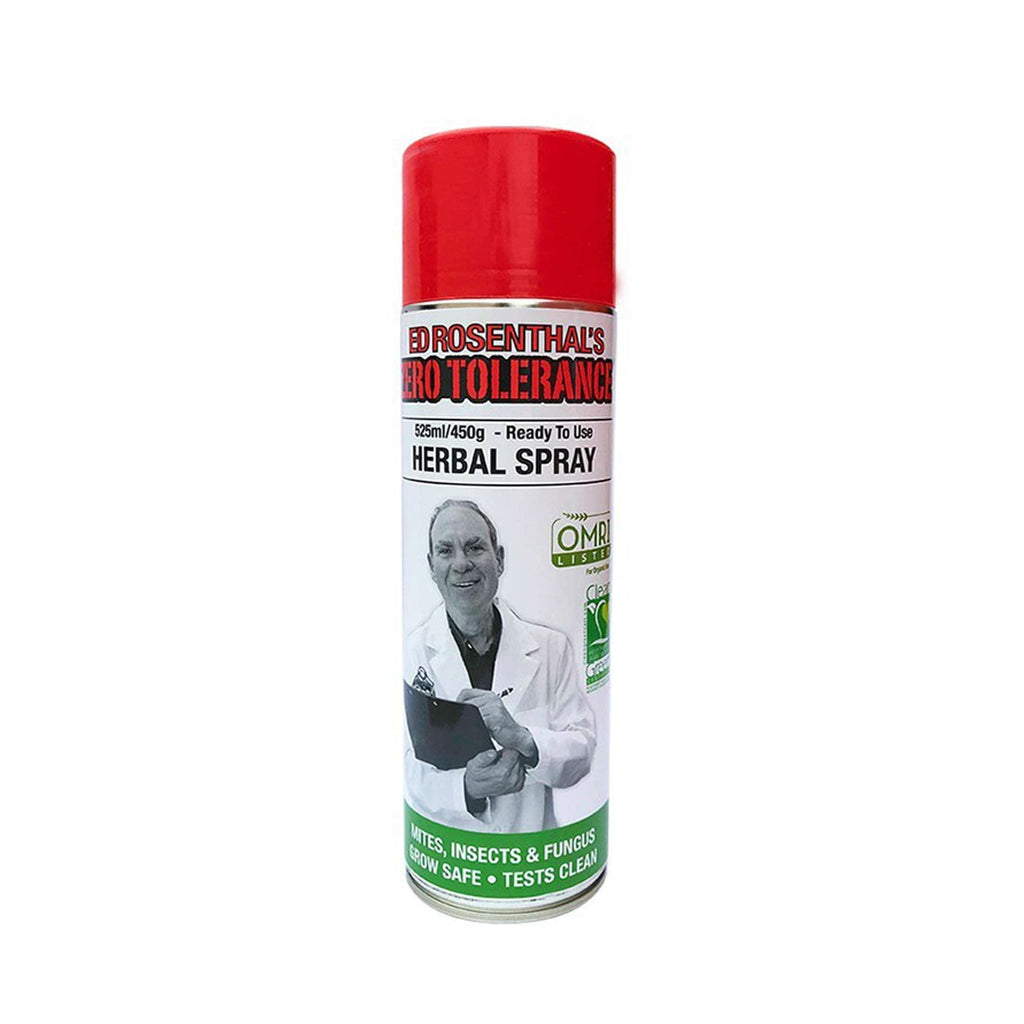

Ed Rosenthal's Zero Tolerance (New LARGER Can!)

Save 13%

Price:
Sale price$28.00 Regular price$32.00

Pickup available at Bellambi

Usually ready in 24 hours

Description

Zero Tolerance is the go-to organic pest control solution from the legendary Ed Rosenthal.

Made entirely from food-grade herbal oils like cinnamon, rosemary, thyme, and clove, this ready-to-use formula eliminates a wide range of common garden pests while smelling pleasant and leaving no harmful residues. Now in a new larger 699ml can, it's 25% bigger for even more value and coverage.

Features

  • 100% herbal, OMRI-listed, and approved for organic growing

  • Combats mites, thrips, aphids, fungus gnats, mealybugs, caterpillars, and scale

  • Dual-action: kills pests and repels new ones

  • Made from food-grade oils — safe for people, pets, and plants

  • No harmful or lingering chemical smell

  • Suitable for indoor or outdoor use

  • Safe for use on fruits and vegetables up to 5 days before harvest

  • Will not harm aquatic life or beneficial insects like bees

Why You Should Buy

Ed Rosenthal’s Zero Tolerance is trusted by both professionals and hobbyists for a reason. It offers a powerful, all-natural solution to pest problems, without compromising safety or harvest quality. The increased can size means you get more of this effective formula for your money, helping ensure long-term plant health without synthetic pesticides.

Directions for Use

  • Shake well before use

  • Spray directly on affected areas, including under leaves

  • Apply in early morning or late evening for best absorption

  • Use as a preventative spray weekly or as needed

FAQs

Can I use Zero Tolerance during flowering?
Yes, it is safe during flowering and even up to 5 days before harvest.

Is this safe for pets and children?
Yes, this product is made from food-grade ingredients and is safe for use around pets and people.

Will this harm beneficial insects?
No, when used as directed, Zero Tolerance will not harm bees or other pollinators.

Does it leave residue on plants?
No, it evaporates cleanly and does not leave behind sticky or oily residues.

THIS PRODUCT CANNOT BE SHIPPED EXPRESS POST

Secure & Encrypted Payments

Logos for Google Pay, Airwallex, and PayPal.

Estimate shipping

Frequently Asked Questions (FAQ)

What is Ed Rosenthal’s Zero Tolerance and how does it work?

Ed Rosenthal’s Zero Tolerance is a ready-to-use herbal pest control spray made from food-grade essential oils like cinnamon, rosemary, thyme, and clove. It works as a contact spray that kills pests on contact and helps repel new activity when used consistently.

What pests does Zero Tolerance control?

It’s commonly used for spider mites, thrips, aphids, whiteflies, fungus gnats, mealybugs, scale, caterpillars, and other soft-bodied pests. Spider mites and thrips are especially common targets, but repeat applications are essential to break pest life cycles.

Does Zero Tolerance kill eggs or just adult pests?

It helps reduce future generations, but no single spray ends an infestation. Eggs hatch in waves, so consistent repeat spraying is what actually breaks the cycle and prevents pests from bouncing back.

Is Ed Rosenthal’s Zero Tolerance organic and safe for edible plants?

It’s positioned as an organic-friendly, OMRI-listed option. It can be used on fruits, vegetables, and herbs, typically up to about five days before harvest. Always follow the label on your specific bottle and rinse produce as you normally would.

Can I use Zero Tolerance during flowering?

Yes, it’s widely used during flowering when applied as directed. Use thorough but light coverage, avoid oversaturating dense buds, and spray during cooler, lower-light periods to reduce plant stress.

Where and how should I spray for best results?

Spray directly on affected areas with full coverage, especially undersides of leaves, stems, nodes, and dense inner canopy. Aim for a fine, even mist that wets surfaces without excessive runoff. Coverage is the single biggest factor in success.

How often should I spray Zero Tolerance?

As a preventative, weekly spraying is common. During active infestations, spray more frequently and stay consistent until you’ve gone at least several days with no live pests or fresh damage.

Can I use Zero Tolerance indoors, outdoors, or in a greenhouse?

Yes. It’s suitable for indoor, outdoor, and greenhouse use. Spray during cooler parts of the day, avoid peak sun, and ensure good airflow so foliage dries properly after application.

Can I use Zero Tolerance for fungus gnats in the soil?

It’s often sprayed around the base of plants and on the top of the media to reduce fungus gnat pressure. For heavy infestations, combine with improved dry-back cycles and sticky traps for better life-cycle control.

Can I mix Zero Tolerance with neem oil, soaps, or other sprays?

It’s best used alone. Mixing with neem, soap sprays, or foliar nutrients increases the risk of leaf burn or unwanted reactions. If dilution is recommended for your version, patch test first.

Can Zero Tolerance burn or spot leaves?

It can if sprayed in high heat, intense light, or on stressed plants. Always test on one leaf first, spray during low-light periods, and avoid treating wilted or heat-stressed plants.

Is Zero Tolerance safe around pets and beneficial insects?

When used as directed, it’s generally considered safe. Avoid spraying directly onto pollinators or beneficial insects, and keep pets away until foliage is dry.

Does Zero Tolerance leave residue or affect taste?

It’s designed to evaporate cleanly without leaving heavy, greasy residue. When used within the recommended harvest window, it should not affect the taste of edible crops.

How should I store Ed Rosenthal’s Zero Tolerance?

Store sealed in a cool, dark place away from heat and direct sunlight. Like most natural oil-based products, it has a shelf life, so proper storage helps maintain effectiveness.

What’s the biggest mistake people make with Zero Tolerance?

Spraying once and stopping too early. Pest control requires repeat applications, strong coverage—especially under leaves—and correcting the environmental conditions that favour outbreaks.

You may also like

Recently viewed