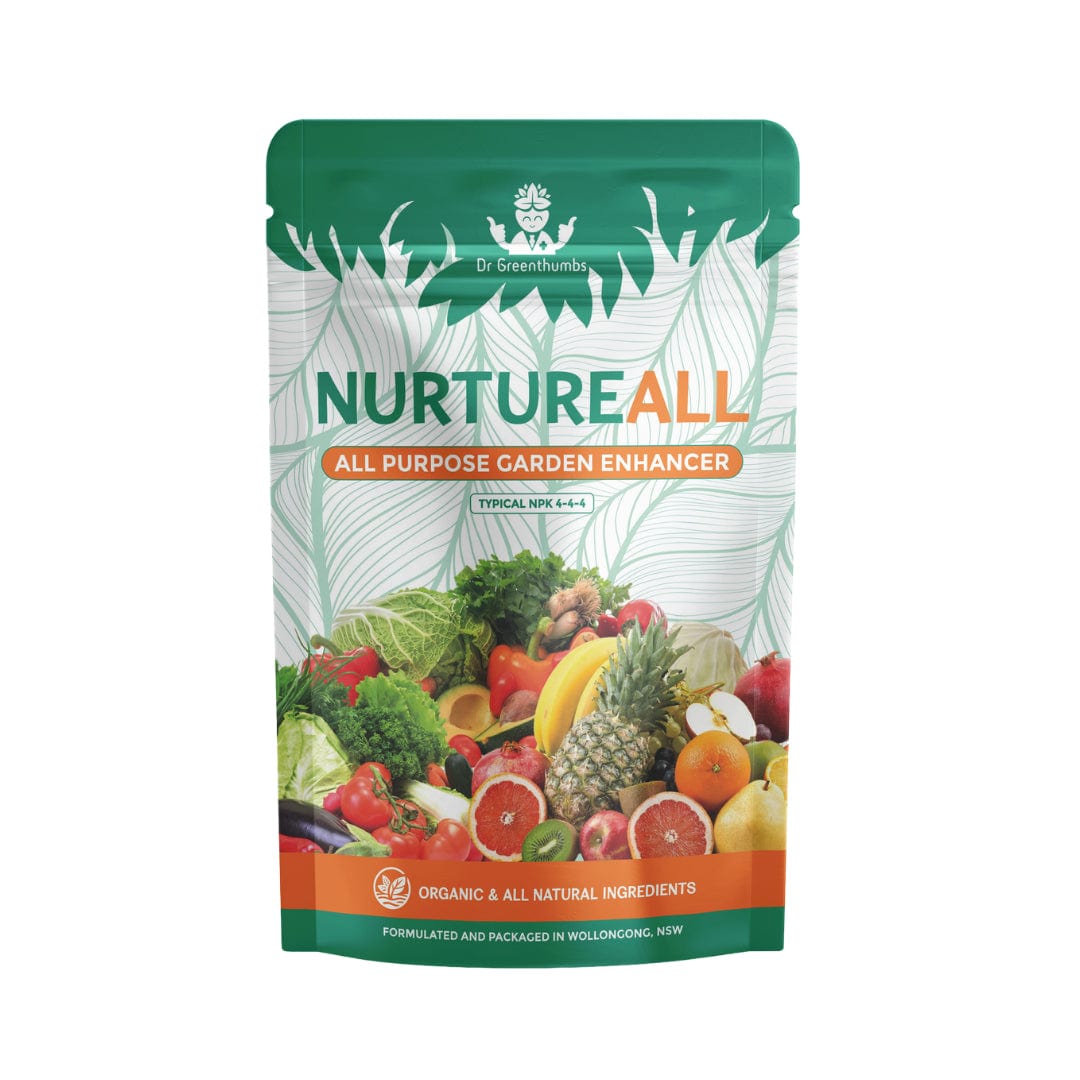
What is Nurture All and how is it different from other fertilisers?
Nurture All is a 4-4-4 balanced organic fertiliser designed to support the full plant lifecycle—from seedlings to harvest. It feeds both plants and soil microbes, acting as both a nutrient source and a soil conditioner. It’s ideal as a one-bag solution for all stages or as a base layer in more complex feeding routines.
For tomato-specific feeding guidance, see our guide to organic fertilisers for tomatoes in Australia.
What’s in Nurture All?
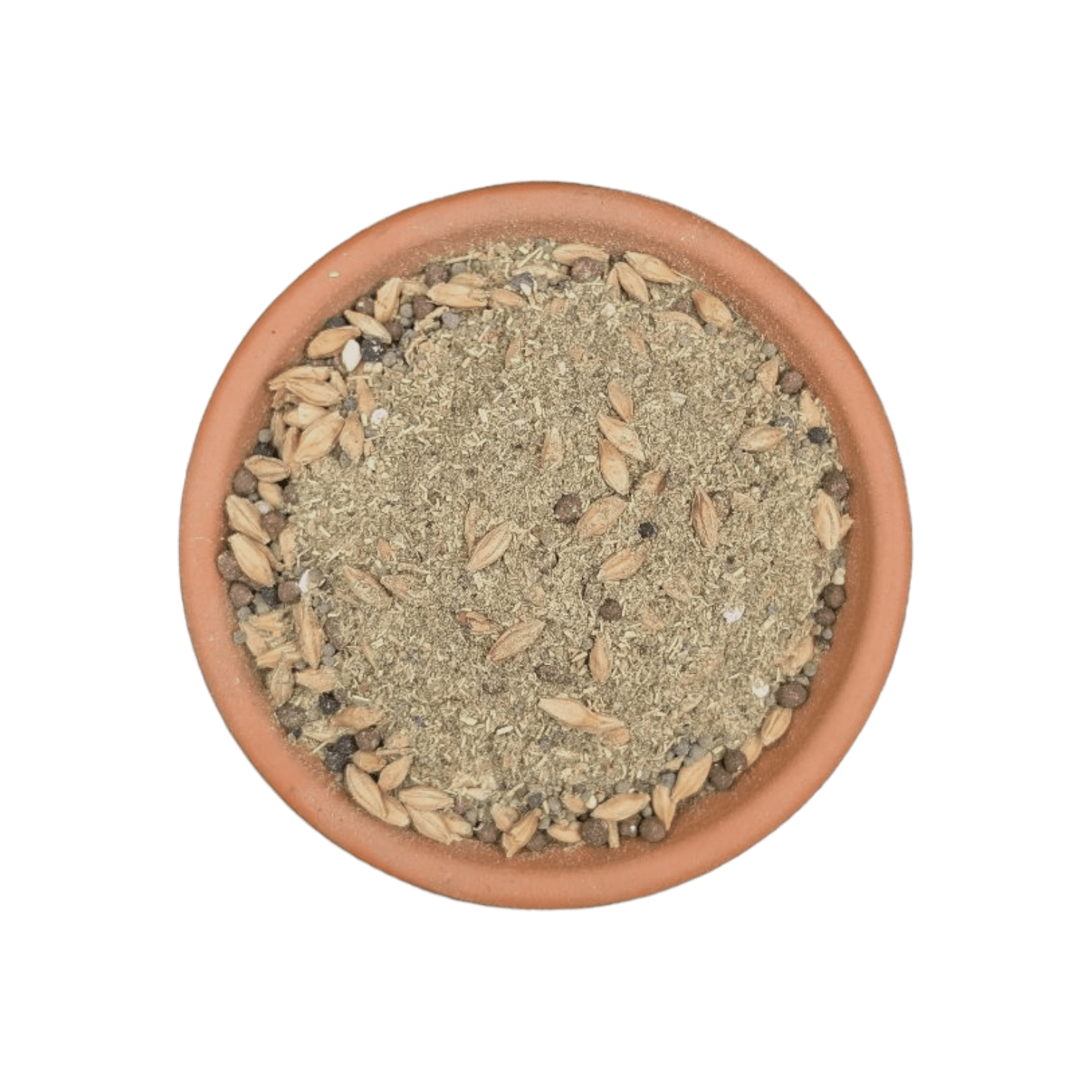
It’s a craft blend of alfalfa, neem, coconut, kelp, barley, crustacean meal, seabird guano, gypsum, dolomite, rock dust, potash, and plant-based aminos—plus beneficial microbes. It’s made from organic ingredients but not vegan (due to guano and crustaceans). Safe for worms and healthy soil systems when used as directed.
Does Nurture All contain living microbes?
Yes—it includes Bacillus bacteria and Glomus mycorrhizae. These support root growth, nutrient uptake, and soil biology. To keep them active, store the product sealed, dry, and out of sunlight. Pairing with compost or mulch can boost microbial benefits further.
Where can I use Nurture All?
You can use it on indoor plants, veggies, herbs, lawns, raised beds, leafy greens, succulents, aroids, fruiting plants, and even natives (with caution). It’s especially effective in living soil, no-till beds, or as a gentle feed for stressed or slow growers.
For tomato growers, our guide to the best potting mix for tomatoes covers the soil and potting-mix factors that sit alongside a feeding routine.
How do I apply Nurture All?
Mix ¼–½ cup per 30L of potting mix, or top-dress the same amount into pots or beds and water in well. For garden beds, use 1–2 cups per m². Scale doses based on plant size and hunger. Avoid direct contact with stems or leaves.
How often should I reapply Nurture All?
Every 4–8 weeks during active growth is a solid guide. Fast growers or heavy feeders may need closer to 4 weeks. In winter or cool conditions, reapply less frequently as microbial activity slows.
How quickly will I see results?
Expect gradual improvement over 1–3 weeks as the microbes activate and nutrients release. It’s slow-release by design, supporting long-term growth without the spike-and-crash of synthetics.
Is Nurture All safe for seedlings or sensitive plants?
Yes—just start light. For seedlings or cuttings, it’s best to pre-mix into the soil at low rates rather than top-dressing heavily. For phosphorus-sensitive natives, use cautiously or skip if unsure.
Can I make a compost tea with Nurture All?
Yes—steep 1 tablespoon per 5L of water, aerate for 24 hours, and use immediately. It’s for soil drenching only, not foliar spraying. Don’t store leftover tea, as it can spoil quickly without refrigeration or ongoing aeration.
Can I use Nurture All with other fertilisers?
Yes. It pairs well with compost, worm castings, liquid kelp, and other dry blends like Go & Grow or Bud & Bloom. If you’re combining products, reduce doses to avoid overfeeding—especially when using synthetic inputs.
Can I use Nurture All in coco coir or hydroponics?
It works in coco when treated like soil (with biology and good drainage). It’s not suitable for clean hydro systems like DWC or LECA—it won’t dissolve and may cause buildup or clogs.
How should I store Nurture All?
Keep it sealed, cool, dry, and out of direct sun. Clumps can form if exposed to humidity, but breaking them up won’t affect performance. Use gloves and a mask if sensitive to dust during application.
Will Nurture All attract pests or burn my plants?
Not usually—if used correctly. Avoid piling it on or leaving it dry on the surface. Watering in well and covering with mulch helps prevent gnats or critters. Always start low and increase based on plant response.
What bag sizes are available and how far do they go?
Nurture All comes in 1.5kg and 4.5kg bags. A 1.5kg bag can support several top-dress rounds for a few large pots, while 4.5kg is better value for bigger gardens. Use the product calculator for exact coverage based on pot or bed size.
What’s the simplest routine for beginners?
Mix into your potting soil at planting, then top-dress every 4–8 weeks in the growing season. Water in well and optionally mulch the surface. Avoid over-applying or expecting instant results—consistency wins with dry organics.