
Choosing the right fertiliser can feel confusing, especially when every bag or bottle has different numbers on the label.
10-10-10.
20-5-10.
3-1-6.
What do they actually mean… and how do you know which one your plants need?
This guide breaks it down simply, so you can confidently choose the right NPK fertiliser for your garden, lawn, veggies or flowers, without guesswork or overfeeding.
Table of Contents
- Understanding NPK Fertiliser Labels
- How to Choose the Right NPK
- Fertiliser Strength and Product Comparison
- Choosing a Fertiliser Type
- When and How to Apply Fertiliser
- What NPK Numbers Don’t Tell You
-
Special Considerations for Australian Gardens
- Your NPK Checklist Before You Buy
- Next Reads for Choosing the Right Fertiliser Strategy
If you want the quickest way to match the right fertiliser to your plants, these are reliable, beginner-friendly options:


Understanding NPK Fertiliser Labels
What Does NPK Mean on Fertiliser Labels?
NPK refers to the three primary nutrients represented on fertiliser labels:
- N – Nitrogen: Supports leafy, green growth
- P – Phosphorus: Supports root development, flowering and fruiting
- K – Potassium: Supports plant health, resilience, flowering and fruit development
The three numbers on the label tell you how much of each of these nutrients the fertiliser declares. The next section explains why gardeners often call them an NPK “ratio”, even though the numbers are technically expressed as percentages by weight.
Are NPK Numbers a Ratio or a Percentage?
You’ll often hear people say the numbers are a “ratio”, and that’s partly true. But technically they’re shown as percentages by weight.
For example, a fertiliser labelled 10-20-10 contains:
- 10% Nitrogen
- 20% Phosphorus
- 10% Potassium
The remaining percentage isn’t “missing”, it’s made up of other ingredients like trace elements, carriers, or sometimes additional nutrients.
So while we compare them like a ratio (because 20 is double 10), what you’re actually looking at on the bag is the percentage of each nutrient in the mix.
That’s why a 20-5-5 fertiliser isn’t just “higher nitrogen”, it literally contains four times more nitrogen than phosphorus or potassium.
Understanding this makes it much easier to compare products properly.
Fertiliser vs Fertilizer: Australian and US Spelling
You’ll see both “NPK fertiliser” and “NPK fertilizer” online. They refer to the same thing; the difference is spelling.
In Australia, fertiliser is the standard spelling, while fertilizer is common on US and other overseas websites. The NPK numbers themselves still follow the same basic principle.
Overseas advice can still be useful, but check whether the recommendations suit Australian seasons, climate and growing conditions before copying an exact feeding routine.
What If There’s a Fourth Number?
Sometimes you’ll see four numbers instead of three, for example 10-5-5-4.
The fourth number usually represents Sulfur (S), which helps with protein formation and nutrient uptake.
And if you’ve ever added up the numbers and noticed they don’t equal 100%, that’s completely normal.
The rest of the product is made up of:
- Organic matter or composted materials
- Fillers or carriers that help with application
- Secondary nutrients (like calcium or magnesium)
- Trace elements (like iron or zinc)
So NPK tells you the primary nutrients — not the entire story of what’s in the bag.
How to Choose the Right NPK
Why Choosing the Right NPK Matters
Plants don’t all grow the same way — and they don’t all need the same nutrients at the same time.
Using the wrong NPK ratio can lead to:
- Lots of leaves but no flowers
- Weak roots and poor fruiting
- Burnt plants from overfeeding
- Wasted fertiliser that never gets used
The right NPK, applied correctly, helps your garden:
- Grow faster and stronger
- Flower more reliably
- Produce better harvests
- Stay healthier through heat, cold and stress
Best NPK: Choose by Goal, Not Popularity
There is no single NPK fertiliser that is “best” for every plant or situation. The right choice depends on what the plant is doing, what you want it to do next, and what nutrients are already available.
All-purpose fertilisers can be useful for general maintenance across mixed plants, but they are less precise when you are trying to achieve a specific result. Use the plant-specific guidance below to match the nutrient direction to the actual gardening goal rather than choosing a product simply because it has popular or high NPK numbers.
Choosing NPK for Different Plants
Lawns & Leafy Growth
If your goal is lush green growth, nitrogen is the priority.
- Best NPK: Higher N, moderate K, low P
- Ideal for: Lawns, leafy greens, hedges
A steady feeding approach works best here, especially in Australian conditions where growth can surge quickly after rain.
High-nitrogen fertilisers include organic options like soybean meal, or for a fast-acting water-soluble boost, Super-N works extremely well and has a very economical dose of 0.5 ml per litre of water
Vegetables & Productive Gardens
Veggies need balanced nutrition, but their needs change as they grow.
- Early growth: More nitrogen for leaf development
- Flowering & fruiting: Increased potassium for yield and quality
A balanced NPK is ideal, with the flexibility to top up nutrients as needed. Our Ocean Grown Fish & Kelp combo is a balanced & organic fertiliser that can be used from seedling to flowering stages.
Flowers, Fruit & Blooming Plants
If your plants are leafy but not flowering, the issue is often too much nitrogen and not enough potassium.
- Best NPK: Lower N, higher K
- Ideal for: Roses, ornamentals, fruit trees, flowering natives
Potassium supports bud formation, colour intensity and flower longevity. An economical option that packs a big punch is Pro-PK, perfect for using from the early to late stages of most flowering and fruiting plants.
👉 For targeted bloom support, explore
Our handpicked Flower Boosters & Enhancers
designed to promote stronger flowers and better fruit set.
Quick NPK direction by goal
If you’re unsure where to start, here’s a general guide:
Leafy growth (lawns, leafy vegetables):
Higher nitrogen (first number larger).Root development (young plants, root vegetables):
Balanced fertiliser or slightly higher phosphorus early on.Flowering and fruiting plants:
Moderate nitrogen, higher potassium to support blooms and fruit set.These aren’t strict rules — but they give you a reliable starting point.
Match Fertiliser to Your Growing Setup
NPK fertiliser Australia-wide needs to suit the way you grow.
A veggie patch, a potted indoor plant, a lawn, a citrus tree and a hydro system are not asking for the same thing. They might all use nitrogen, phosphorus and potassium, but the delivery method matters.
In soil beds, organic or slow-release fertilisers can work beautifully because microbes, moisture and soil structure help cycle nutrients. In pots, nutrients can leach out faster, so smaller and more regular feeds may be safer. In hydro or soilless growing, precision matters much more because the plant is relying on the nutrient solution rather than a living soil buffer.
A simple setup guide:
- Garden beds: balanced feeding, soil biology and seasonal timing matter most.
- Pots: avoid heavy overdosing because roots have nowhere to escape.
- Lawns: nitrogen and steady release are usually the main focus.
- Flowers and fruiting crops: don’t overdo nitrogen once flowering starts.
- Hydro or coco: use complete nutrients made for that system, not random garden fertiliser.
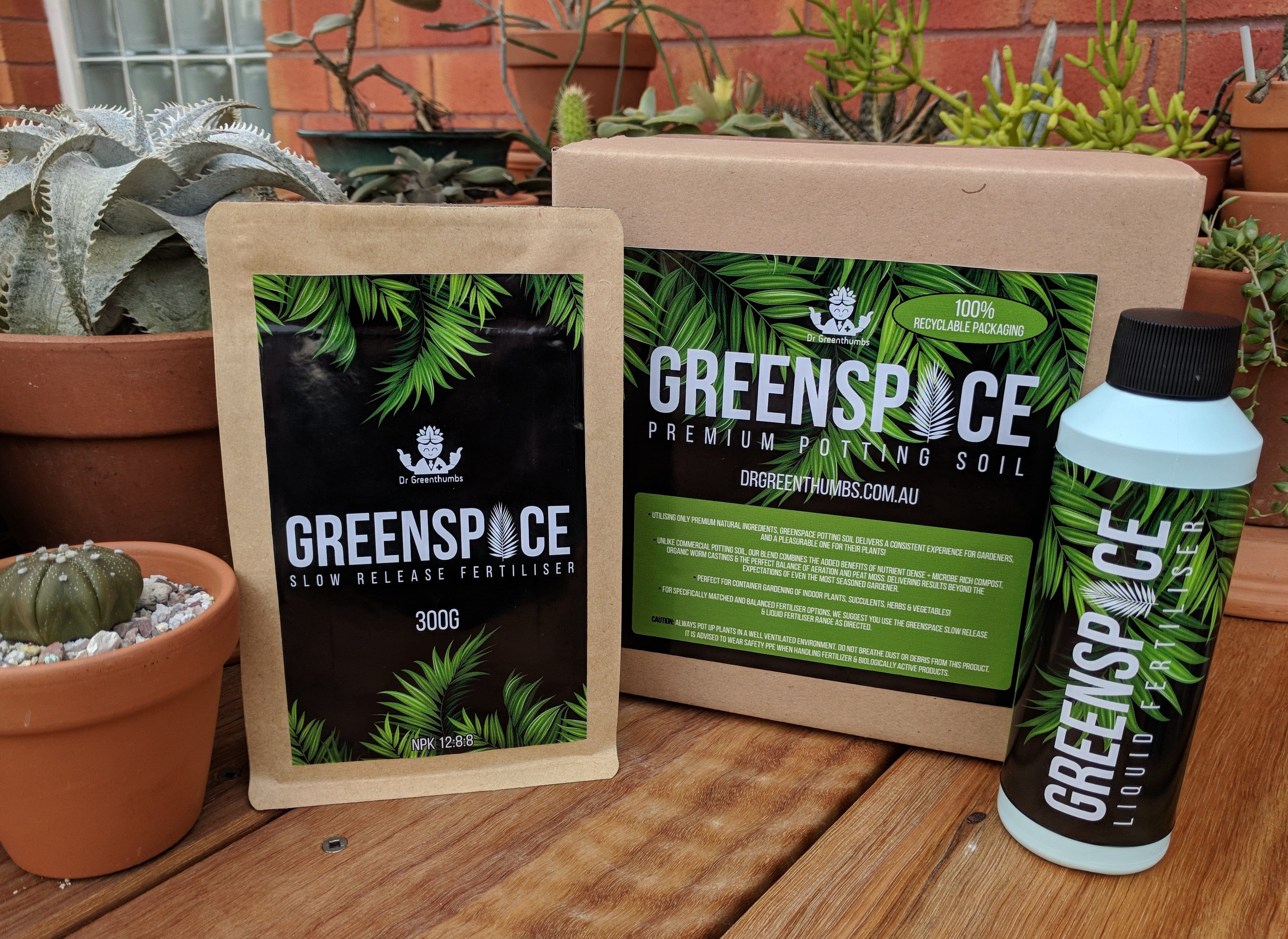
If you want a gentle background feed for mixed garden beds and pots, GreenSpace Slow Release Fertiliser fits that low-fuss role without turning every watering into a maths lesson.
Fertiliser Strength and Product Comparison
High NPK Fertiliser: When Stronger Helps and When It Doesn’t
A higher NPK number usually means a more concentrated fertiliser. It does not automatically mean a better fertiliser.
A product such as 20-20-20 is more concentrated than 5-5-5, which generally means there is less room for application error. Heavy application—particularly when plants or roots are already stressed—can increase the risk of overfeeding and root damage.
High-NPK fertilisers can have a place when you need a measured nutrient input for actively growing plants and can control the dose accurately. They are less suitable as a reflex response to every tired-looking plant.
Be especially cautious with concentrated fertilisers around:
- seedlings
- newly transplanted plants
- indoor plants in low light
- drought- or heat-stressed plants
- plants with damaged roots
- containers where salts may already have accumulated
Lower NPK numbers are not automatically weak either. Many fertilisers with lower declared numbers are formulated differently or provide nutrition in a different way.
The useful question is not, “Which product has the biggest numbers?” It is, “Which concentration, formulation and dose suit this plant and situation?”
How to Compare Two Fertilisers
Comparing NPK fertiliser is not just about lining up the three numbers.
You need to look at concentration, release speed, application rate and what else is in the product. A 10-10-10 dry fertiliser and a 10-10-10 liquid fertiliser might show similar numbers, but they won’t necessarily behave the same way in the garden.
Compare products like this:
- Check the NPK numbers.
- Check whether it’s liquid, granular, soluble or slow-release.
- Check the application rate.
- Check whether it includes calcium, magnesium, sulfur or trace elements.
- Check whether it’s made for soil, pots, lawns, hydro or edible crops.
- Check how often it needs to be applied.
- Check the risk level if you accidentally overdo it.
Also look at the cost per use, not just the shelf price. A concentrated liquid may look expensive but last ages. A cheap bag may disappear quickly if the dose rate is high.
The label tells you the numbers. The application rate tells you the real-world value.
Choosing a Fertiliser Type
Liquid vs Slow-Release Fertilisers
Both have their place — and the best gardens often use a combination of both.
Liquid & Foliar Fertilisers
Best for:
- Fast results
- Correcting deficiencies
- Supporting plants during stress or rapid growth
They’re absorbed quickly and are perfect when plants need nutrients now.
👉 Ideal options can be found in
Liquid & Foliar Solutions
Slow-Release Fertilisers
Best for:
- Long-term feeding
- Lawns and garden beds
- Low-maintenance gardens
They release nutrients gradually, reducing the risk of burn and nutrient runoff.
👉 A reliable option for Australian gardens is
GreenSpace Slow Release Fertiliser
Organic vs Synthetic Fertilisers
Release speed and nutrient source aren’t the same thing.
You can have organic slow-release, organic liquid, synthetic slow-release, or synthetic liquid fertilisers.
Here’s the difference:
- Usually have lower NPK numbers
- Feed soil microbes as well as plants
- Improve soil structure over time
- Release nutrients more gradually
- Deliver precise, measurable nutrients
- Act quickly
- Can burn plants if overapplied
- May leach faster in sandy soils
If you’re building long-term soil health, organic inputs play an important role.
If you need a fast correction, synthetic fertilisers can be useful when applied carefully.
👉 If you prefer feeding naturally while improving soil biology, explore our range of Organic Liquid Fertilisers designed for Australian gardens.
When and How to Apply Fertiliser
When Should You Apply Fertiliser?
Even the right NPK won’t help if it’s applied at the wrong time.
Here’s a simple guide for Australian conditions:
During active growth (spring and early summer):
This is when most plants benefit from regular feeding.
During dormancy (late autumn and winter for many plants):
Avoid fertilising. Plants aren’t actively growing, so nutrients go to waste.
After heavy rain:
Nutrients can leach from soil, especially in sandy areas. A light top-up may help once the soil settles.
During extreme heat:
Avoid pushing growth during heatwaves. Plants are stressed and can burn more easily.
Pots vs in-ground:
Potted plants need feeding more often because nutrients wash out faster.
Timing matters just as much as the numbers on the label.
How to Apply Fertiliser Correctly
Once you have chosen the right fertiliser and timing, apply it according to the product directions rather than guessing the dose.
Key application principles:
- Measure the dose accurately.
- Follow the label rate and application method.
- Avoid applying more simply because results are not immediate.
- Apply fertiliser evenly rather than concentrating it around one part of the root zone.
- Follow the product's watering instructions after application.
- Reassess the plant before automatically applying another dose.
Seasonal timing, extreme heat and heavy-rain considerations are covered in the section above.
What NPK Numbers Don’t Tell You
Nutrient Availability and Micronutrients
The fertiliser NPK number tells you nitrogen, phosphorus and potassium. It does not tell you whether your plant can access those nutrients.
That access depends on soil pH, moisture, temperature, root health and microbial activity. If those are off, the right NPK can still give average results.
For example, dry soil slows nutrient movement. Cold soil slows biological activity. Bad pH can lock nutrients away. Damaged roots can’t take up much, even when the fertiliser is technically correct.
Before blaming the NPK, check the growing conditions:
- Is the soil evenly moist?
- Is the plant actively growing?
- Is the pH in a sensible range?
- Are the roots healthy?
- Is the potting mix compacted or waterlogged?
- Has the plant already been overfed?
Plants also need nutrients beyond NPK, including:
- Calcium for strong cell walls
- Magnesium for chlorophyll production
- Iron to help prevent yellowing between leaf veins
- Other trace elements in small amounts
For example, if new leaves are yellow but the veins stay green, that’s often an iron deficiency — not a nitrogen problem. A product like CMX, can help provide calcium, magnesium and iron at a low dose rate when those nutrients are actually needed.
Container plants are especially prone to micronutrient deficiencies because they can’t draw nutrients from deep soil reserves. What’s in the pot is all they get.
If you’re growing in controlled systems or soilless media, precision feeding becomes even more important. Specialised Hydroponic Nutrients are designed to deliver balanced nutrition where soil is not part of the equation.
NPK is important, but it is not magic. It works best when the root zone is already set up to use it.
Do You Need to Test Your Soil?
Soil testing can be helpful, but most home gardeners do not need to test before every fertiliser application.
You can often get good results by:
- Observing plant growth
- Matching fertiliser to plant type
- Adjusting feeding during flowering or fruiting stages
- Watching for repeated symptoms
If plants look healthy, green and productive, your NPK choice is probably working.
A soil test becomes more useful if:
- You’re starting a new garden bed
- Plants repeatedly struggle despite fertilising
- Leaves are yellowing but growth is stunted
- You’re growing heavy feeders like vegetables
- You suspect pH is stopping nutrient uptake
pH affects how nutrients are absorbed. Soil that is too acidic can limit availability of certain nutrients, while soil that is too alkaline can lock out iron and other trace elements.
The simple order is:
Test → adjust pH if needed → then choose your NPK.
Otherwise, you might be feeding nutrients the plant physically can’t absorb.
If pH needs adjusting, use an appropriate pH adjuster and follow the label carefully.
Special Considerations for Australian Gardens
Australia covers very different climates, soils and plant communities, so local conditions still matter after you understand the basic NPK principles.
Phosphorus-Sensitive Natives
Many Australian native plants are sensitive to high phosphorus levels. Using a standard high-P fertiliser can damage roots.
If you’re feeding natives, choose a low-phosphorus or native-specific fertiliser.
For general advice on heat, heavy rain and seasonal feeding, use the When Should You Apply Fertiliser? section above.
Your NPK Checklist Before You Buy
Before choosing a fertiliser, check:
- What is the plant doing now? Is it producing leaves, establishing roots, flowering, fruiting or simply maintaining growth?
- What do the NPK percentages actually show? Compare the declared nitrogen, phosphorus and potassium rather than treating the numbers as a quality score.
- How concentrated is the product? Higher numbers are not automatically better.
- What type of fertiliser is it? Check whether it is liquid, soluble, granular or slow-release, and whether it suits your growing setup.
- What is the application rate? Compare the actual dose, not just the NPK numbers.
- Are the growing conditions suitable for feeding? Consider active growth, moisture, heat and recent weather.
- Could pH, root health or another nutrient be the real problem? NPK cannot solve every plant symptom.
- Do you actually need a soil test? Test when problems repeat, a new garden bed is being established, or nutrient availability is uncertain.
Quick memory aid:
- Leaves → think nitrogen first.
- Roots and reproductive growth → consider phosphorus availability.
- Plant strength, flowering and fruit development → consider potassium.
Use that memory aid as a starting point rather than a substitute for checking the plant, soil and product label.
Next Reads for Choosing the Right Fertiliser Strategy
Still comparing NPK ratios, fertiliser types or deficiency symptoms? These guides will help you choose better inputs and fine-tune your feeding plan with more confidence.
- Natural Garden Fertilisers Australia Guide
- Chemical vs Organic Fertilisers in Aussie Gardens
- Why Are My Leaves Yellow? Diagnose N, Fe, Mg and Fix It Fast
- Making Your Own Liquid Fertiliser: DIY Organic Methods
About the Author