
Walk outside after a decent bit of autumn rain and suddenly find hundreds of little black millipedes marching across the pavers, climbing the walls or sneaking under the back door?
If you're in southern Australia, there's a fair chance you've met the Portuguese millipede.
The good news is that finding millipedes doesn't automatically mean something has gone horribly wrong with your garden. Most millipedes are useful decomposers that spend their lives breaking down dead plant material. They normally want damp leaf litter and decaying organic matter — not your lounge room.
The introduced black Portuguese millipede, however, is a different story. In parts of southern Australia it can build up in enormous numbers and become a serious nuisance around homes and gardens.
In this guide we'll cover:
- what millipedes are
- how to identify Portuguese millipedes
- native millipedes vs Portuguese millipedes
- millipedes vs centipedes and other lookalikes
- what millipedes eat
- whether millipedes damage plants
- why Portuguese millipedes invade houses
- how to get rid of millipedes
- how to reduce the chances of them coming back
The trick isn't simply killing every millipede you see.
It's understanding why they're there in the first place.
Table of Contents
- What Are Millipedes?
- Millipedes in Australia
- How to Identify a Portuguese Millipede
- What Do Millipedes Eat?
- Are Millipedes Good for the Garden?
- Why Are There Suddenly So Many Millipedes?
- Why Do Portuguese Millipedes Come Inside?
- How to Get Rid of Portuguese Millipedes
- Are Millipedes Dangerous, Poisonous or Likely to Bite?
- The Portuguese Millipede Lifecycle
- The Bottom Line on Millipedes in Australia
- Next Reads for Managing Crawling Pests Around the Garden
Want the quickest control setup? These are the tools that make the job easier:


What Are Millipedes?
Millipedes are small terrestrial arthropods belonging to a group called Diplopoda.
Despite the name, most don't literally have a thousand legs.
One of the easiest ways to recognise a millipede is its long, segmented body. Most of the visible body segments carry two pairs of legs, giving them the classic many-legged appearance.
Millipedes generally:
- have cylindrical or slightly flattened bodies
- move relatively slowly
- curl into a coil when disturbed
- prefer cool, damp environments
- feed largely on decomposing organic material
- spend much of their time under mulch, logs, rocks and leaf litter
And here's an important point:
Millipedes aren't insects.
They're myriapods, so treating every crawling garden creature as the same pest can quickly send you down the wrong path.
Millipedes in Australia
Australia has a huge variety of native millipedes.
Most are not major garden pests.
In fact, many play a useful role in the garden by helping break down fallen leaves, rotting wood and other organic matter. That decomposition helps recycle nutrients back through the soil ecosystem.
So if you lift a damp log and find a couple of native millipedes underneath, there's normally no reason to declare war on the backyard.
The bigger problem for many Aussie gardeners is the introduced Portuguese millipede.
Black Portuguese Millipedes
The black Portuguese millipede, Ommatoiulus moreleti, originated in Europe and became established in Australia during the twentieth century.
It is now well established across parts of southern Australia, particularly in areas of:
- South Australia
- Victoria
- Tasmania
- Western Australia
- New South Wales
Portuguese millipedes love the sorts of cool, moist environments we often deliberately create in gardens.
Mulch?
Beautiful.
Leaf litter?
Even better.
Moist soil under dense plants?
Lovely stuff.
Unfortunately, when conditions suit them, their populations can become huge.
That's when a useful decomposer relative becomes an absolute pain around the house.
How to Identify a Portuguese Millipede
Adult Portuguese millipedes are usually around 30–45 mm long.
Look for:
- a long, narrow cylindrical body
- dark brown to almost black colouring as adults
- lots of short legs running down the body
- relatively slow movement compared with a centipede
- a tendency to curl into a tight spiral when disturbed
Young Portuguese millipedes may be lighter in colour, so don't rely on black colouring alone.
The combination of body shape, leg arrangement, behaviour and large numbers is more useful. If hundreds of dark millipedes suddenly appear around an Australian home after suitable weather, particularly across southern Australia, Portuguese millipedes should be high on your suspect list.
Native Millipedes
Australian native millipedes come in a wide range of sizes, shapes and colours. Finding a few beneath logs, mulch and decaying leaves is normal and usually beneficial. Unlike a mass movement of Portuguese millipedes, a small number of native millipedes generally does not require control.
Millipedes vs Centipedes
Centipedes are different animals and are generally predators rather than decomposers.
The simplest distinction is the legs:
- Millipedes usually have two pairs of legs on most body segments.
- Centipedes have one pair of legs per body segment.
Centipedes also tend to have flatter bodies, move much faster and have longer, more obvious legs extending from their sides.
Slaters
Slaters — also called woodlice — can be mistaken for small millipedes when they move through damp mulch. They are terrestrial crustaceans with broader, armour-like bodies rather than the long cylindrical shape of a Portuguese millipede.
Caterpillars and Other Larvae
Some dark caterpillars or insect larvae can also cause confusion. Look closely at how many legs are present and whether the animal has the hard, highly segmented body of a millipede.
Correct identification matters because a treatment intended for an insect pest is not automatically suitable for a millipede.
Quick Millipede Identification Guide
|
Creature |
Body |
Legs |
Behaviour |
Typical Garden Role |
|---|---|---|---|---|
|
Native millipede |
Segmented, usually rounded |
2 pairs on most segments |
Slow, often curls up |
Mostly decomposer |
|
Portuguese millipede |
Long, dark, cylindrical |
2 pairs on most segments |
Slow, may gather in huge numbers |
Decomposer/nuisance pest |
|
Centipede |
Flatter body |
1 pair per segment |
Fast-moving |
Predator |
|
Slater |
Broad, armoured |
7 pairs |
Crawls through damp litter |
Decomposer |
|
Caterpillar |
Soft-bodied |
Limited true legs plus prolegs |
Feeds directly on plants |
Often a plant pest |
What Do Millipedes Eat?
Most millipedes eat dead and decaying organic material.
Their menu commonly includes:
- fallen leaves
- decomposing plant matter
- rotting wood
- fungi
- soft decaying vegetation
- other organic debris
That makes them useful recyclers.
They help turn yesterday's garden waste into material that can eventually cycle back through the soil.
Do millipedes eat living plants?
Sometimes.
Most of the time, decomposing material is the main attraction.
But when millipede populations become very high, some species — including Portuguese millipedes — may feed on softer living plant material.
Young seedlings can be particularly vulnerable.
You may also find damage around:
- strawberries
- melons
- tomatoes
- potatoes
- onions
- tender shoots
- soft fruit touching the soil
Before blaming millipedes, though, inspect the plant carefully.
Slugs, snails, earwigs, slaters, caterpillars and other pests can produce similar-looking overnight damage.
Are Millipedes Good for the Garden?
In sensible numbers, yes. A few native millipedes living beneath mulch are normal and usually do not require control.
Control becomes worth considering when:
- Portuguese millipedes are gathering or moving in very large numbers
- young seedlings or soft produce are being damaged
- millipedes are repeatedly entering the house
- dense, damp habitat is supporting an obvious population problem beside the building
The aim is not to create a completely millipede-free garden. It is to keep useful decomposers in balance while managing Portuguese millipedes where they become a genuine nuisance.
Why Are There Suddenly So Many Millipedes?
This is where Portuguese millipedes catch people out.
You can go weeks barely noticing them, then one evening it feels like the entire backyard has grown legs.
Several things can contribute.
Moisture
Millipedes lose moisture relatively easily, so damp conditions suit them.
Rain after a dry period can trigger noticeable activity and movement.
Leaf litter and mulch
Decaying organic matter provides food as well as shelter.
Thick, permanently moist material immediately beside the house can create favourable habitat.
That doesn't mean mulch is bad.
Mulch is fantastic.
It just means where it sits and how wet it stays matters when you're battling Portuguese millipedes.
Cool hiding places
They may shelter under:
- pots
- timber
- pavers
- garden edging
- rocks
- dense groundcovers
- old leaves
- garden rubbish
When Is Portuguese Millipede Season in Australia?
There's no single date circled on the calendar for every suburb because activity depends heavily on local weather.
Major movements are commonly associated with the cooler, wetter conditions experienced across southern Australia, with autumn often being a particularly noticeable period. Rain can transform what seemed like a minor background population into a very obvious problem.
Prevention work is best completed before the annual march reaches the back door. Check seals, lighting and habitat during dry weather rather than waiting until hundreds are crawling across the patio.
Light
Portuguese millipedes can be attracted towards lights at night.
That helps explain one of their most annoying habits:
They don't simply remain down the back of the garden.
They can end up moving towards illuminated buildings, patios, doorways and windows.
Why Do Portuguese Millipedes Come Inside?
Your house generally isn't what Portuguese millipedes actually want.
They prefer suitable outdoor habitat.
But large population movements combined with exterior lighting and easy entry points can result in substantial numbers wandering indoors.
Common entry routes include:
- gaps beneath exterior doors
- poorly sealed sliding doors
- cracks near walls
- vents
- garage-door edges
- gaps around plumbing or services
- damaged flyscreens
- other small building openings
Once they're inside, dry indoor conditions aren't particularly friendly to them.
But that's not much comfort when you're vacuuming dozens off the floor every morning.
The best approach is therefore to work from the outside in.
How to Get Rid of Portuguese Millipedes
If you're trying to work out how to get rid of millipedes, especially Portuguese millipedes, think in layers.
Removing the ones you can see helps immediately. Reducing the conditions that support them helps longer term. Blocking their route into the house is what finally stops you sharing the living room with them.
1. Remove Millipedes Already Inside
For millipedes already indoors, physical removal is usually the simplest starting point.
You can:
- vacuum them up
- sweep them into a dustpan
- collect them with a brush
- empty them into an appropriate outdoor waste container
Try not to crush large numbers on carpets, walls or porous surfaces.
Millipedes can release defensive secretions when stressed, and squashed individuals can produce staining or unpleasant odours.
Physical removal won't solve a major outdoor population by itself.
But it's the quickest answer to the immediate indoor problem.
2. Seal the Gaps They're Using
If millipedes can walk through it, they eventually will.
Check:
- door seals
- door sweeps
- sliding-door tracks
- garage doors
- low wall gaps
- vents
- pipe penetrations
- damaged screens
Pay particular attention to the parts of the house where you find the most millipedes indoors.
That's often telling you where the main entry route is.
A decent door sweep can sometimes achieve more than repeatedly treating the inside of the house.
3. Reduce Light Attraction Around Entry Points
If Portuguese millipedes are moving towards exterior lighting at night, consider whether you really need bright lights running beside the problem doorway.
Where practical:
- switch unnecessary outdoor lights off
- reduce lighting immediately beside entrances
- close blinds or curtains where bright interior light spills outside
- move non-essential lighting away from vulnerable doorways
The aim isn't to turn the backyard into a cave.
It's simply to avoid creating a bright destination directly beside the easiest route into your home.
4. Reduce Damp Habitat and Manage Mulch Near the House
Inspect the first metre or two around affected walls for:
- piles of wet leaves
- old timber
- pots sitting permanently damp
- thick organic debris packed against the building
- dense groundcover touching the wall
- deep, continually wet mulch
- garden rubbish that has not been moved for a long time
You do not need to sterilise the garden or remove mulch everywhere. Healthy garden soil benefits enormously from good mulching.
Instead, remove unnecessary damp hiding places immediately beside the building. Move stored timber away from the house, clean accumulated leaf litter from trouble spots, lift objects sitting on wet ground and improve drainage where water continually collects.
Where Portuguese millipede pressure is severe, create some breathing room between wet mulch and the house or vulnerable seedlings. Allow the surface to dry between watering where appropriate for your plants, and avoid overwatering purely out of habit.
The goal is to reduce ideal millipede habitat without sacrificing good gardening practice.
5. Protect Young Seedlings
Established plants can often tolerate a little chewing.
Fresh seedlings can't.
If millipede populations are high:
- inspect seedlings early in the morning
- check beneath nearby pots, timber and mulch
- remove excessive hiding places immediately around young plants
- use physical barriers where practical
- avoid leaving ripe or damaged fruit lying on damp soil
Also confirm who's actually doing the damage.
If you've got seedlings disappearing overnight, don't automatically blame the first millipede you spot.
Snails, slugs, caterpillars and slaters deserve a look too.
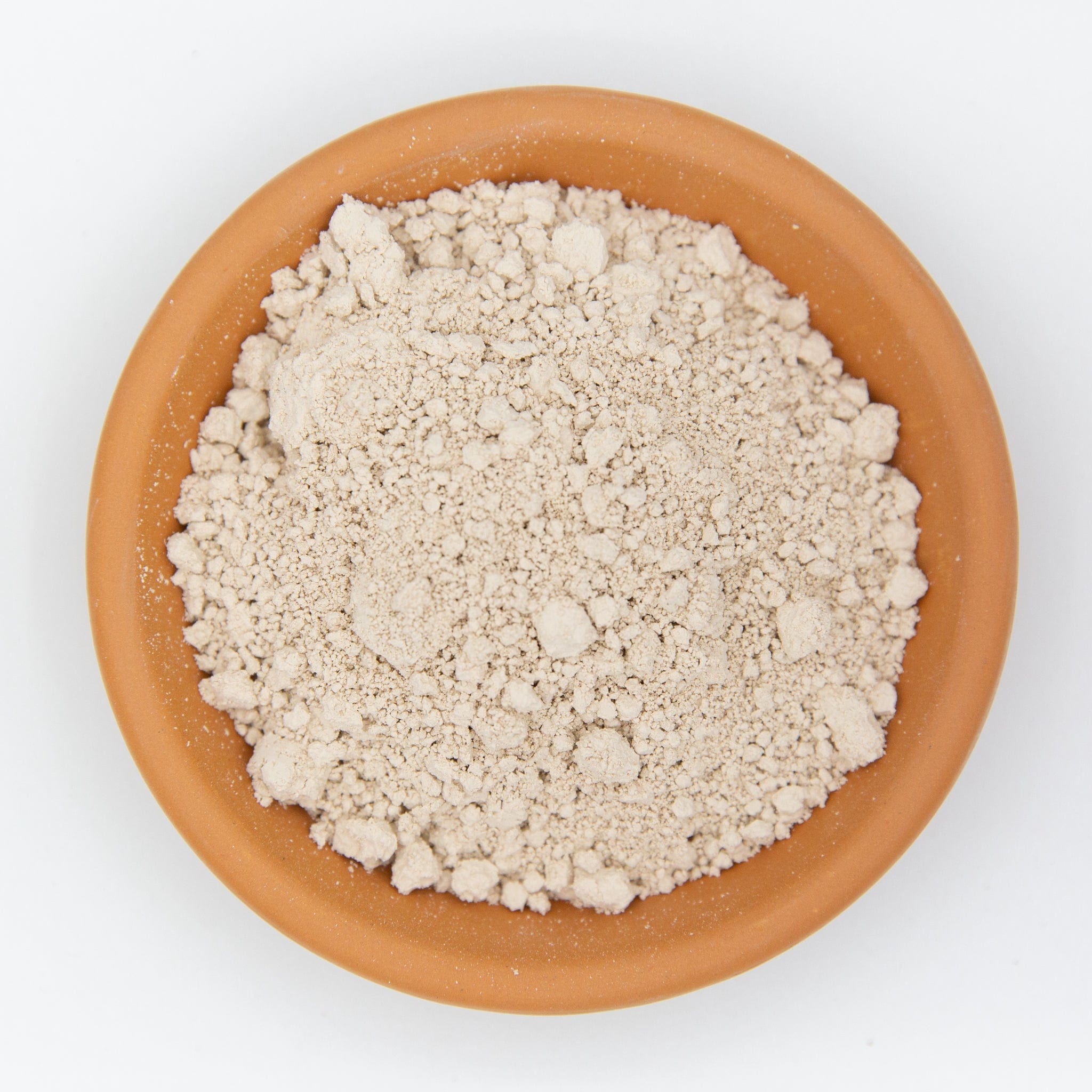
6. Does Diatomaceous Earth Work on Millipedes?
A dry, fine mineral powder can form part of a broader crawling-pest management strategy around targeted areas.
Our Micronised Diatomaceous Earth is designed for garden pest-control applications around pots, plants, growing media and other targeted areas.
Diatomaceous earth acts physically rather than as a conventional poison.
There is one massive catch:
It needs to be dry to do its job.
Rain, heavy dew and irrigation can dramatically reduce its usefulness as a dry barrier.
That's especially important with Portuguese millipedes because the weather that gets them moving is often exactly the sort of weather that makes dry powders difficult to maintain.
So don't think of DE as a magic force field.
Think of it as one tool inside a layered strategy, used according to the packaging directions and with appropriate dust precautions.
7. Only Use Insecticides for Pests Listed on the Product Label
This one's worth repeating:
Millipedes aren't insects.
Correct identification comes first.
If closer inspection reveals that the damage is actually being caused by a listed insect pest, then an insect-control product may make sense.
For example, our Pyrethrum Insect Dust is sold for listed exposed insect pests including aphids, caterpillars, leafhoppers, thrips and ants.
Our Pyrethrum Concentrate is a contact insecticide concentrate intended for target pests and plants permitted by its label.
Always use pest-control products according to the current product label and only for approved targets and applications.
Don't assume a product that controls one crawling garden pest automatically controls every other one.
A Practical Portuguese Millipede Control Timeline
For a serious Portuguese millipede problem, use the control steps above in this order.
Tonight
- remove the millipedes already inside
- turn off unnecessary lights near affected doors
- check obvious gaps beneath doors
This Weekend
- inspect the building perimeter
- clean up concentrated damp debris
- move old timber and unused pots
- check drainage
- install or repair door seals
- identify where the heaviest populations are hiding
Over the Following Weeks
- keep monitoring after rain
- manage excessive moisture near the house
- protect vulnerable seedlings
- maintain dry physical barriers where appropriate
Do not view every individual as a separate pest. If 300 millipedes are marching towards the back door, killing 20 does not fix the conditions creating the problem.
Lasting control means reducing shelter + favourable moisture + attraction + access.
How to Keep Portuguese Millipedes Out of the House
Once the outdoor habitat work is underway, concentrate on the routes millipedes use to enter the building:
- Fit door sweeps to exterior doors with visible gaps.
- Seal cracks and service penetrations near ground level.
- Repair damaged screens.
- Check sliding-door tracks and garage-door edges.
- Reduce unnecessary lighting beside affected doorways.
- Monitor after rain to identify the main direction of movement and the most active entry points.
- Repeat the inspection seasonally if Portuguese millipedes are established in your area.
Continue physically removing any millipedes that reach the living area rather than repeatedly applying pest-control products indoors.
Are Millipedes Dangerous, Poisonous or Likely to Bite?
For most people, millipedes are far more annoying than dangerous. They do not behave like predatory centipedes, are not venomous hunters and are not known for biting people in the way centipedes can.
Their main defence is chemical. When disturbed, some millipedes release defensive secretions that can irritate skin or eyes.
Take these sensible precautions:
- avoid rubbing your eyes after handling millipedes
- wash your hands afterwards
- do not deliberately crush them against bare skin
- keep curious children and pets from playing with large numbers
- seek appropriate medical or veterinary advice if significant irritation occurs
If you encounter a fast-moving, flattened many-legged animal capable of giving a painful nip, it is more likely to be a centipede than a typical millipede.
The Portuguese Millipede Lifecycle
Portuguese millipedes develop through a series of juvenile stages.
Young millipedes start with fewer body segments and legs, adding more as they grow and moult.
Much of their lifecycle takes place hidden away in suitable soil and organic material.
That explains something important about millipede control:
The adults wandering across your pavers are only the most visible part of the population.
Repeatedly removing visible adults without changing the surrounding conditions may give temporary relief while doing very little about why large numbers are present.
The Bottom Line on Millipedes in Australia
Most native millipedes are useful decomposers and do not need to be removed from a healthy garden. Portuguese millipedes are different because favourable conditions in southern Australia can produce mass movements, plant damage and repeated invasions around homes.
Lasting control does not come from killing a few visible millipedes. It comes from reducing damp shelter near the building, managing light attraction, sealing entry points and protecting vulnerable plants.
Identify the animal correctly before reaching for any pest-control product. The goal is not to eliminate every millipede; it is to keep useful decomposers in the garden and Portuguese millipedes out of the house.
Next Reads for Managing Crawling Pests Around the Garden
Still seeing unwanted crawlers around damp beds, pots or the house perimeter? These guides will help you compare likely pests and choose a more targeted control approach.
- Diatomaceous Earth Australia Guide
- Pest Control IPM Stack: Top 10 Organic Solutions
- Which Pest When? Australia
- Organic Snail Bait Australia Guide
About the Author