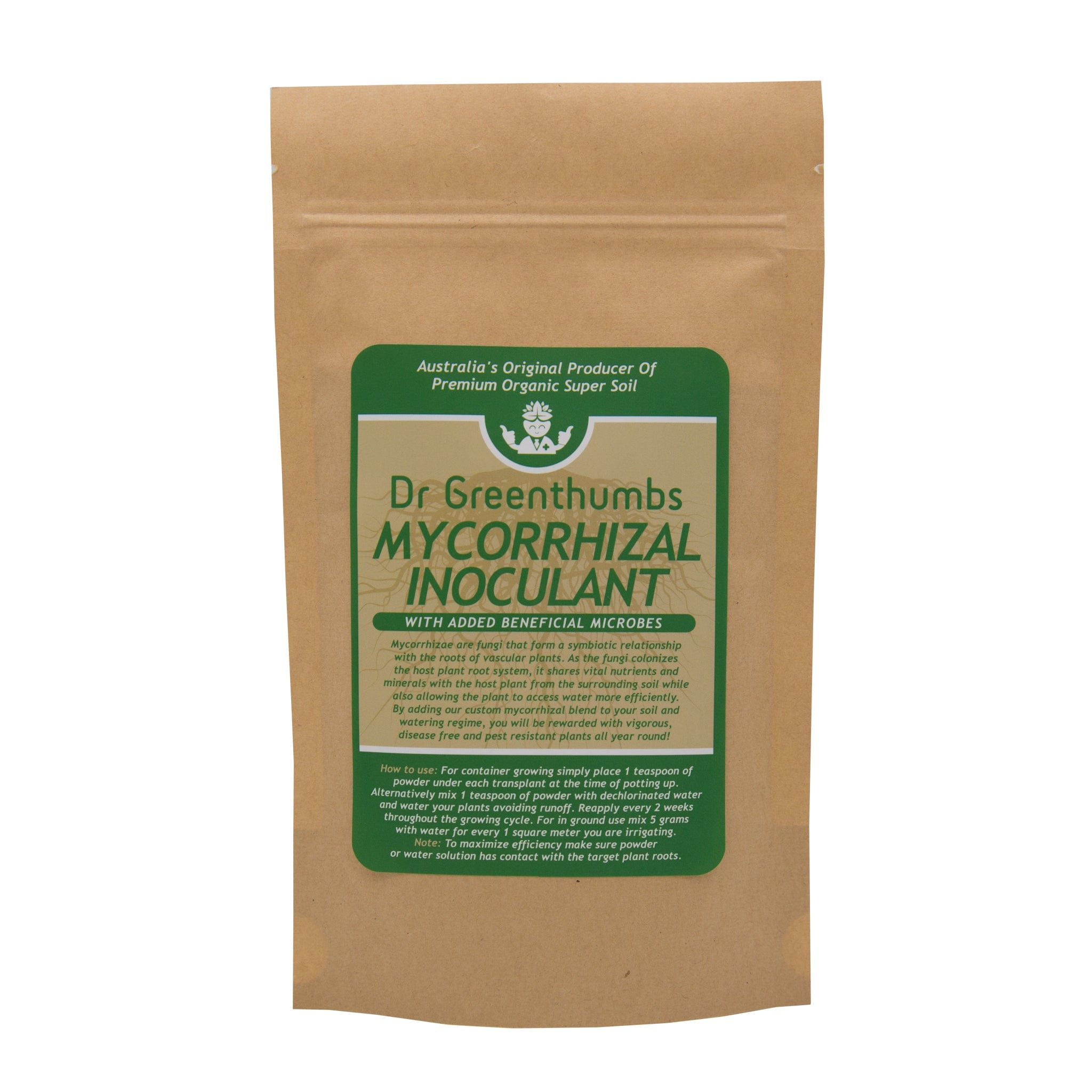
What is this mycorrhizal inoculant?
It’s a living fungi powder that bonds with plant roots, growing a fine “root extension” network that helps plants drink more water and pull in more nutrients with less stress.
Which plants can I use mycorrhizal inoculant on?
Pretty much all ornamentals, veggies, herbs, fruit trees, natives and houseplants—about 90–95% of plant species form endo-mycorrhizae.
Which plants should I NOT use mycorrhizal inoculant on?
Brassicas and a few others don’t partner with these fungi. Skip it for azalea, beet, blueberry, broccoli, Brussels sprouts, cabbage/kale, carnation, cauliflower, collards, cranberry, heath, huckleberry, mustard, protea, rhododendron, sedge and spinach.
What type of mycorrhizae is it? Endo or ecto?
Endo (arbuscular) mycorrhizae—the kind that works with the vast majority of garden and indoor plants.
How concentrated is mycorrhizal inoculant?
It contains a minimum of 240,000 propagules per gram across four endo species—seriously high activity for quick colonisation.
How much should I use per plant?
At planting: about 1 teaspoon per plant, dusted where roots will touch it. For in-ground beds: ~5 g per square metre. For small pots/seedlings: a pinch per plug or lightly dust the root ball.
How do I apply mycorrhizal inoculant for best results?
Get it in direct contact with live roots. Sprinkle into the planting hole, dust bare roots at transplant, or mix a slurry with water and drench so it reaches the root zone. Water in gently.
Can I use mycorrhizal inoculant on established plants (not just transplants)?
Yes. Make a thin slit around the drip line, sprinkle a teaspoon or two, or mix a slurry and drench so it reaches roots. You don’t need to dig much—just get it to living roots.
How soon will I notice anything?
Typically within days to a couple of weeks you’ll see perkier growth, tighter internodes, faster establishment and better recovery from transplant shock. The underground partnership keeps building for months.
Will mycorrhizal inoculant burn my plants if I overdo it?
No—there’s no “hot” NPK here. More than needed won’t burn; it’s just wasteful. Focus on contact with roots rather than piling it on.
Is mycorrhizal inoculant organic?
Yes. It’s a natural microbe product on a benign carrier that plays nicely in both organic and conventional gardens.
Can I use mycorrhizal inoculant in coco coir and soilless mixes?
Absolutely. Dust the transplant hole or root ball, or drench a slurry into coco so it reaches the roots. Works great alongside coco nutrients.
How about hydroponics?
Use it at propagation/early root stage. Apply as a root dip/slurry to cuttings or seedlings before they go into the system, and re-inoculate media around the root zone when up-potting.
Can I mix mycorrhizal inoculant with fertilisers?
Yes, with a caveat: avoid very high-phosphorus feeds during initial colonisation (first 1–2 weeks). After that, run your normal program.
Any products I should avoid around application time?
Yes—skip hydrogen peroxide, sterilants and systemic fungicides near application. Chlorinated tap water is usually fine if you let it off-gas or filter; heavy chlorine/chloramine right on the powder can reduce viability.
Does mycorrhizal inoculant replace fertiliser?
No. Think of it as a biological booster that makes your existing nutrition and watering more efficient.
For broader context on how biological soil inputs fit alongside organic feeding, see our guide to chemical vs organic fertilisers for Australian gardens.
Can I seed-coat with mycorrhizal inoculant?
Yep. Dust seeds lightly or tumble a small amount with seeds before sowing so first roots meet fungi immediately.
How often should I reapply?
At each transplant or up-pot is ideal. For long-cycle plants, a light top-up near the root zone every month or two doesn’t hurt, especially after heavy root pruning or media disturbance.
Is mycorrhizal inoculant safe for pets and kids?
It’s non-toxic and non-caustic, but it’s a live microbial product—don’t ingest, inhale dust, or let pets eat it. Store out of reach.
How should I store mycorrhizal inoculant and what’s the shelf life?
Cool, dark, dry place with the bag sealed tight. Avoid heat and humidity. Opened packs remain effective for many months if kept dry and cool.
What if I already have compost, worm castings or biochar in my mix?
Perfect—those foods and habitats help the fungi establish and persist. Apply the inoculant at planting and let the biology work together.
Can I brew mycorrhizal inoculant into a compost tea?
Don’t. The goal is root contact, not brewing. If you want to water it in, just stir a small amount into non-chlorinated water and drench straight away.
Will mycorrhizal inoculant help with drought, heat or nutrient stress?
Yes—mycorrhizal roots improve water uptake and make nutrients more available, which helps plants ride out stress with fewer inputs.
Will mycorrhizal inoculant improve flavour, yield or flower size?
Indirectly, yes. Better root systems and nutrient/water efficiency typically translate into stronger growth, higher yields and better quality.
Can I use mycorrhizal inoculant on Australian natives?
Many Aussie natives respond well to endo-mycorrhizae. Just avoid the listed non-compatible families (e.g., Proteaceae like some proteas—already in the “don’t use” list).
What if my potting mix already claims to have mycorrhizae?
Plenty of bagged mixes list “mycorrhizae,” but viability varies with storage and heat. Direct dusting at transplant is a reliable insurance policy.
Is there a difference between powder and granules?
Functionally they do the same job. Powder is easy to dust on roots; granules are cleaner to handle and blend into media. Use whichever application style suits you.
How do I know the mycorrhizal inoculant’s working if I can’t see the fungi?
You’ll see faster establishment, improved turgor between irrigations, thicker white roots and better nutrient uptake. That’s the mycelial network doing its thing.
Can I combine mycorrhizal inoculant with beneficial bacteria, compost teas or humic acids?
Yes—those allies often enhance root colonisation and nutrient exchange. Just avoid sterilising agents around the same time.
Does pH matter for colonisation?
A wide range is tolerated, but most plants colonise best in roughly pH 5.8–7 in soilless mixes and 6.2–6.8 in soil. Don’t fuss—prioritise root contact.
Any quick “recipe” for common uses?
Transplanting seedlings: pinch per cell or dust roots; water in.
Up-potting houseplants: 1 tsp sprinkled where roots will sit.
Garden bed: ~5 g/m² raked into the top 2–5 cm, then plant.
Coco: dust the hole and drench a light slurry to the root zone.
My plant family is on the “don’t use” list. Any alternative?
For those non-mycorrhizal plants, focus on great structure (air-filled porosity), balanced nutrition, and microbial foods (composts, castings). Mycorrhizae won’t colonise them, so save your inoculant for plants that will.
Why is everyone talking about ‘propagules per gram’?
It’s the real “horsepower” metric—viable units that can colonise roots. Higher counts typically mean faster, more reliable establishment when applied correctly.
Can I see results if I only top-dress without touching roots?
Less reliable. If you can’t access roots, mix a thin slurry and drench so it wicks to the root zone—that’s far more effective than a dry top-dress alone.
Does high phosphorus really slow mycorrhizae?
Early on, yes. Very high P can signal the plant to rely less on fungal partners. Keep P sensible for the first week or two after inoculation, then resume your normal feed.