
Want healthier soil, fewer inputs, and less work? Chop-and-drop gardening lets you compost directly in your beds—feeding microbes, retaining moisture, and improving structure without turning a pile.
Table of Contents
- What Is Chop & Drop?
- Why It Works – Short & Long-Term Garden Wins
- Step-by-Step: Your First Chop & Drop Bed
- Top Aussie Plants to Chop
- Troubleshooting & Pro Tips
- FAQ
-
Next reads for building richer soil with chop-and-drop and compost
If you want the easiest way to speed up your results, here's the simplest ways to get results:


What Is Chop & Drop?
Think of chop & drop as “compost exactly where your plants need it.” You trim or harvest garden growth, cut it into palm-sized pieces and drop it straight on bare soil. No turning, no hauling bins, no nutrient loss—just nature’s recycling on fast-forward.
Why It Works – Short & Long-Term Garden Wins
|
Time-frame |
Soil & Plant Upside |
Extra Perks |
|---|---|---|
|
Immediately |
Fresh mulch shades soil, cutting evaporation by up to 30 % |
Water less, save on bills |
|
0 – 6 months |
Organic matter breaks down, releasing N-P-K & trace minerals |
Weeds suppressed under the biomass layer |
|
6 – 24 months |
Roots decay → natural channels for air & water |
Earthworms move in and till for free |
|
Long term |
Continuous carbon inputs lift soil-organic-matter %, boosting nutrient-holding power |
Beds withstand heatwaves and downpours with ease |
Soil-geek fact: Trials by a leading horticultural society found in-situ mulches like chop & drop retain up to 50 % more carbon than turned compost piles.
Step-by-Step: Your First Chop & Drop Bed
-
Pick your patch. Bare spots around fruit trees, veg rows or ornamental borders all qualify.
-
Chop at the right time. End-of-season prunings or spent green-manure crops are perfect.
-
Size matters. Aim for pieces smaller than your palm for faster breakdown.
-
Layer like nachos. Roughly 2 parts “greens” (soft, juicy) to 1 part “browns” (twiggy) speeds things up.
-
Moisten, don’t drench. A light hose until material is damp to the touch.
-
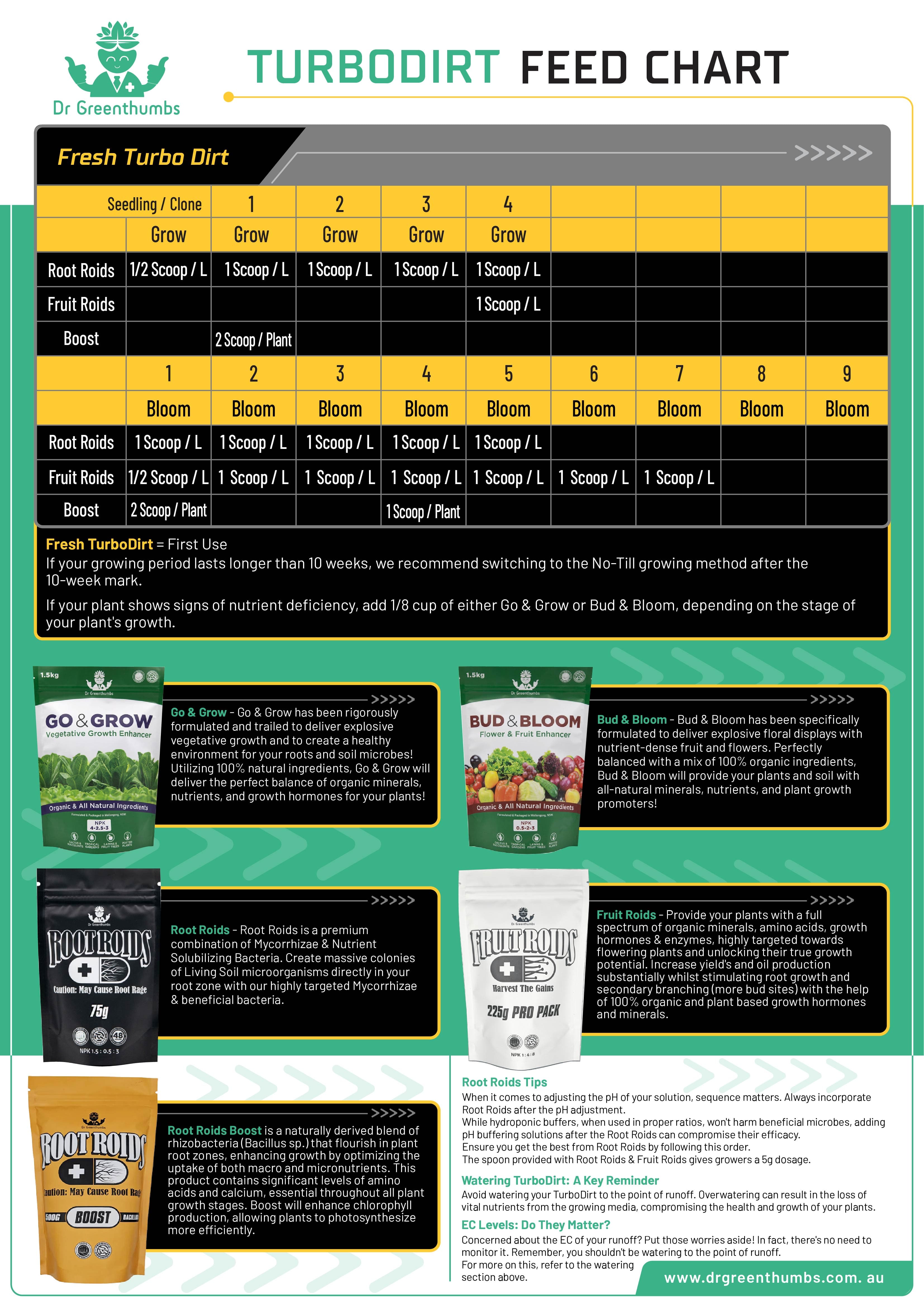
Optional boost. Dust a handful of Root Roids Mycorrhizal Inoculant between layers to jump-start fungal partners.
-
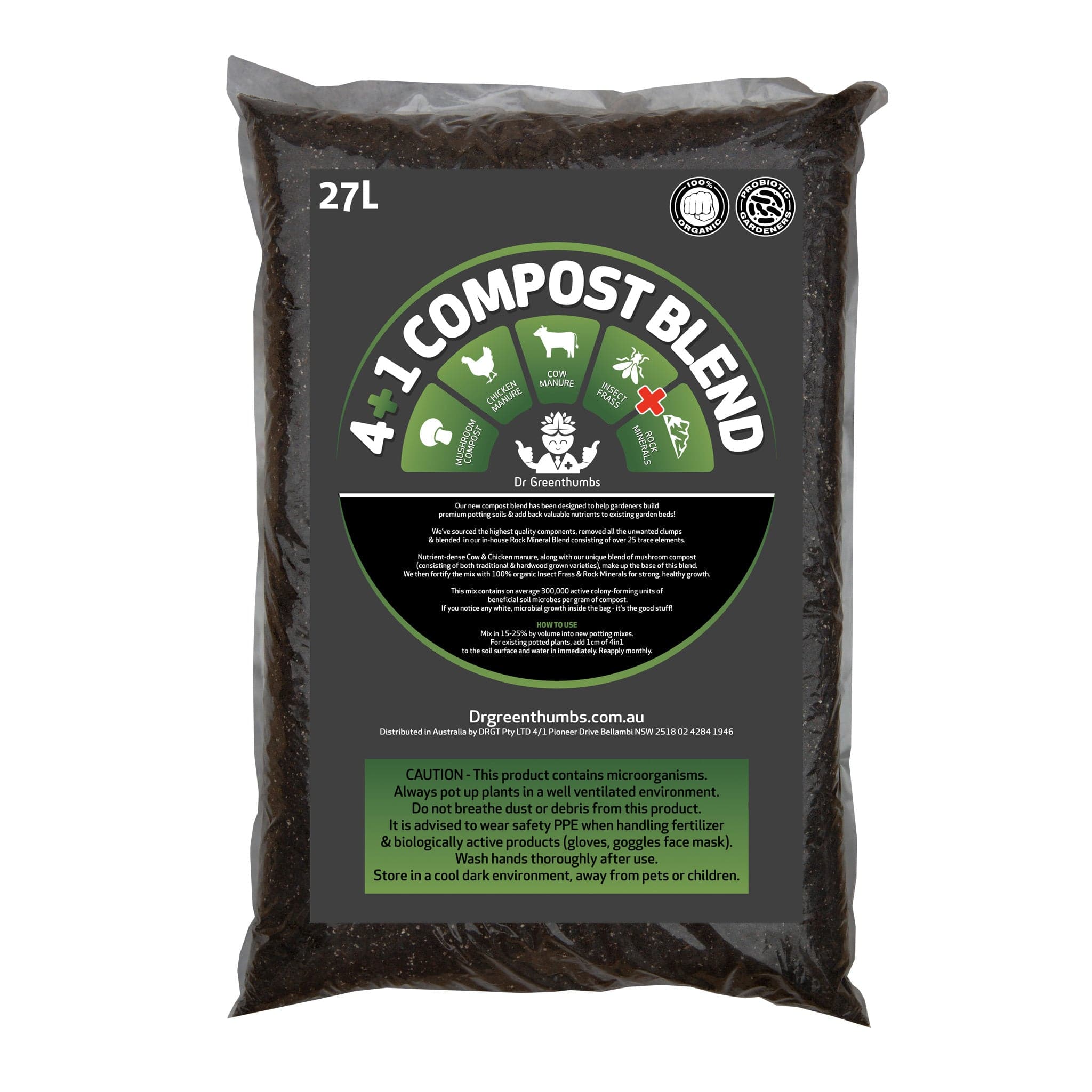
Top it off. Cap with 5 mm of 4+1 Compost Blend to keep things tidy and microbe-rich.
- Repeat quarterly for a living mulch that never depletes.
Top Aussie Plants to Chop
|
Climate Zone |
High-N “Green” Material |
Carbon-Rich Balancers |
|---|---|---|
|
Cool / Temperate |
Comfrey, broad-bean tops, mustard |
Raspberry canes, corn stalks |
|
Sub-tropical |
Pigeon pea, sweet-potato vine |
Banana leaves, lemongrass culms |
|
Arid / Hot |
Cowpea, lucerne, moringa tips |
Saltbush prunings, grapevine cuttings |
Pro move: Inter-plant quick growers like pigeon pea as a “chop bank” around slower fruit trees, then slash-and-feed 3-5× per year.
Troubleshooting & Pro Tips
|
Issue |
Why it happens |
Quick Fix |
|---|---|---|
|
Slugs & snails dive in |
Layers too thick and soggy |
Keep mulch < 10 cm; sprinkle wood ash or coffee grounds on top |
|
Woody bits linger |
High carbon : nitrogen ratio |
Add fresh “greens” or a splash of fish hydrolysate |
|
“Looks messy” |
Front-yard aesthetic worries |
Leave a 20 cm neat edge, push mulch back from paths |
|
Nitrogen tie-up |
Excess sticks without greens |
Pre-mix woody trimmings with Make Your Own Fertiliser Bundle high in alfalfa meal |
FAQ
Does chop & drop attract pests?
Only if the layer stays wet and thick. Keep mulch under 10 cm and vary textures.
Can I use weeds?
Absolutely—just slash before seeds mature, or bin seed heads first.
Is it bush-fire safe?
Finely chopped, moist layers break down fast. In high-risk zones, maintain a 1 m buffer from structures.
How is this different from a compost pile?
Traditional piles centralise and lose some nutrients as heat or leachate; chop & drop keeps everything in situ, locking more carbon and minerals in your soil.
Bottom line
Whether you’re growing tomatoes in Tassie or mangoes in Mackay, chop & drop is the simplest way to turn garden waste into living-soil gold—no bins, no guesswork, just healthier plants and happier microbes.
Next reads for building richer soil with chop-and-drop and compost
Using chop-and-drop in your garden? These guides will help you improve compost speed, build living soil and keep nutrients cycling where your plants need them most.
- From Waste to Nutrient-Rich Soil: The Art of Nutrient Recycling
- Compost Starter Australia
- Organic Gardening 101: Living Soil Aussie Guide
- 5 Secrets Sustainable Soil Health
About the Author