
Here's the thing about houseplants in Australia—they're stuck in pots while the great outdoors gets all the good stuff. No worms doing their magic, no leaf litter breaking down, no seasonal nutrient cycles. Just your lounge room and whatever's left in that potting mix.
Over time, every watering session rinses away the nutrients your plants need. It's like living on toast—sure, you'll survive, but you won't exactly thrive. Your plants start running on empty, and before you know it, they're giving you the silent treatment.
Signs your green mates are getting hangry:
- Growth slower than a Melbourne tram in peak hour
- Leaves going pale or yellow (and not in a good autumn way)
- No new growth, even during our growing season (September to March)
- That droopy look that water just won't fix
Sound familiar? Your plants aren't being dramatic—they're genuinely hungry. The question isn't whether to feed them, it's how.
Table of Contents
- Liquid Fertiliser: The Espresso Shot Your Plants Crave
- Slow-Release Fertiliser: The Set-and-Forget Champion
- A quick word of caution for indoor pots
- The Australian Context: Why It Matters
- When to Use What: Your Quick Reference
- How to apply each type safely
- Do some plants need a different approach?
- The Pro Move: Using Both
- FAQ
- Next reads for choosing the right houseplant feeding routine
If you’d rather skip the guesswork, these are the two easiest options:


Liquid Fertiliser: The Espresso Shot Your Plants Crave
Think of liquid fertiliser as the flat white of plant nutrition—concentrated, fast-acting, and exactly what you need when you need it. These are nutrients diluted in water that go straight to work via your plant's roots.
✅ The Good Stuff:
- Lightning-fast absorption—nutrients hit the root zone immediately
- Easy to adjust—dial it up for hungry feeders, ease off for sensitive souls
- Perfect for our growing season—spring and summer growth spurts love this stuff
- Great for fussy plants—Monsteras, Fiddle Leaf Figs, and other drama queens respond beautifully
❌ The Not-So-Good:
- Needs regular attention (every 2-4 weeks during growing season)
- Easy to overdo it if you're heavy-handed
- More hands-on than some busy plant parents want
Slow-Release Fertiliser: The Set-and-Forget Champion
Slow-release fertilisers are like having a personal chef for your plants. These granules or pellets break down gradually over months, feeding your plants bit by bit without you lifting a finger.
What does “slow-release” fertiliser actually mean?
Slow-release fertiliser isn’t just “fertiliser that lasts longer” — it’s designed to release nutrients gradually over time, rather than all at once.
Most slow-release fertilisers come in one of two forms:
-
Coated pellets or prills – tiny fertiliser granules wrapped in a coating that breaks down with moisture, warmth, and time
-
Organic slow-release feeds – made from natural ingredients that release nutrients as soil microbes break them down
The key thing to know is that release speed isn’t fixed. Heat, watering frequency, and soil moisture all influence how quickly nutrients become available. That’s why slow-release fertiliser behaves very differently in outdoor garden beds compared to indoor pots.
For houseplants, this slow, steady nutrient supply can be helpful — as long as it’s used correctly and suited to the plant and growing conditions.
✅ The Good Stuff:
- Low maintenance magic—one application lasts 2-3 months
- Nearly foolproof—hard to overfeed when nutrients release slowly
- Perfect for busy lifestyles—great for shift workers or frequent travellers
- Handles Australian heat—releases more nutrients when it's warm (exactly when plants need it)
❌ The Trade-offs:
- Results take longer to show
- Not ideal for fast-growing plants or nutrient-deficient ones
- Can't adjust mid-season if your plant's needs change
These are brilliant if you want to set your plants up for success without thinking about it again until next season. Ideal for those summer holidays when you're away for weeks, or if you're the type who forgets to water until your plants start giving you dirty looks.
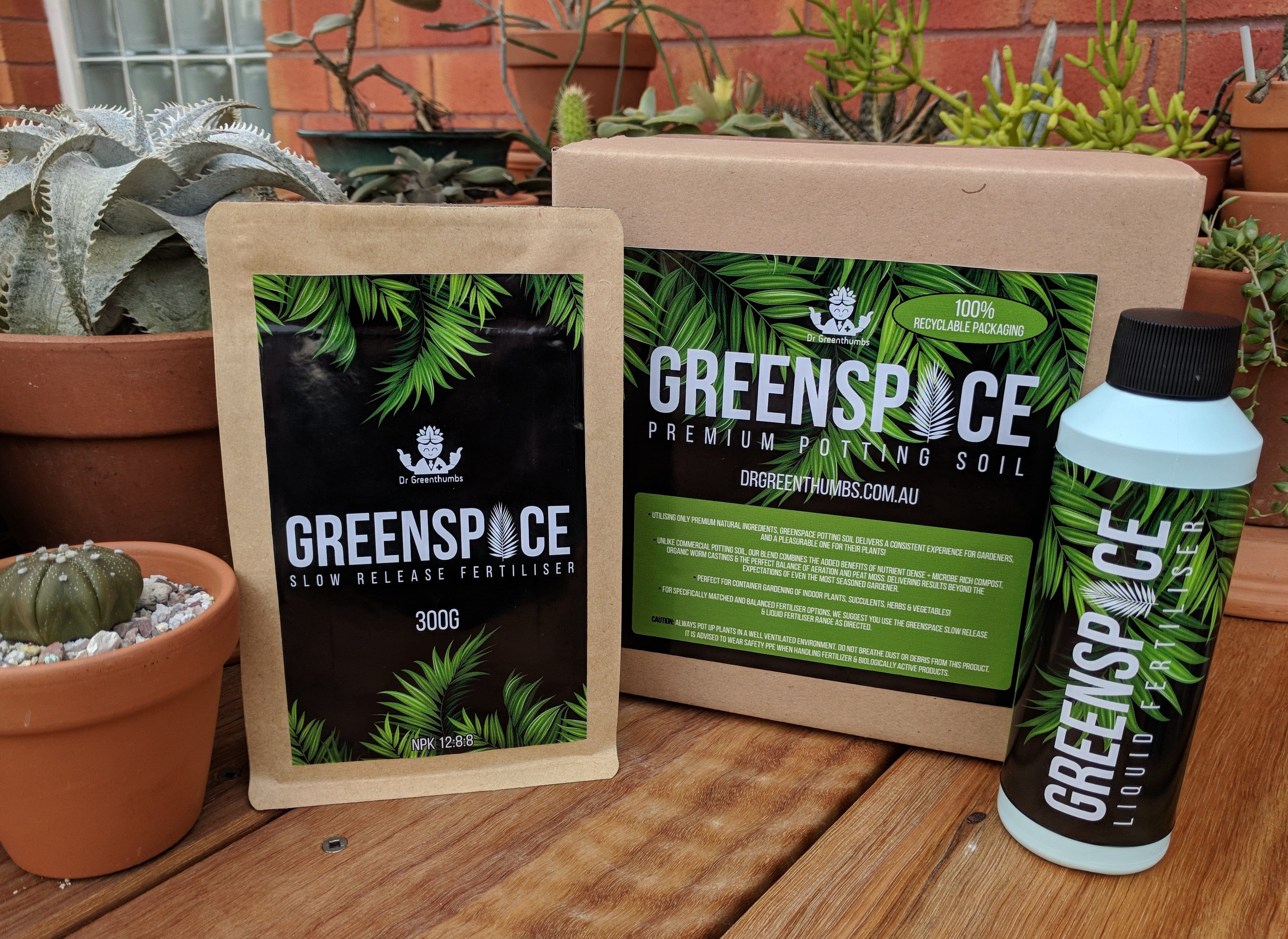
Our GreenSpace Slow Release Fertiliser is perfectly formulated for Australian conditions—it knows to release more nutrients during our hot summers when plants are actively growing.
A quick word of caution for indoor pots
Slow-release fertiliser can work well for houseplants — but indoor pots come with a few extra considerations.
Because pots don’t have the same natural nutrient cycling as garden soil, nutrients can build up over time, especially if the plant is watered frequently or sits in a warm spot near a window.
This can lead to:
-
Excess salts in the potting mix
-
Leaf tip burn or yellowing
-
Slower growth despite regular feeding
To reduce the risk:
-
Use lighter application rates than outdoor recommendations
-
Avoid stacking multiple fertilisers at once
-
Flush the pot with plain water every few months to wash out excess salts
For indoor plants, organic slow-release fertilisers are often the safer option, as they release nutrients more gently and are less likely to overwhelm roots.
The Australian Context: Why It Matters
Let's be real—Australia isn't Europe or North America. Our seasons are different, our soil is different, and our indoor climate challenges are uniquely ours.
Australian considerations:
- Dry air from heating/cooling—increases nutrient uptake needs
- Intense summer heat—even indoors, plants work harder
- Variable humidity—from Darwin's year-round moisture to Adelaide's dry spells
- Longer growing season—especially in warmer states
This means your Northern Hemisphere plant care advice might need tweaking. Your Brisbane Monstera has different needs than one in London, and your Melbourne Fiddle Leaf Fig faces different challenges than one in New York.
And since watering is half the battle with Aussie plants, you’ll love this guide: Never Kill Another Plant Again: The Moisture Meter Hack That Australian Families Swear By.
When to Use What: Your Quick Reference
|
Your Situation |
Best Choice |
|---|---|
|
New to plant parenting |
Slow-release |
|
Propagating cuttings |
Liquid |
|
Growing season boost (Sept-March) |
Liquid or combination |
|
Holiday/travel frequently |
Slow-release |
|
Plant showing deficiency signs |
Liquid |
|
You love routine plant care |
Liquid |
|
Busy lifestyle, want simple |
Slow-release |
|
Fast-growing plants (Pothos, Monstera) |
Liquid |
|
Slow growers (Snake plants, ZZ plants) |
Slow-release |
How to apply each type safely
Liquid fertiliser
-
Apply as a soil drench, not on dry potting mix
-
Water the plant lightly first if the soil is very dry
-
Avoid fertilising in the heat of the day — morning or evening is best
-
Skip feeding stressed or recently repotted plants until they settle
Slow-release fertiliser
-
Keep pellets away from the main stem and leaves
-
Gently mix into the top layer of potting mix rather than piling it on the surface
-
Water in well after applying
-
Don’t reapply “just in case” — more isn’t better with slow-release
Correct application makes a bigger difference than which fertiliser you choose.
Do some plants need a different approach?
Yes — feeding isn’t one-size-fits-all.
-
Succulents and cacti
These plants are watered infrequently, which means slow-release fertiliser may release nutrients very slowly or unevenly. A diluted liquid feed during active growth often works better. -
Fast-growing tropicals (like monstera, philodendron, pothos)
These respond well to a combined approach — slow-release for background nutrition, plus occasional liquid feeding during spring and summer. -
Orchids
Orchids generally prefer very gentle, regular liquid feeding rather than slow-release pellets, which can be difficult to manage in specialised potting mixes.
Matching fertiliser type to plant behaviour helps avoid guesswork and feeding issues.
The Pro Move: Using Both
Here's where it gets interesting—you don't have to choose sides. Many experienced Australian plant parents use both, and here's why it works brilliantly:
The combo approach:
- Apply slow-release fertiliser at the start of growing season (September)
- Boost with liquid feed every 2-4 weeks during peak growing months
- Ease off liquid feeding as things cool down (April onwards)
It's like giving your plants a steady diet with the occasional power smoothie. The slow-release keeps them consistently fed, while the liquid gives them that extra boost when they're putting on new growth.
For a complete setup, check out our organic growing range that includes both liquid and slow-release options designed specifically for Australian growing conditions.
FAQ
Can I use both liquid and slow-release fertiliser?
Yes. Many indoor gardeners use slow-release fertiliser as a base, then add liquid feeding during active growth periods.
Which is better for indoor plants?
Liquid fertiliser offers more control, while slow-release provides consistency. The best option depends on your plant type, watering habits, and how hands-on you want to be.
How often should I fertilise houseplants?
Liquid fertiliser is typically applied every 2–4 weeks during the growing season. Slow-release fertiliser is usually applied every few months, depending on the product.
Should I fertilise houseplants in winter?
Most indoor plants grow more slowly in winter. Reduce feeding rather than stopping completely, especially if plants are in bright, warm conditions.
Getting Started: Your Next Steps
If you're new to plant feeding: Start with our GreenSpace Slow Release Fertiliser—it's virtually impossible to mess up and works brilliantly in Australian conditions.
If you want faster results: Go with GreenSpace Liquid Fertilizer, specially formulated for foliage plants like Monsteras, Aroids, and Orchids. Perfect for those Instagram-worthy plant collections.
If you're ready to level up: Consider combining the pair for a complete system that covers all your plants' nutritional needs naturally.
The Bottom Line
Don't overthink it. There's no perfect fertiliser for every situation, but there's definitely a better choice for your specific plants, lifestyle, and the unique challenges of growing indoors in Australia.
Your plants aren't asking for much—just consistent nutrition and a bit of attention. Whether you choose liquid for control and speed, slow-release for simplicity, or both for the best of all worlds, the key is actually feeding them.
Because at the end of the day, healthy plants make for happy homes—and there's nothing more Australian than that. 🌿
Want to expand your collection with stress-free, pet-safe plants? Check out: Your Family's Safe Haven: 12 Low-Light Indoor Plants That Love Australian Homes (And Won't Harm Your Pets).
Next reads for choosing the right houseplant feeding routine
Comparing liquid and slow-release feeds? These guides will help you choose the right fertiliser, spot nutrient problems early and make sure your potting mix supports healthy indoor growth.
- Indoor Plant Fertiliser Guide Australia
- Indoor Plant Nutrient Deficiency: Fix Fast
- Indoor Potting Mix Australia
- Indoor Plant Care Aussie Guide
About the Author