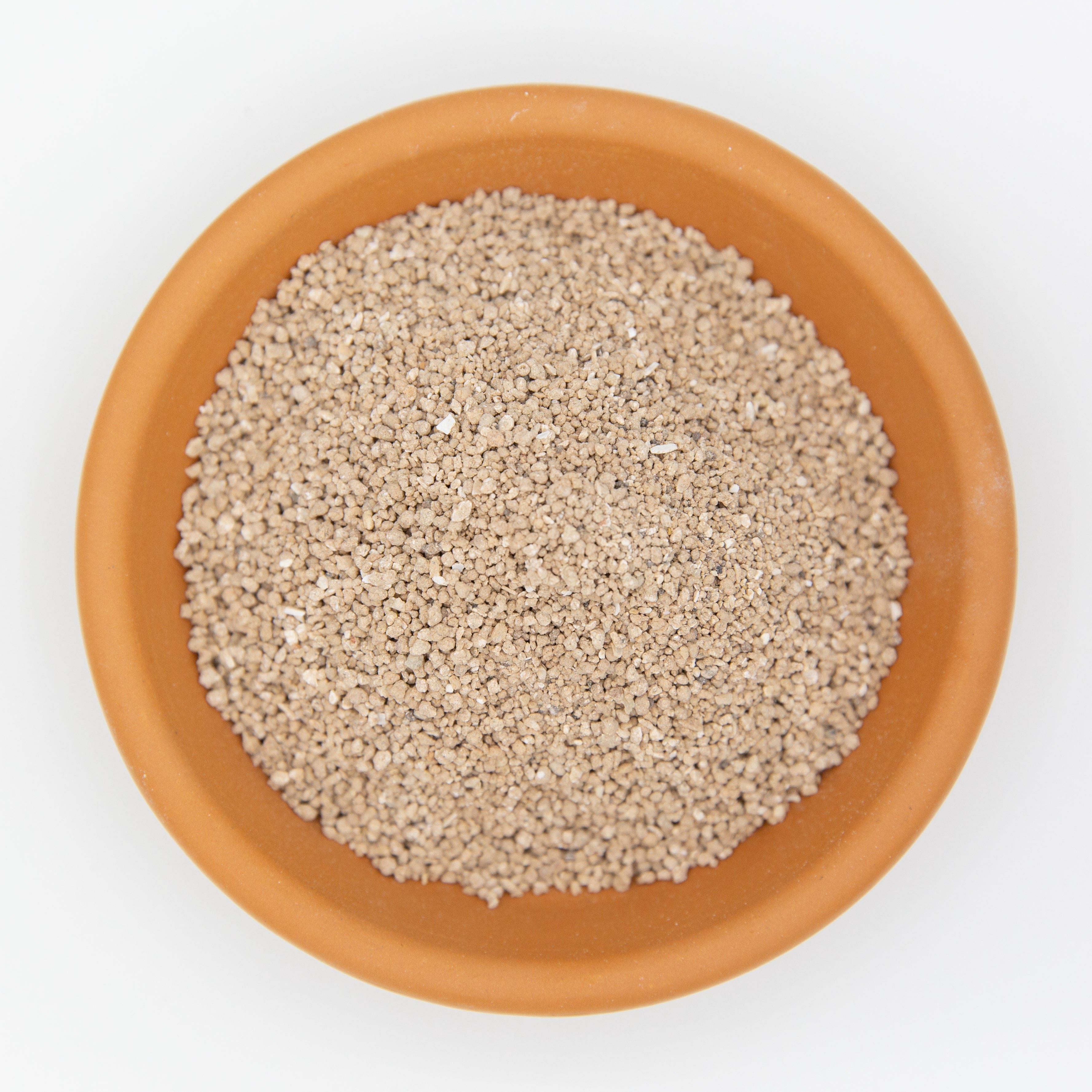
What exactly is Gypsum soil conditioner?
A powdered gypsum (calcium sulfate dihydrate) clay-breaker that supplies soluble calcium and sulfur to improve soil structure — especially useful where clay is tight and/or sodic.
What sizes are available?
500 g, 1 kg and 2.5 kg bags — handy for pots through to beds and small lawns.
Does gypsum change soil pH like lime does?
No. Gypsum is basically pH-neutral. It adds calcium and sulfur without raising pH (lime raises pH). If you need to change pH, use the right product after a soil test.
So when does gypsum actually help?
When clay is dispersive/sodic (high sodium), water ponds, and soil seals after rain. Calcium in gypsum kicks sodium off clay particles so they flocculate (clump) and let air/water through.
When is gypsum not the fix?
If your clay isn’t sodic, gypsum may do very little. In that case, focus on organic matter, aeration, and mulch. (Don’t add sand to clay.)
How much should I use in garden beds?
As a general garden guide: ~0.5–1 kg per m² on established beds; very tight/heavy areas may need up to ~1–2 kg per m², split over a couple of applications and watered in. Always adjust to soil tests.
What about on lawns?
Typical Aussie lawn advice is ~5–10 kg per 100 m² (0.05–0.1 kg/m²). Aerate first if you can, then spread and water in.
Can I throw the Gypsum soil conditioner on top, or do I need to dig it in?
Broadcast it evenly and water in. For renovations or new beds, lightly fork into the top 5–10 cm so it actually meets the clay.
How fast will I see improvements?
Gypsum is moderately soluble; you’ll notice better infiltration after good watering/rain events, but real structure changes take weeks–months and multiple wet/dry cycles.
Do I still need compost if I’m using gypsum?
Yep. Gypsum fixes the chemistry (sodium/calcium) part; organic matter fixes biology and ongoing structure. Use both for the win.
What’s the difference between gypsum and lime/dolomite?
All supply calcium, but only lime (CaCO₃) or dolomite (CaMg(CO₃)₂) raise pH. Gypsum doesn’t. Use lime/dolomite for acidity; gypsum for sodicity/structure and Ca+S.
Is Gypsum soil conditioner safe around pets and kids?
It’s considered non-toxic/minimally irritating. Avoid dust, apply sensibly, and water in after spreading so curious paws/toddlers aren’t licking powder.
Can I overdo it?
Yes. Massive, repeated doses without a soil test can imbalance calcium:magnesium and waste money. Stick to practical rates and test heavy problem spots.
Will it help with salty/greywater-affected spots?
Often, yes. Gypsum helps displace sodium so salts leach with deep watering/rain — particularly on sodic clays.
Does pelletised/prilled gypsum work better than powder?
Different form, same chemistry. Pellets are easier to spread; effectiveness depends on actual gypsum content and getting it into solution with water.
Good time of year to apply?
Anytime you can water it in, but it’s convenient before seasonal rains or after aeration/top-dressing.
How often should I reapply Gypsum soil conditioner?
Annually for stubborn clay areas or after you’ve done a soil test and see sodium creeping back. Light maintenance dressings are common on lawns/beds.
Does Gypsum soil conditioner help with compaction from foot traffic or mowers?
Indirectly — by improving structure and drainage. Pair gypsum with aeration and organic matter for compaction from traffic.
Can I use Gypsum soil conditioner in pots and raised beds?
Small amounts are fine if mixes are clay-heavy or you need calcium/sulfur, but most potting mixes drain well already. Go light. (Compost quality matters more.)
Is Gypsum soil conditioner okay for vegie patches, roses and natives?
Yes — gentle on roots and doesn’t bump pH. Great where clays stay sticky. Always water in.
Will Gypsum soil conditioner “melt” clay into loam by itself?
No silver bullets. Gypsum addresses the sodium issue; you still build loam with organics, mulch, roots and time.
How do I know if my clay is sodic?
A lab test is best. Quick DIY clue: a soil slake/dispersion jar — if a clod turns to cloudy soup, sodicity is likely and gypsum is worth trying.
Can I mix Gypsum soil conditioner with other amendments or fertilisers?
Generally yes. It plays nicely with composts and most fertilisers. Avoid stacking huge rates with lime/dolomite unless a soil report calls for it.
Any crops that especially love calcium/sulfur?
Brassicas and legumes often respond to calcium and sulfur. Gypsum supplies both without altering pH.
How long does a bag of Gypsum soil conditioner go?
Rule-of-thumb coverage at ~1 kg/m²:
• 500 g ≈ 0.5 m² • 1 kg ≈ 1 m² • 2.5 kg ≈ 2.5 m². Adjust down if you’re doing light maintenance rates.
Is Gypsum soil conditioner suitable for hydroponics?
No — this is a soil amendment. Use hydro-specific nutrients/media.
Any handling tips?
Wear a dust mask if it’s windy, spread evenly, water in thoroughly, and wash off foliage/hardscape after use.
Will Gypsum soil conditioner help drainage under new turf?
It can, especially if you prep the subsoil: aerate/rip lightly, add compost, apply gypsum to clay patches, level, then lay turf.
Why do some folks say gypsum is a “myth”?
Because on non-sodic clays it doesn’t do much — it’s not a universal cure. On sodic clays, science and field trials back it. Context matters.
Can I combine Gypsum soil conditioner with cover crops or mulch?
Absolutely. Deep-rooted covers + mulch + gypsum is a strong combo for clay rehab over seasons.
Where does Gypsum soil conditioner come in on cost vs impact?
It’s one of the cheapest clay-structure levers you can pull. Start with a sensible rate, observe after proper wetting, and re-dose only where you see gains.
Anything else to watch out for?
Don’t expect results without water; gypsum needs dissolving and movement into the profile. Keep organic matter going, avoid compaction, and re-test problem zones periodically.