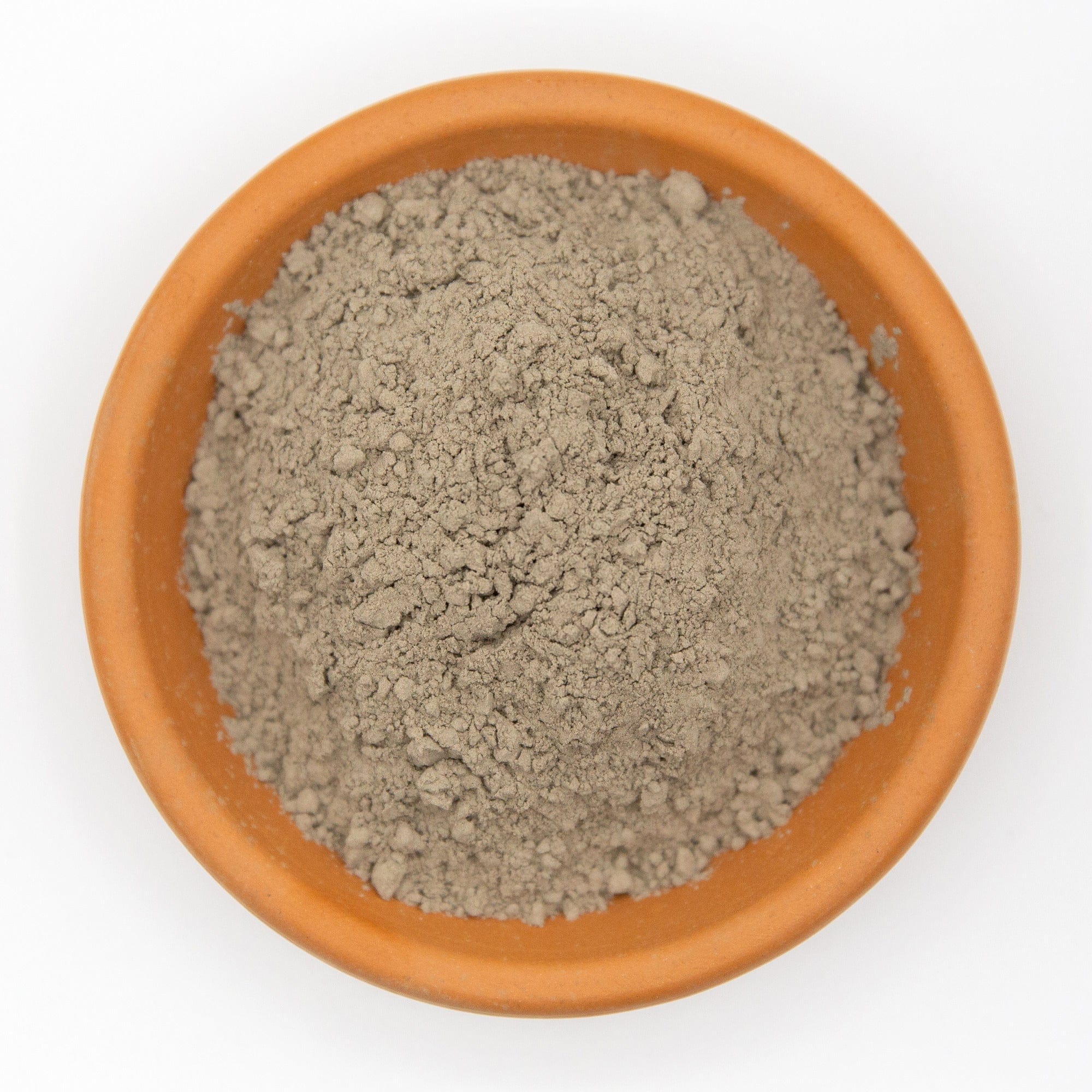
What exactly is Glacial Rock Dust?
Glacial rock dust is a natural mineral powder made from Canadian glacial moraine—rocks crushed and ground by glaciers—rich in trace elements including iron, calcium, magnesium and manganese. It’s used to remineralise soil and boost overall plant health.
What’s special about Glacial Rock Dust?
It’s 100% pure Canadian glacial moraine and exclusive to DRGT in Australia, with a guaranteed analysis showing Fe ~2.9%, Ca ~2.0%, Mg ~1.0% and Mn ~0.06%.
What does “High Iron” mean for my plants?
It’s a handy source of iron to support chlorophyll production and greener growth—especially in iron-hungry species or in mixes low in available Fe.
Where can I use Glacial Rock Dust?
Everywhere you’d use a remineraliser: veggie beds, fruit trees, lawns, garden beds, raised beds, containers, and compost.
How much should I apply in the garden or landscape?
Use 1–2 cups per square metre and lightly work it into the surface. Water in.
What’s the container/potting mix rate?
Premix at ~1 tbsp per 3 L of potting mix. For top-dressing pots, use ~1 tbsp per 3 L of soil and scratch in. Repeat monthly or as needed.
Can I add Glacial Rock Dust to compost?
Yep—sprinkle through your pile to enrich compost with trace elements and support microbe activity. (Glacial dust is commonly recommended as a compost additive.)
Does Glacial Rock Dust replace fertiliser?
No. Think of it as a mineral/trace-element insurance policy. It’s slow-release; pair it with your usual organic fertilisers for NPK.
How fast will I see results?
It’s a geology-paced input—benefits accrue over weeks to months as microbes weather the particles. (Rock dusts release minerals slowly as they dissolve and interact with soil biology.)
Is Glacial Rock Dust safe for edible gardens?
Yes—glacial rock dusts are natural mineral products used widely on food crops. As with any mineral amendment, source quality matters; this product provides a published analysis.
Any heavy metal concerns?
Quality glacial dusts are tested and used in organic systems; if you’re cautious, you can request a COA.
Is Glacial Rock Dust suitable for phosphorus-sensitive Australian natives?
It’s very low in P (none listed in the guaranteed analysis), so it’s generally a safer remineraliser choice for P-sensitive natives compared with high-P inputs. Always start light and observe.
Will Glacial Rock Dust change my soil pH?
Glacial dust tends to be near-neutral and is used mainly for minerals/trace elements rather than pH shifts. (Basaltic dusts are more associated with pH buffering upward in acidic soils.)
Can I use Glacial Rock Dust on my lawn?
Yes—broadcast lightly (same 1–2 cups/m² guideline), then water in to wash fines off the blades.
Is Glacial Rock Dust OK for houseplants and indoor pots?
Yep—premix into potting soil or use a light top dress scratched in. Go sparingly in small pots and water in well to avoid dust.
Can I use Glacial Rock Dust in hydroponics?
Not directly in nutrient solution. It’s largely insoluble and can settle/clog systems. If you’re running soilless containers (not recirculating hydro), you can remineralise the media at potting.
Will Glacial Rock Dust boost microbes and worms?
It helps by supplying minerals and creating better habitat/structure—conditions microbes and earthworms like.
How often should I reapply?
For garden beds and lawns, 1–2 light dressings a year is typical; for pots, a small monthly top-dress is fine if plants are actively growing. (Follow the product’s monthly pot top-dress note; beds don’t need constant reapplication.)
Can I blend Glacial Rock Dust with other rock dusts (e.g., basalt)?
Yes—many growers pair glacial (broad trace suite, including iron) with basalt (silica-rich) for coverage. Keep total dust additions reasonable.
What does Glacial Rock Dust actually do to soil?
Improves mineral balance and, over time, soil structure, moisture retention, drainage and CEC; plants can show better vigor and resilience.
Any tips to avoid mess or staining?
Because this is “High Iron,” don’t leave powder sitting on pavers/concrete. Sweep/blow it off hard surfaces and water the treated soil area—iron fines left on stone can rust-stain when wet.
Will it make my concrete or stone paths rust?
It won’t damage them, but iron residues can create cosmetic rust marks if dust sits on wet masonry. Keep applications on soil and clean up nearby hardscape immediately.
Is it dusty—do I need PPE?
It’s a fine powder. Apply on a still day, avoid breathing dust, and consider a simple dust mask—general stone/mineral dust guidance always recommends minimising inhalation.
Does Glacial Rock Dust expire or go off?
Mineral powders don’t “expire,” but they’ll clump if they get damp. Store sealed, cool and dry; if it cakes, break it up and use as normal.
Can I mix Glacial Rock Dust into seed-raising mixes?
In tiny amounts, yes—aim for the same ~1 tbsp per 3 L premix guideline. With very young seedlings, lighter is better.
Will Glacial Rock Dust burn plants?
No—there’s no salt/NPK burn risk at the suggested rates. It’s a slow-release mineral input.
Does Glacial Rock Dust help with yellowing leaves (chlorosis)?
If chlorosis is due to low iron availability, the added Fe can help over time, especially in mixes that don’t already supply it. For fast fixes, pair with appropriate chelated iron while the dust works long-term.
If you’re troubleshooting chlorosis, our yellow-leaf diagnosis guide explains how to distinguish iron deficiency from nitrogen and magnesium issues.
How does Glacial Rock Dust compare to Azomite/basalt?
Glacial = broad trace element suite from mixed glacial sediments (this one’s Fe-forward). Basalt = higher silica and often used for structure/stress tolerance. Both are complementary, not either/or.
Is Glacial Rock Dust organic-friendly?
Glacial rock dusts like Gaia Green’s are Ecocert-approved in Canada; as a mined mineral, they’re commonly accepted in organic systems. Check your local scheme if you’re certifying.
Will Glacial Rock Dust fix poor yields by itself?
It’s not a silver bullet—treat it as part of a system (good compost, balanced fertiliser, proper watering, pH, and biology). Rock dust supports, it doesn’t replace, good culture.
Can I brew Glacial Rock Dust into compost tea?
You can whisk a spoonful into a finished tea as you apply (for distribution), but don’t expect it to dissolve—it’s there for slow mineralisation in the soil after you drench.
Any reason not to use Glacial Rock Dust?
Avoid dumping heavy amounts into recirculating hydro/aquaponic beds (fines can settle and clog); stick to soil, compost, and potting mixes.
What size bags and what’s the coverage?
500 g, 1 kg and 22.5 kg. As a rough guide, 1–2 cups/m² means a 1 kg bag will lightly cover multiple square metres depending on your cup size and soil needs.
Bottom line—when should I reach for Glacial Rock Dust?
When you want a clean, low-P, trace-element boost (especially iron) for veggies, fruit, ornamentals, natives, lawns or compost. Use light, regular dressings and let biology do the rest.
Quick recipe: how would you add Glacial Rock Dust to a new raised bed?
Blend ~1–2 cups/m² through the top 5–10 cm pre-planting, add compost, then mulch. Top-up with a light sprinkle mid-season if plants are feeding hard. (Based on the product’s garden rate and common slow-release practice.)