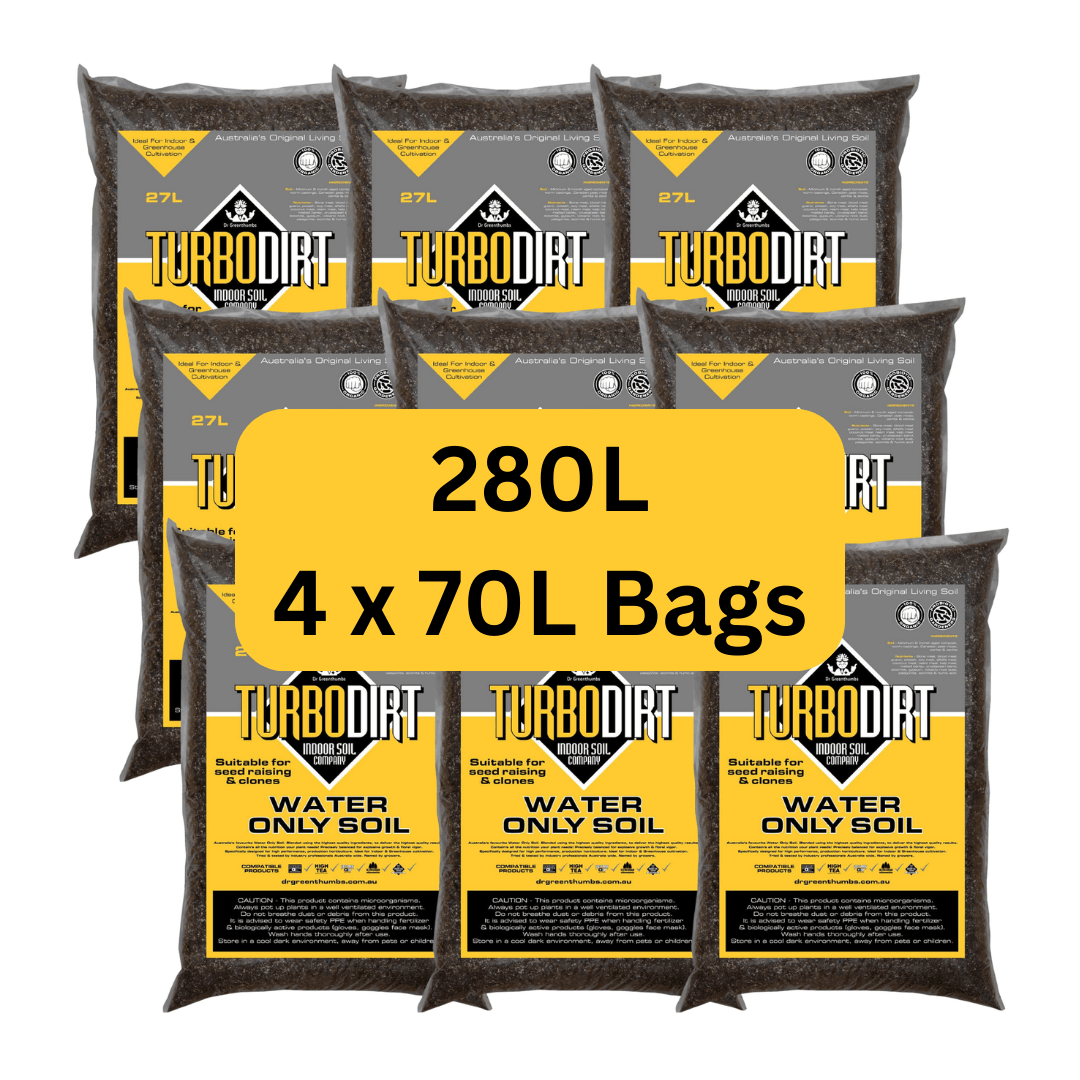
What is Dr Greenthumbs TurboDirt and how does it work?
TurboDirt is a 100% organic, Australian-made “water-only” living soil designed to carry plants through a full grow cycle with minimal feeding. It supports beneficial microbes and fungi that help cycle nutrients—so you mainly focus on watering properly and maintaining soil health.
What ingredients are in Dr Greenthumbs TurboDirt?
The base includes aged compost, worm castings, peat moss, perlite, and zeolite. It’s amended with organic inputs like bone meal, kelp, crustacean blend, volcanic rock dust, humic acid, and beneficial microbes like mycorrhizae for long-term nutrition and root health.
Is TurboDirt safe for seedlings, transplants, and edible plants?
Yes—it’s suitable for seedlings, clones, transplants, and edible crops. For extra-sensitive varieties, you can start in a gentler mix and transplant into TurboDirt once established. It’s ready to use out of the bag—no pre-composting needed.
How long does TurboDirt feed plants, and do I need fertiliser?
It typically supports a 9–10 week cycle without bottled nutrients. Heavy feeders, long veg periods, or demanding genetics may need top dressing later. Start simple, monitor plant health, and only supplement if needed.
Can I use TurboDirt indoors, outdoors, or in raised beds?
Yes—TurboDirt works well in pots indoors and outdoors. It can also be used in raised beds, but consistent moisture and mulch are important. It’s compatible with systems like Blumats, EarthBoxes, and self-watering planters when managed correctly.
How should I water Dr Greenthumbs TurboDirt?
Water gently and evenly—aim for “moist, not wet.” Avoid flooding, full dry-backs, or soaking one spot. Top watering is preferred for living soil. A pump sprayer or gentle watering can helps prevent dry pockets and runoff.
Do I need to pH my water or dechlorinate it?
Living soil is more forgiving than hydro, but extreme tap water can still cause issues. Dechlorinating is helpful for protecting microbes. Most growers use rainwater, filtered water, or allow tap water to sit before use.
Should I add Root Roids, Fruit Roids, or compost teas?
They’re optional but beneficial. Root Roids support early root development, while Fruit Roids boost flowering microbes. Compost teas can also help. TurboDirt works without them, but these additions can enhance microbial life and plant performance.
Does TurboDirt attract pests like fungus gnats?
It can if the top layer stays constantly wet. To prevent gnats, let the surface dry slightly between waterings, improve airflow, and consider adding a dry top layer like straw or mineral mulch. A healthy soil ecosystem helps keep pests in check.
Why is my plant showing deficiencies in TurboDirt?
Common causes include inconsistent moisture, poor root health, or plants with unusually high nutrient needs. Check watering habits first. If needed, top-dress with organic amendments instead of switching to bottled nutrients.
What if my soil is staying too wet or drying too fast?
Too wet? Improve airflow, use smaller pots, or water less frequently. Too dry? Use mulch, water more evenly, or switch to plastic pots over fabric. Matching pot size and watering to your environment makes a big difference.
Can I reuse Dr Greenthumbs TurboDirt?
Yes—reuse is a key part of TurboDirt’s value. Remove or chop old roots, refresh with compost and dry amendments, re-inoculate microbes, and keep it evenly moist. With proper care, it can support multiple cycles.
What pot size is best, and can I mix TurboDirt with other soils?
Larger pots are better for moisture and nutrient buffering. Small pots dry out faster and limit the “water-only” benefits. You can mix in other soils or coco, but this may shorten the nutrition window and increase feeding needs.
Can I use TurboDirt for houseplants or herbs?
You can, but it’s more nutrient-rich than typical indoor mixes. For houseplants like monstera or philodendrons, consider blending it with bark or perlite. It’s excellent for herbs and vegetables when pot size and watering are matched properly.
What’s the best way to get results with TurboDirt?
Keep moisture steady (not soaked or bone dry), water gently, avoid adding bottled nutrients unless needed, and maintain airflow. The biggest mistake? Overwatering, then trying to fix it with more inputs. Let the soil do the work.