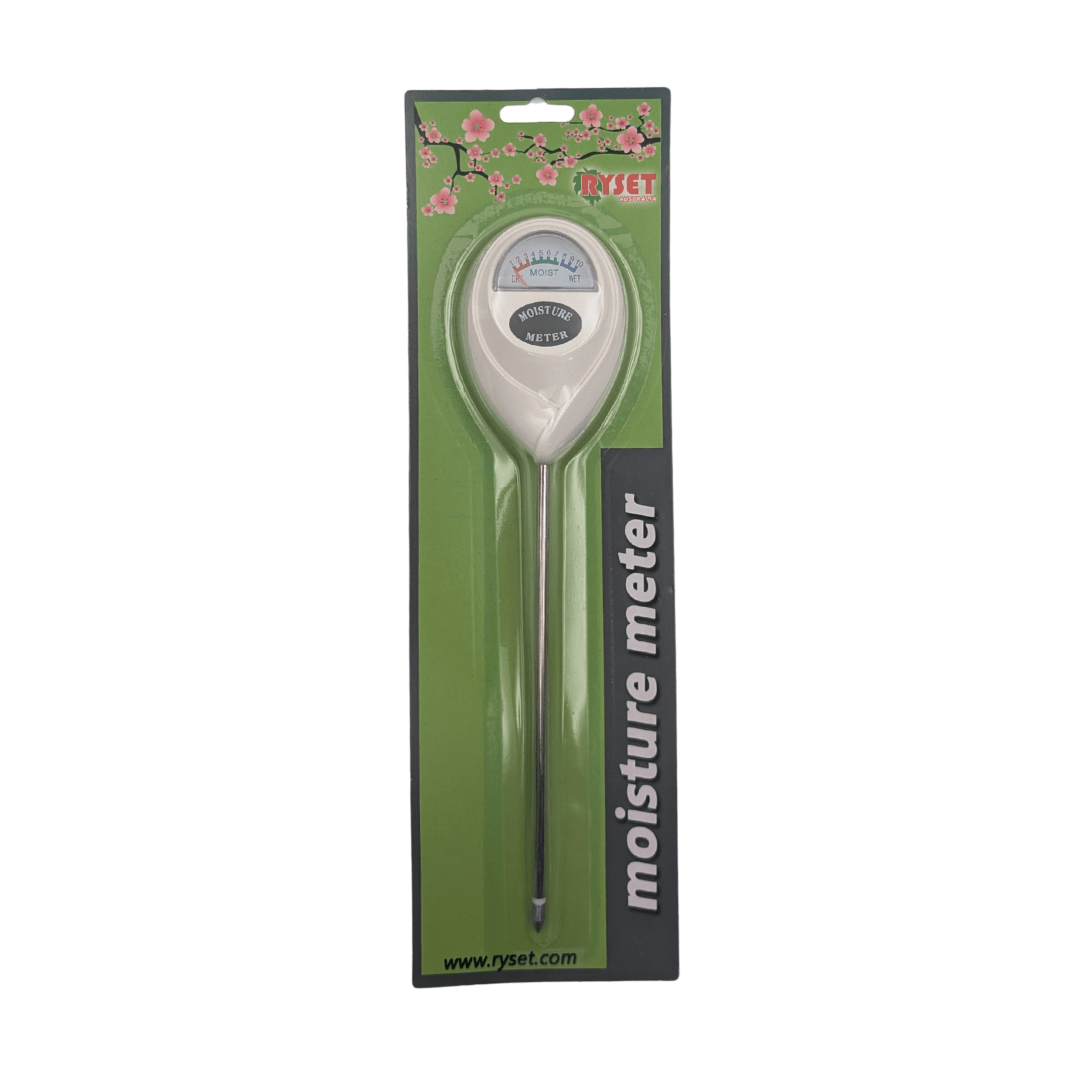
What does the Soil Moisture Meter measure, and how does it work without batteries?
The Soil Moisture Meter measures how wet or dry the soil is at root level. It’s a simple analog tool with no batteries. The probe reacts to changes in soil conductivity: wetter soil conducts better, which moves the needle. You’re reading real soil conditions, not guesswork based on surface appearance.
How do I use the Soil Moisture Meter correctly for accurate readings?
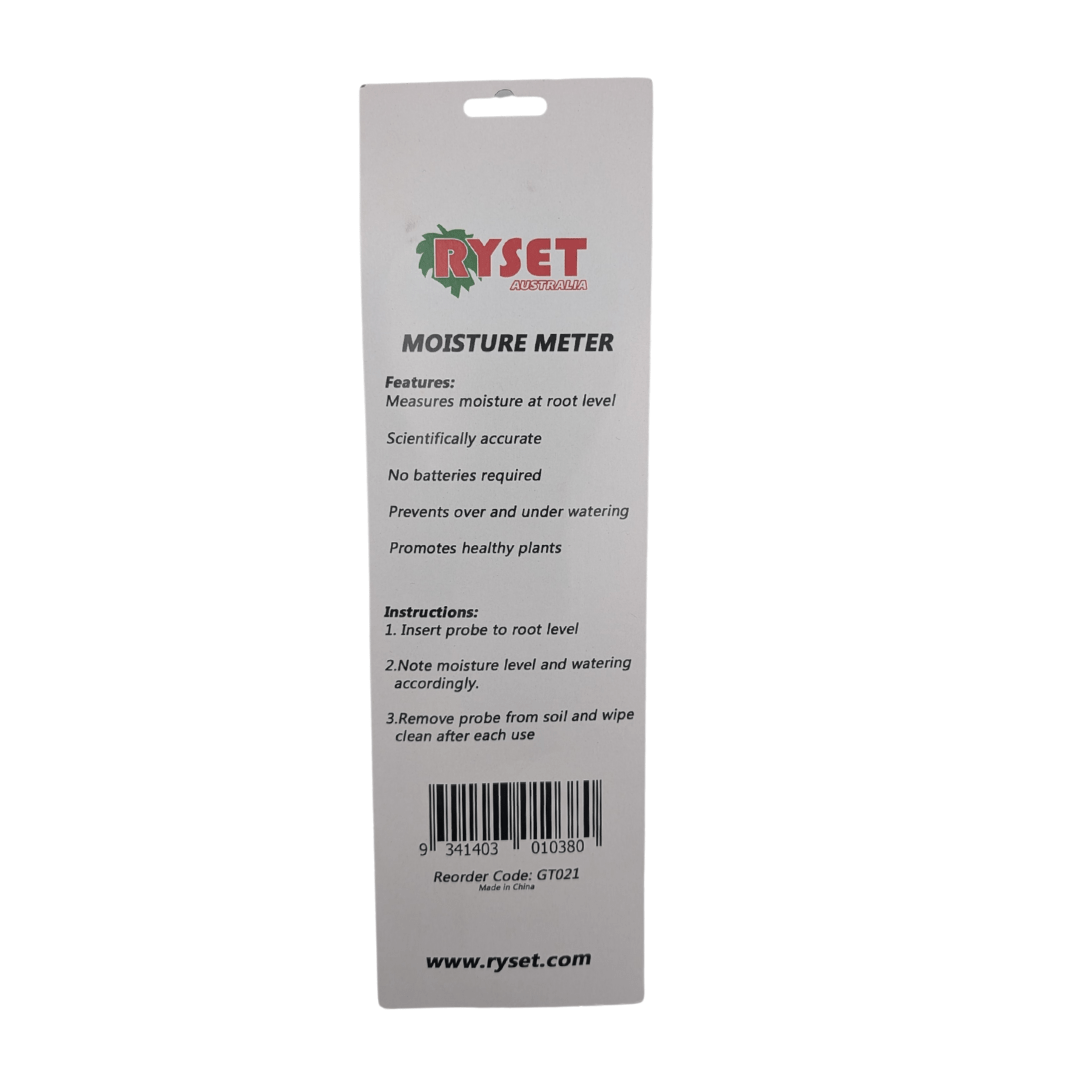
Insert the probe gently about 2–4 inches into the soil, aiming near the root zone rather than right against the stem. Wait a few seconds for the needle to settle, then read it. In larger pots or beds, take two or three readings in different spots since moisture is rarely even.
When should I water based on the Soil Moisture Meter reading?
In most cases, water when the meter is trending dry, but plant type matters. Succulents and cacti prefer fully dry soil before watering, while most houseplants like watering as soil moves from moist to dry. Veggies and herbs usually prefer more consistent moisture without staying soggy.
How accurate is a Soil Moisture Meter for houseplants?
It’s very useful as a guide, especially for preventing overwatering. Like any simple meter, it’s not laboratory equipment. The best results come from combining the reading with common sense cues like pot weight, drainage, and how the plant actually looks.
Can a Soil Moisture Meter help prevent overwatering and root rot?
Yes. Root rot usually happens when soil stays wet for too long below the surface. The meter helps you avoid watering again just because the top looks dry, even though the root zone is still wet.
Can the Soil Moisture Meter help prevent underwatering?
Also yes. Sometimes soil looks fine on top but is dry deeper down where roots actually live. The meter helps you catch that early so plants don’t quietly dry out while looking “okay” on the surface.
Does the Soil Moisture Meter work in all soil types?
It works best in regular potting mix and garden soil. In very chunky mixes, bark-heavy blends, or coco coir, readings can vary more and benefit from multiple tests. It’s not reliable in LECA, semi-hydro systems, or straight water, since those don’t behave like soil.
Can I use the Soil Moisture Meter indoors, outdoors, or in garden beds?
Yes. It works for indoor plants, outdoor pots, garden beds, lawns, and greenhouses. In cache pots, be careful of water collecting at the bottom. For beds and lawns, take readings where roots actually grow, not just at the surface.
Why does the Soil Moisture Meter sometimes give strange or inconsistent readings?
Moisture is uneven in soil. Airy mixes, mineral buildup, hydrophobic dry soil, or poor probe contact can affect readings. Test a couple of spots and wipe the probe clean. Use the meter as a trend indicator, not a single-point verdict.
How do I clean, store, and look after the Soil Moisture Meter?
Wipe the probe clean after each use with a dry cloth. If needed, use a slightly damp cloth and dry it fully. Don’t rinse it under running water or leave it buried in soil. Store it clean and dry so the probe doesn’t corrode or bend.
Is the Soil Moisture Meter good for beginners or people who forget to water?
Yes. It’s one of the easiest tools for beginners to avoid overwatering and guessing. It also helps build better watering habits over time by showing what your plants actually need instead of following rigid schedules.
Can the Soil Moisture Meter help save water and improve plant health?
Absolutely. By watering only when needed and avoiding constant soggy soil, you reduce water waste and stress on roots. It can also help with issues like fungus gnats, drooping leaves, and inconsistent growth caused by poor watering habits.