
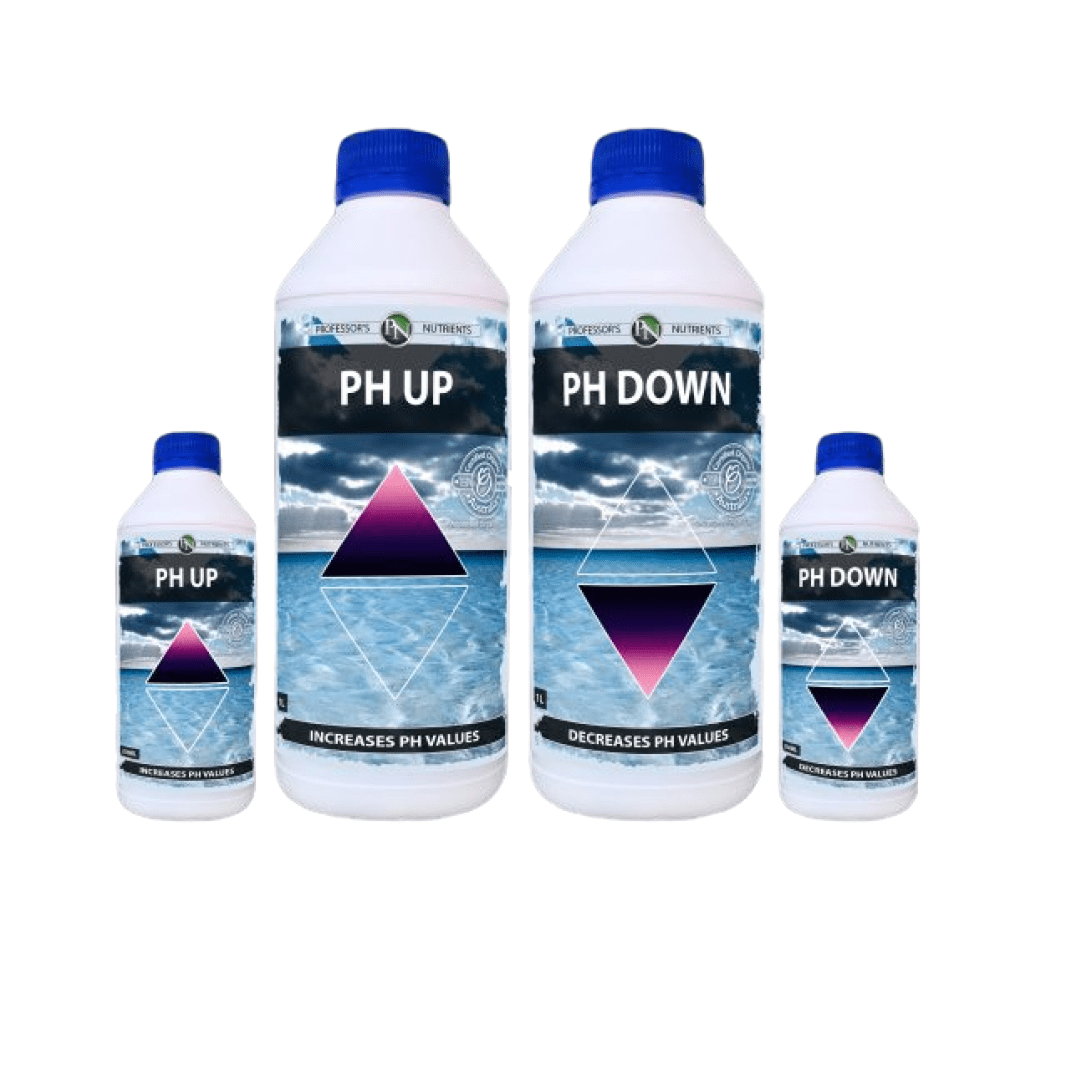

Professor Nutrients Organic pH Buffer (Up or Down)


Size: pH Down 250ml
Price:
Sale price$20.00

Pickup available at Bellambi

Usually ready in 24 hours

Description

Achieve the perfect nutrient balance with Professor's Nutrients Organic pH Buffer. Available in both pH Up and pH Down variants, this buffer is essential for maintaining the ideal pH range in your hydroponic or soilless grow systems.

Proper pH levels are critical for nutrient uptake, plant vitality, and maximizing yields. This organic formulation helps you fine-tune your pH to prevent deficiencies, lockouts, and stunted growth, ensuring your plants thrive from seedling to harvest.

Features

  • pH Up raises, pH Down lowers your solution’s pH

  • Improves nutrient absorption and prevents lockout

  • Optimizes root health and plant development

  • Suitable for both growth and bloom stages

  • Ideal for hydroponics and soilless media

Why You Should Buy

Maintaining the right pH range is the cornerstone of plant success. This organic pH buffer gives growers the control they need without compromising plant safety. Easily adjustable and highly effective, it supports healthier roots, faster growth, and bigger yields.

Directions for Use

  • Test a small sample of your nutrient solution using a reliable pH meter

  • Add a small amount of pH Up to raise, or pH Down to lower the pH

  • Mix thoroughly and let the solution settle

  • Retest and adjust if needed until the desired pH is achieved

Recommended pH Ranges

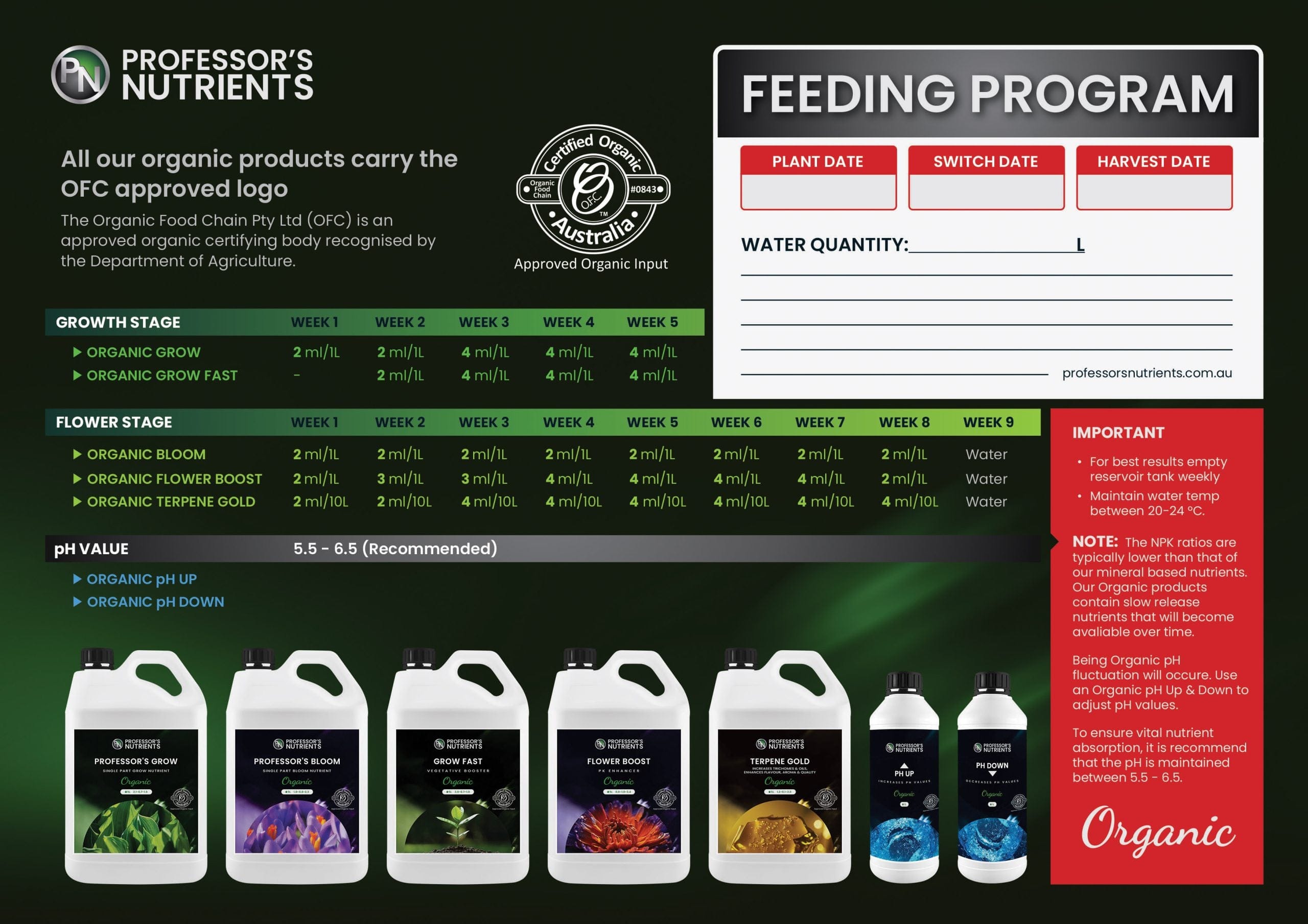
  • Hydroponics: 5.5 – 6.5

  • Soilless mediums: 6.0 – 7.0

Click Here To View The Professor Nutrients Feed Chart & Product Guide

FAQs

Why is pH balance important for plant growth?
If the pH is too high or too low, your plants can't absorb nutrients efficiently, which leads to nutrient lockout, slow growth, or visible deficiencies.

Can this be used in organic systems?
Yes, the buffer is designed to be compatible with organic nutrients and systems.

How often should I adjust pH?
Check your reservoir daily as pH fluctuations are common, especially in organic nutrient programs.

Is it suitable for all growth stages?
Yes, this buffer can be used during both vegetative and flowering phases.

Secure & Encrypted Payments

Logos for Google Pay, Airwallex, and PayPal.

Estimate shipping

Frequently Asked Questions (FAQ)

What is Professor Nutrients Organic pH Buffer used for?

Professor Nutrients Organic pH Buffer is used to adjust the pH of your feed water or nutrient solution so plants can properly absorb nutrients. It comes in two versions: pH Up to raise pH and pH Down to lower pH. Keeping your solution in the correct range helps prevent nutrient lockout, weak growth, and avoidable deficiency symptoms.

Is this a pH Up and pH Down product?

Yes. Professor Nutrients Organic pH Buffer is available as two separate products: pH Up (to increase pH when your solution is too acidic) and pH Down (to reduce pH when it’s too alkaline). You use one or the other depending on where your measured pH sits relative to your target range.

Which grow systems can I use Professor Nutrients Organic pH Buffer in?

It’s suitable for hydroponics, soilless media like coco or perlite, and hand‑watering setups. It works in both vegetative and flowering stages and is designed to be compatible with organic nutrient programs, while also being usable with mineral or salt-based nutrients when dosed carefully.

What pH range should I aim for?

Most hydro systems run well around pH 5.5–6.5, while soilless media like coco typically sits closer to pH 6.0–7.0. You don’t need to hit a single perfect number every time—staying consistently within range and avoiding big swings matters more than chasing exact decimals.

When should I add Professor Nutrients Organic pH Buffer in my feeding routine?

Always adjust pH last. Mix your water, silica (if used), base nutrients, and additives first, then let the solution circulate. Once everything is fully mixed, measure pH and use Professor Nutrients Organic pH Buffer to dial in your final pH.

How much Professor Nutrients Organic pH Buffer should I use?

There’s no fixed dose. The amount needed depends on your starting pH, water alkalinity, reservoir size, and nutrient strength. Start with very small amounts, mix thoroughly, wait a few minutes, then retest. Slow, incremental adjustments give you far more control than trying to fix pH in one shot.

Why does pH sometimes barely move—or swing really fast?

Hard, high‑alkalinity water can resist pH change, meaning you’ll need more product and may still see drift. Soft or RO water has low buffering, so even tiny doses can cause big swings. Reservoir size also matters: smaller volumes react faster than large, well‑circulated tanks.

Should I adjust pH before or after adding silica and Cal‑Mag?

After. Silica often pushes pH up significantly, so add it first and mix well. Add Cal‑Mag and base nutrients next, then adjust your final pH using Professor Nutrients Organic pH Buffer once everything else is fully dissolved and circulating.

How often should I check and adjust pH?

For reservoirs, daily checks are a solid baseline. Check again after top‑ups, major temperature changes, or heavy feeding days. Recirculating and organic systems tend to drift more, so regular monitoring is part of keeping things stable.

Do I need a good, calibrated pH meter?

Yes. A poor or uncalibrated pH meter makes pH adjustment guesswork. Calibrate your meter regularly so the number you’re adjusting toward is accurate. Good readings matter more than adding more pH buffer.

Will Professor Nutrients Organic pH Buffer fix nutrient burn or yellowing leaves?

It only fixes pH-related problems. If yellowing or damage is caused by overfeeding, underfeeding, pests, root issues, or poor environment, adjusting pH alone won’t solve it. pH buffer helps when lockout is the issue, not when feeding or plant health problems are the real cause.

Is Professor Nutrients Organic pH Buffer safe to handle and how should it be stored?

Handle it like a proper chemical. Avoid eye contact or ingestion, rinse spills promptly, and consider gloves if dosing frequently. Store it sealed, upright, out of direct sunlight, and away from children or pets. It’s generally stable when stored properly, but contamination shortens its useful life.

You may also like

Recently viewed