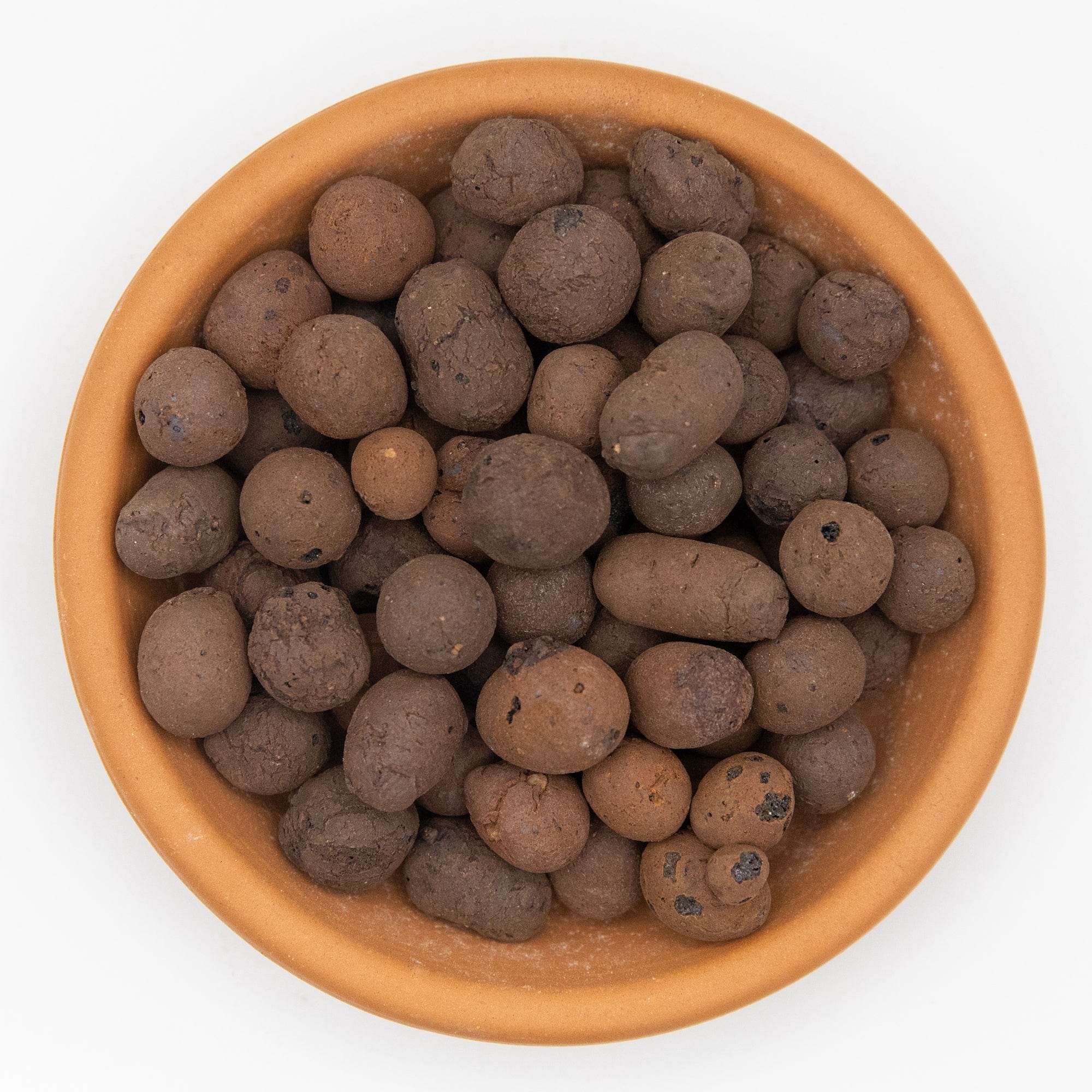
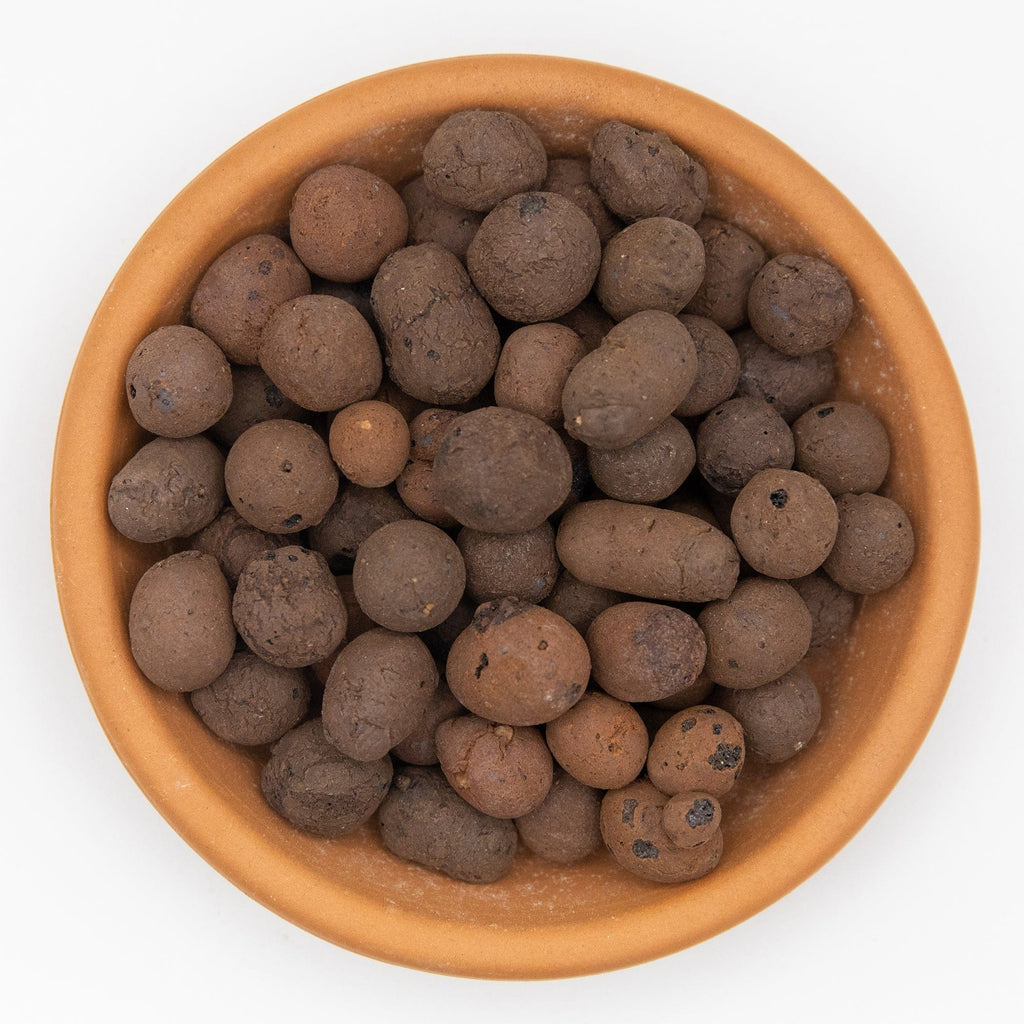
What are Hydroton / LECA / Clay Balls made of?
Hydroton, also called LECA or clay balls, are made from natural clay that’s baked at high temperatures until it expands into lightweight, porous pellets. They hold some moisture while allowing excellent airflow around plant roots.
What sizes of Hydroton / LECA / Clay Balls are available?
Dr Greenthumbs offers Hydroton / LECA / Clay Balls in 5L, 10L, 25L, and 50L full bags—perfect for everything from small houseplant setups to larger hydroponic systems.
Do I need to rinse or soak Hydroton / LECA / Clay Balls before use?
Yes. Although low-dust, a full rinse removes residual fines. Soak them for 6–24 hours (preferably in pH-adjusted water) to hydrate fully and avoid early pH swings. Dry LECA may float initially until it’s fully saturated.
Are Hydroton / LECA / Clay Balls reusable?
Absolutely. After each grow, remove root debris, rinse thoroughly, and sanitise if needed (boiling, hydrogen peroxide, or diluted bleach all work). With proper care, LECA can be reused many times without breaking down.
Why do Hydroton / LECA / Clay Balls sometimes get white crust or smell?
White crust is usually salt or mineral buildup from nutrients or hard water. Odors typically come from organic gunk, not the clay itself. Rinse well, clean regularly, and flush occasionally to avoid both issues.
Can Hydroton / LECA / Clay Balls grow algae or mould?
Yes, if exposed to light and constant moisture. Keep systems clean, avoid organic buildup, and block light at the surface to reduce algae and mould in semi-hydro or hydroponic setups.
Which hydro systems are Hydroton / LECA / Clay Balls compatible with?
They’re great for DWC, drip systems, Dutch buckets, ebb & flow, and aquaponics. Use them in net pots or media beds, and always rinse well to avoid clogging lines with dust or small fragments.
Can I use Hydroton / LECA / Clay Balls for semi-hydro houseplants?
Yes—LECA is ideal for semi-hydro setups. It wicks moisture upward while keeping roots aerated. Most growers use an inner pot with holes and a small water reservoir to maintain consistent moisture without overwatering.
How do I switch a plant from soil to Hydroton / LECA / Clay Balls?
Remove as much soil as possible, rinse roots gently, and trim any dead or mushy roots. Some older roots may die off, but new water-adapted roots will grow. Keep moisture stable during the transition period.
Do Hydroton / LECA / Clay Balls prevent root rot?
They help by improving airflow and drainage, but rot can still occur in stagnant water or dirty systems. Ensure good oxygenation, clean reservoirs, and avoid overwatering during transitions.
Can I use Hydroton / LECA / Clay Balls in soil or as a top dressing?
Yes. Mix them into soil to improve drainage or use as a top layer to reduce fungus gnats and soil splash. They’re especially helpful in heavy or compacted soil mixes.
Are Hydroton / LECA / Clay Balls safe to use around pets and kids?
They’re non-toxic, but the pellets are a choking hazard for small children and animals. Store securely and supervise use to avoid accidents.
Can I use Hydroton / LECA / Clay Balls outdoors or in jars?
Yes—they work in outdoor planters and vases, but you’ll get more algae or gunk if exposed to light and organic matter. Always rinse and clean before reuse.
Can I use beneficial microbes or organic nutrients with Hydroton / LECA / Clay Balls?
Yes—LECA pairs well with microbes and organics, but expect more buildup. Regular cleaning and filtration are key to prevent clogged systems or anaerobic zones.
What’s the biggest mistake beginners make with Hydroton / LECA / Clay Balls?
Skipping the initial rinse/soak, using too much water in semi-hydro, or expecting soil-grown roots to instantly thrive in LECA without transition time. Clean prep and patience are key to success.