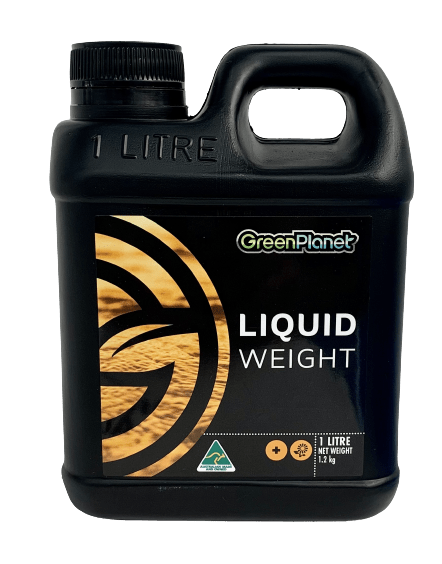
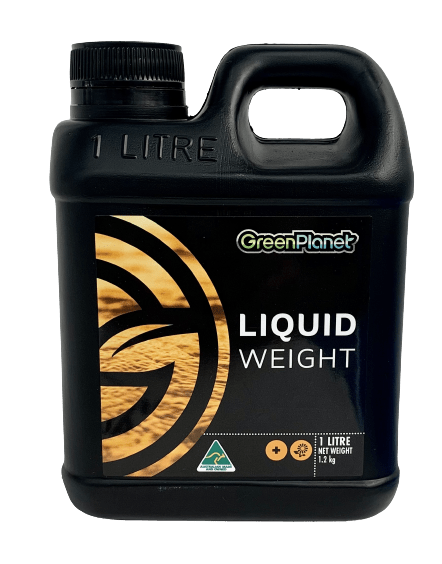
What is Green Planet Liquid Weight and what does it do?
Green Planet Liquid Weight is a carbohydrate-based bloom additive that fuels flower development and feeds beneficial microbes in the root zone. It’s designed to support bigger yields, stronger aroma, better resin production, and a cleaner-tasting finish by helping plants use nutrients more effectively during bloom.
When should I use Green Planet Liquid Weight?
You can start as early as week 2 of flower and run it through to harvest, depending on your finishing style. Some growers stop 1–2 weeks before harvest. It’s not used during veg, and it’s usually skipped during a hard flush unless you’re doing a “soft finish.”
How much Green Planet Liquid Weight should I use?
The standard dose is 1–1.5 mL per litre. For soil, 2 mL/L once per week is also popular. You can feed it every watering during bloom, especially in coco and hydro, or use it weekly for lower-input systems. Start lighter and increase based on plant response.
Can I use Green Planet Liquid Weight in soil, coco, and hydro?
Yes—Liquid Weight is compatible with all major media types including soil, coco coir, hydroponics, DWC/RDWC, and drip or autopot systems. Just keep reservoirs clean and avoid letting mixed solutions sit too long, especially in warm conditions.
Will Green Planet Liquid Weight cause slime or clog systems?
It can contribute to biofilm if the reservoir is warm, low-oxygen, or dirty. Prevent issues by keeping water cool, aerated, and shaded. In irrigation setups, flush lines regularly and avoid long holds of pre-mixed solution.
Do I need to adjust other nutrients when using Liquid Weight?
If your EC is already high, consider reducing base nutrients slightly to “make room.” It can be stacked with PK boosters and terpene enhancers, but watch EC to avoid overfeeding. One carb product is usually enough unless you have a specific reason to stack more.
Can I use Green Planet Liquid Weight in sterile or microbial systems?
It pairs well with beneficial microbes by feeding the biology. Avoid using it alongside sterilizers like hydrogen peroxide, which kill microbes and defeat the purpose. Choose either a living root zone or sterile—don’t mix the two approaches.
What if Green Planet Liquid Weight doesn’t seem to be working?
Check your root zone, lighting, base feed, and environmental factors. Liquid Weight enhances an already functional setup—it won’t fix major issues like overwatering, high EC, or pH drift. Simplify your mix if you’re seeing odd reactions late flower.
How soon will I see results from Liquid Weight?
Some growers notice improved aroma and resin within 1–2 weeks. Yield and density gains are more noticeable by late bloom. It tends to perform best under strong lighting (like full-spectrum LEDs) when the plant’s energy demand is high.
Is Green Planet Liquid Weight safe for edible crops?
Yes—it’s widely used for flowering edibles like tomatoes, strawberries, chillies, and cucumbers. Just don’t spray it on harvestable parts; it’s a root-zone additive, not a foliar feed.
Can I use Green Planet Liquid Weight for houseplants?
You can, but it’s rarely necessary. Houseplants don’t usually require bloom-stage carb support. If you use it, apply at very low doses and avoid keeping pots overly wet.
Does Green Planet Liquid Weight have a strong smell?
It has a mild sweet or nutrient-like smell, which is normal. Shake before use to mix properly. If it smells rancid or shows signs of contamination, don’t use it.
How should I store Green Planet Liquid Weight?
Keep it sealed, in a cool, dark place away from sunlight. Don’t store in hot sheds or exposed environments. Mixed solution should be used fresh—short-term holds are fine, but avoid storing it warm for long periods.
Can Green Planet Liquid Weight fix nutrient lockout or stress?
Not directly. It supports uptake when conditions are good, but it won’t resolve salt buildup, root rot, or extreme stress. Fix the root cause first—Liquid Weight helps enhance healthy systems, not rescue broken ones.
What size Green Planet Liquid Weight should I buy?
If you’re trying it for the first time or running a small grow, start with a smaller bottle. For regular bloom cycles or large reservoirs, the bigger size is more cost-effective—especially if you use it every feed in late flower.