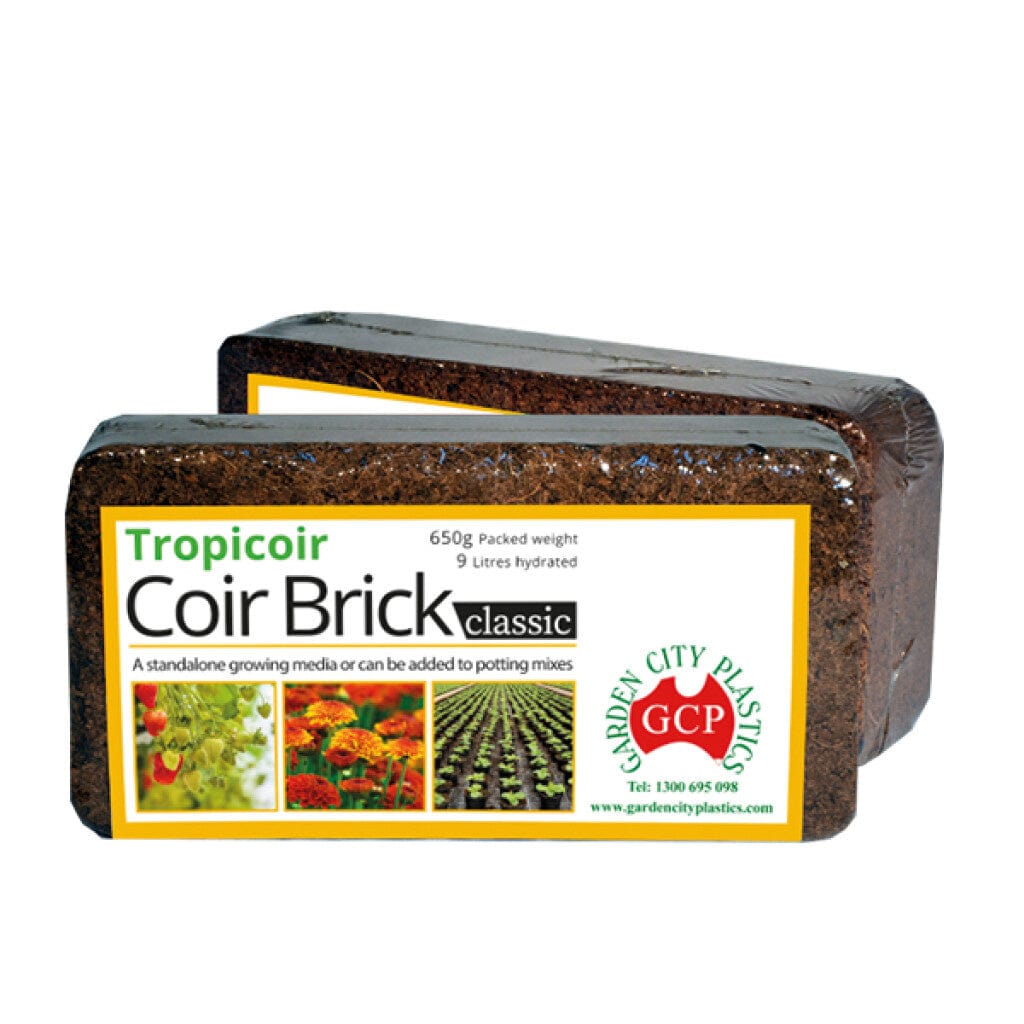
What is the Coco Coir Block Brick, and how much does it expand?
It’s a compressed brick of coconut husk fibre that expands to about 9 litres when hydrated. Just add 2–3 litres of water gradually, wait 10–20 minutes, and fluff it up for use in pots, seed trays, soil mixes, or hydroponics.
What’s the best way to hydrate and fluff the coir brick?
Add water in stages, not all at once. Let it soak, then break it up with your hands or a trowel. If it’s too dry, add more water. If it’s too wet, spread it out to dry until evenly moist—not soggy.
Is the coir washed and buffered, or do I need to rinse it?
Yes—this product is washed and buffered, meaning excess salts are removed and it’s ready for most uses. If you’re growing sensitive plants or using recirculating systems, a quick rinse may still be helpful.
Do I need to add Cal-Mag or worry about pH with coco coir?
Buffered coir helps reduce calcium/magnesium issues, but many growers still include Cal-Mag in early feeds—especially in coco-heavy systems. Coir has a stable pH range, but pH monitoring is still smart for hydro setups.
Does the coir block contain nutrients, or do I need to feed plants?
Coco coir itself isn’t nutrient-rich—it’s more about structure, water retention, and aeration. If used solo or as a base, plan to feed plants with liquid nutrients or mix in compost or slow-release amendments.
Is the coir block safe for seedlings and propagation?
Yes—coco is gentle and holds moisture well, making it ideal for seed starting and cuttings. Just don’t overwater; coir stays damp longer than many other media, so airflow and moisture balance matter.
For a deeper look at moisture checks and watering decisions, see our moisture meter watering guide.
What should I mix with coir to improve drainage?
Perlite, pumice, orchid bark, or scoria all help. A common starting point is 70% coir to 30% perlite, or go 50/50 for extra drainage—especially helpful for succulents or fast-drying blends.
Can I mix coco coir into soil or use it instead of peat moss?
Yes—coir improves water retention in sandy soils and adds structure to heavy mixes. It’s a popular, sustainable alternative to peat moss and re-wets more easily when dry.
Is coco coir suitable for hydroponics or self-watering pots?
Yes—it’s hydroponic-ready and great for drain-to-waste or passive systems. In self-watering pots, mix in more aeration (like perlite or bark) to prevent overly wet root zones.
Will coco coir attract fungus gnats or pests?
Coir itself isn’t “gnat food,” but soggy media can attract them. Let the top layer dry between waterings, use sticky traps, and maintain good airflow. Coir is generally low-risk for pests or diseases.
Is coco coir organic, compostable, and eco-friendly?
Coir is plant-based, biodegradable, and widely used as a sustainable peat alternative. You can grow organically in it by adding compost, worm castings, or organic nutrients suited for soilless media.
Can I compost or use spent coir in a worm farm?
Yes—used coir makes great compost or worm bedding. It’s high in carbon, so balance with nitrogen-rich inputs when composting. In worm bins, keep it moist and feed worms separately.
How should I store coco coir bricks or leftover hydrated coir?
Keep unused bricks dry and sealed. For hydrated coir, store slightly moist in a closed tub or bag. If it smells sour, dry it out and fluff before using again. Coir re-wets easier than peat even after drying.
Does coir make a mess or stain surfaces?
It can be dusty dry or muddy wet. Hydrate it in a tub or bucket—not on a patio—to avoid mess or stains. Once prepped, it’s clean and easy to handle.
What exactly am I buying, and what does “compression ratio 4:1” mean?
You’re getting a compact block that expands with water. The 4:1 ratio means the brick swells to about four times its size when hydrated—making it efficient to ship, store, and use.