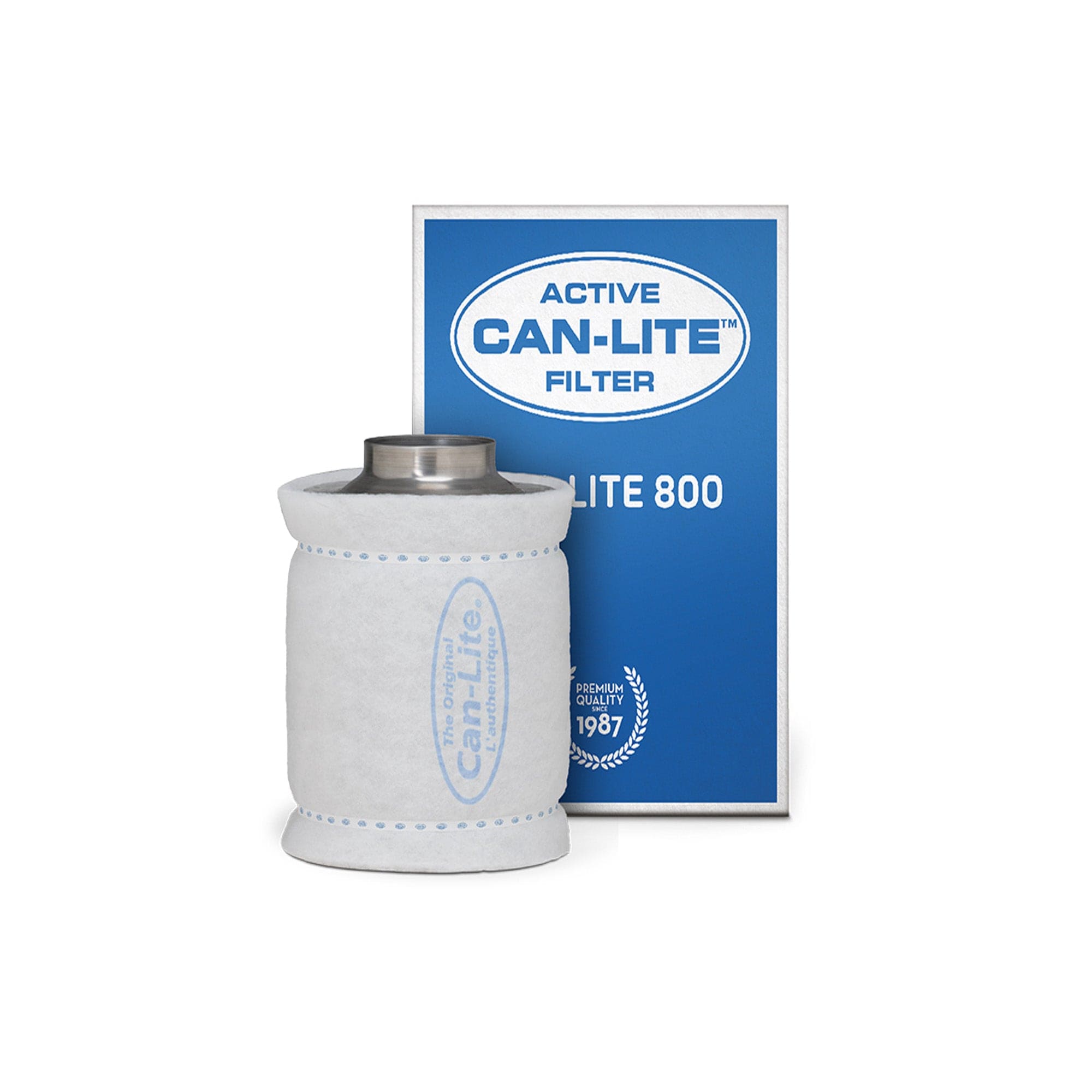
What does the Can Lite Carbon Filter GT 800 do?
It removes odours and VOCs from grow room exhaust air using activated carbon, helping keep your space discreet. It’s designed for exhaust setups but can also work as a recirculating scrubber when external venting isn’t possible. It doesn’t remove moisture, pollen, or mould spores.
What size ducting fits the GT 800?
The GT 800 has a 200mm integrated flange and is built for 200mm ducting and fan systems. It measures 300mm in diameter, 330mm long, and weighs around 5kg—compact enough for most grow tents with proper planning.
What is the maximum airflow rating for this filter?
The GT 800 is rated for up to 800 m³/h (roughly 470 CFM). For optimal odour control, it’s best to run slightly under this max to allow better contact time in the carbon bed. Overspeeding can lead to odour breakthrough.
What fan should I use with the GT 800?
Use a 200mm inline, EC, centrifugal, or mixed-flow fan that matches your airflow needs. A speed controller helps fine-tune airflow to maintain smell control and negative pressure without overdriving the filter.
Can I use reducers or silencers with this filter?
You can, but reducers add turbulence and resistance. Silencers also reduce real airflow. Keep ducting straight, short, and size-matched where possible to maintain balanced performance and quiet operation.
How should I install the GT 800 in a tent?
Mount it high (where heat and odours rise). It can be mounted horizontally or vertically—just support the weight properly. Pulling air through the filter is more effective than pushing, and sealing all duct joins is essential.
What is negative pressure and why does it matter?
Negative pressure means your space slightly sucks in, so air exits only through the exhaust. It’s key to stopping odour leaks. In tents, you’ll see the walls pulling in. Without it, filtered air may mix with unfiltered leaks.
Why can I still smell odours with this filter installed?
Common causes include duct leaks, too much airflow, high humidity, or a saturated filter. Check for air bypass points, confirm negative pressure, and make sure you’re not exceeding the filter’s rated flow rate.
Does the GT 800 come with a pre-filter?
Yes, and it’s essential. The pre-filter traps dust and debris before they reach the carbon bed. Skipping it shortens filter life and reduces airflow. Clean it when it looks dirty or airflow starts to drop.
Can I wash the pre-filter?
Yes—use a gentle wash and make sure it’s completely dry before reinstalling. Wet fabric sitting on carbon can reduce performance and shorten lifespan. Avoid harsh detergents or scrubbing.
How long does the GT 800 last?
Typical lifespan is 12–18 months in clean, moderate environments. High humidity, dust, or pushing max airflow will reduce its life. Signs it’s spent include odour return, airflow drop, and reduced effectiveness even with sealed ducting.
Can I wash or recharge the carbon?
No. Washing or trying to recharge the carbon at home ruins performance. Once the carbon is saturated, the filter should be replaced. Proper reactivation requires industrial equipment.
What carbon is used in the GT 800?
It uses Australian granulated carbon (CKG 48) with a 50mm thick carbon bed inside a steel housing. The design includes a 51% open perforation shell and integrated flange for solid airflow and durability.
Where is the Can Lite GT 800 made?
The Can Lite GT 800 is assembled in Vancouver, Washington, USA, at a dedicated carbon filter facility. It combines North American manufacturing with premium imported carbon for quality filtration performance.
How should I store the filter if I’m not using it yet?
Keep it sealed in its box or an airtight bag, stored in a cool, dry place. Carbon can slowly absorb ambient odours and moisture even when idle, which can reduce its performance once installed.