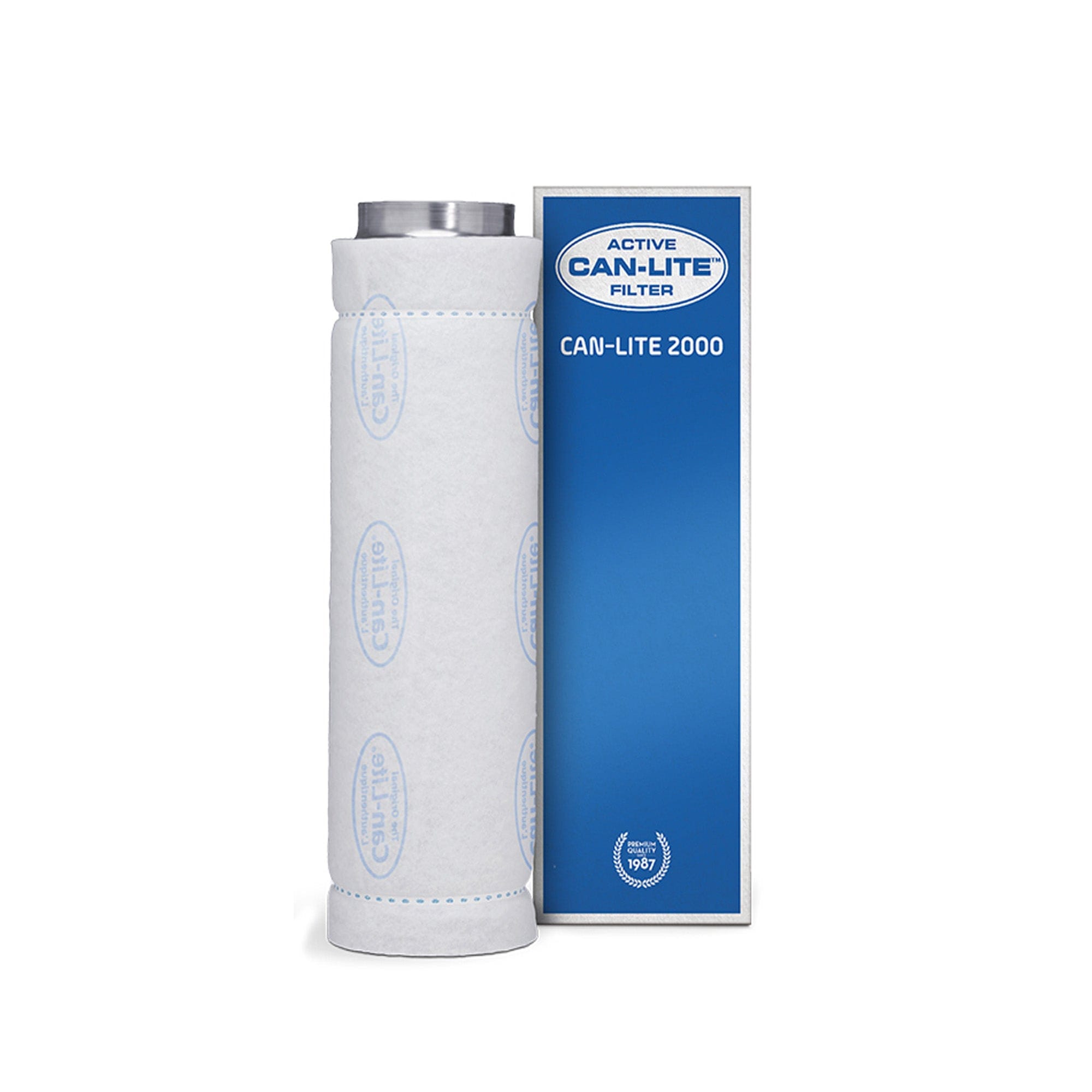
What does the Can Lite Carbon Filter GT 2000 do?
It removes odours and VOCs from grow room exhaust air using activated carbon. It's designed for exhaust setups but can also work in recirculating configurations. Ideal for large tents or rooms, it’s also effective during drying or for strong-smelling grows. It does not remove humidity or act as a HEPA filter.
What fan and airflow rating is best for this filter?
The GT 2000 is rated for up to 2000 m³/h (about 1,175 CFM). Pair it with a 200mm inline, EC, or centrifugal fan. Running slightly below max airflow improves odour control by increasing carbon contact time.
What size ducting fits the GT 2000 and how big is it?
It fits 200mm ducting and fans. The filter is 1000mm long, 300mm in diameter, and weighs about 19kg. It’s best suited to larger tents or grow rooms with sturdy mounting points.
How should I install the GT 2000 for best results?
Mount it high in your space, either horizontally or vertically, with solid support. Keep ducting short and straight. Pulling air through the filter (rather than pushing) is standard. Seal all duct joins and avoid sharp bends to minimize turbulence and noise.
What is negative pressure and why does it matter?
Negative pressure ensures all air exits through the filter, preventing unfiltered smell leaks. If your tent walls pull inward slightly, that’s a good sign. Without it, odours can escape through zips or duct gaps.
Why can I still smell odours even with this filter?
Common causes include duct leaks, fan speed too high, poor sealing, high humidity, or a worn-out filter. First, check all duct joins and airflow direction, and ensure you have negative pressure in the space.
Does humidity or heat affect filter performance?
Yes. The GT 2000 is rated to 70% relative humidity and 80°C. Higher humidity can reduce odour adsorption and shorten lifespan. Smell spikes often happen after watering due to humidity rises, so manage RH for best results.
What kind of carbon is inside the GT 2000?
It uses Australian CKG 48 activated carbon with a 50mm thick carbon bed. This bed thickness helps increase contact time, improving odour control—especially during peak smell periods like flowering and drying.
How long does the GT 2000 last?
Typical lifespan is 12–18 months, depending on dust, odour load, humidity, and runtime. Signs of wear include odour breakthrough, needing higher fan speed, or declining airflow even with clean ducting.
Can I wash or recharge the carbon filter?
No. Washing or recharging carbon at home ruins its performance. Once saturated, the filter should be replaced. Proper reactivation requires industrial equipment and is not recommended for grow use.
Does the GT 2000 come with a pre-filter, and should I use it?
Yes, a pre-filter is included and highly recommended. It traps dust before it reaches the carbon, which helps maintain airflow and extend the life of the filter. Skipping it can quickly clog the carbon bed.
How often should I clean or replace the pre-filter?
Clean it whenever it looks dusty or airflow drops—more often in dusty environments. Gently wash with water (no harsh chemicals), and let it dry completely before reinstalling to avoid damaging the carbon inside.
Can I run the filter 24/7 or only during lights-on?
You can run it 24/7, which is common when odour control is a priority. While some growers run it only with lights, odours don’t always follow that schedule. Consistent extraction offers better smell control.
How should I store a spare Can Lite GT 2000?
Store it sealed in its box or airtight wrap in a cool, dry place. Carbon can absorb moisture and smells even while not in use, which may reduce performance when installed later.
What are the key specs of the Can Lite GT 2000?
200mm integrated flange, 300mm diameter, 1000mm long, 19kg, 50mm carbon bed, CKG 48 carbon, steel housing, 2000 m³/h max airflow, 80°C max temp, 70% max RH, pre-filter included, and 51% open perforation casing for optimal airflow.