What’s in The Blossom Buddy and what is it used for?
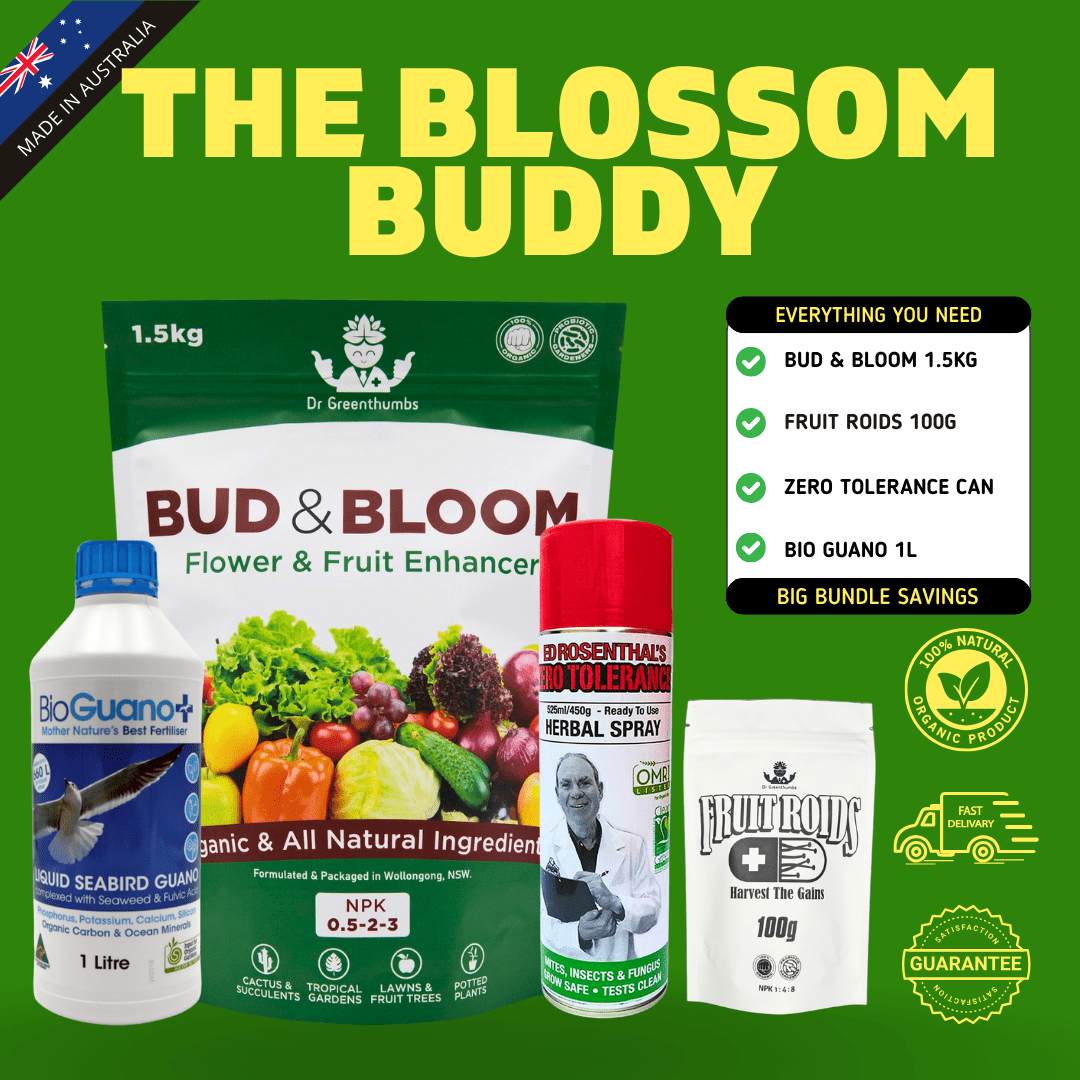
The Blossom Buddy includes Bud & Bloom, Fruit Roids, Bio Guano, and Zero Tolerance. It’s designed to boost flowering and fruiting, support root health, feed beneficial microbes, and manage common pests and fungal issues—all while being suitable for edibles, containers, raised beds, and indoor setups.
When should I start using The Blossom Buddy?
Begin when your plants are nearing their flowering phase. Continue using the products through blooming and fruiting. It works well for tomatoes, berries, cucumbers, citrus, ornamentals, and flowering houseplants.
How do I use Bud & Bloom for best results?
Top dress pots every 2–3 weeks or garden beds monthly. Mix into potting soil, apply as a tea, or scratch into the surface and water in. Bud & Bloom builds flowering nutrition in the soil—don’t stack it too heavily with other bloom boosters, especially in containers.
When and how do I apply Fruit Roids?
Start around early flowering, using ½ to 1 teaspoon per litre of water weekly. Mix fresh and apply shortly after. It’s suitable for soil, coco, or hand-watered hydro setups. Always add Fruit Roids before adjusting pH, and avoid combining too many inputs at once.
How is Bio Guano used during veg and flower?
Apply 1.5 mL per litre in veg and 3 mL in flower, usually weekly or every second watering. Shake well before use. It’s compatible with drip systems and can be used as a light foliar (patch test first). Avoid overuse—signs include tip burn or nutrient lockout.
What’s Zero Tolerance used for, and how do I spray it?
Zero Tolerance targets pests like spider mites, aphids, whiteflies, and fungal issues like powdery mildew. Spray in the evening, covering leaves (especially undersides) without soaking blooms. Always patch test, avoid spraying stressed plants, and don’t apply in hot sun or strong light.
Can I use all the products in The Blossom Buddy at once?
You can, but go easy—stacking all four at full strength can overload small pots. A simple routine: Bud & Bloom every few weeks, Fruit Roids weekly, Bio Guano weekly or alternating, and Zero Tolerance only as needed or weekly as prevention.
How fast will I see results from The Blossom Buddy?
Zero Tolerance acts on contact. Fruit Roids and Bio Guano often show visible plant responses within days. Bud & Bloom takes longer—usually 1–3 weeks—since it feeds through soil biology. Don’t overapply while waiting for results.
Why is my plant growing leaves but not flowers?
This is usually from excess nitrogen, low light, or heat stress—not a lack of bloom boosters. Ease off high-nitrogen feeds, improve sun exposure, and ensure consistent watering. The Blossom Buddy works best when environmental conditions are dialled in.
Why are flowers dropping even though I’m feeding correctly?
Common causes are sudden weather swings, poor pollination, or inconsistent moisture—not fertiliser failure. Keep temperatures stable, water consistently, and give flowers a gentle shake if pollination seems low.
Is The Blossom Buddy safe for edible plants and pets?
Yes, when used as directed. Wash produce before eating. Store all products out of reach and don’t let pets lick leaves or dig in treated soil. Wear gloves when handling dry amendments or concentrated liquids.
Do I need to adjust pH or dechlorinate my water?
In soil, pH isn’t usually critical unless you notice problems. In coco or hydro, pH control is more important. Chlorinated water can reduce microbial activity over time—filtered or dechlorinated water helps if you’re chasing peak performance.
Can The Blossom Buddy attract pests like gnats?
Not directly, but overwatering rich organic media can trigger fungus gnat issues. Let the top layer of soil dry slightly between waterings and keep airflow strong, especially indoors or in humid conditions.
How should I store The Blossom Buddy products?
Keep dry products sealed and away from humidity. Store Bio Guano and Zero Tolerance in a cool spot, out of sunlight. Shake liquids before use. Use fresh mixes quickly—stored solutions can spoil. Clean spills to avoid staining surfaces.