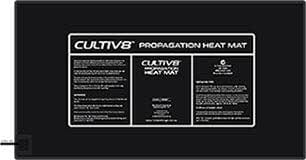
What is the Seahawk Heat Mat used for?
The Seahawk Heat Mat gently warms the root zone to help seeds germinate faster and cuttings root more reliably. It's ideal for warm-season crops like tomatoes, chillies, and eggplants, as well as succulents and slow-germinating seeds. It improves success in cool conditions but won’t fix poor seed quality or other growing issues.
What size and wattage is the Seahawk Heat Mat Large?
The Seahawk Heat Mat Large measures 645 × 350 mm and uses 35 watts of power. This size suits a standard propagation tray or multiple small trays placed side-by-side. Choose a mat size that closely matches your tray footprint for the most efficient heat transfer.
Do I need a thermostat with the Seahawk Heat Mat?
It’s optional but highly recommended. A thermostat helps maintain consistent temperatures, reduces the risk of overheating, and improves results across seasons. The Seahawk Heat Mat works with most standard thermostat controllers. A timer is less effective because it doesn't respond to real-time temperature changes.
Where should I place the thermostat probe for accurate readings?
Insert the probe into the rooting zone—about 1 to 1.5 inches deep in the growing medium. Avoid placing it in open air or on the mat surface. For best accuracy, pair with a soil thermometer during your first few runs or when changing setups.
How warm does the Seahawk Heat Mat get, and does it heat evenly?
The mat raises root-zone temperatures above ambient, typically 5–10°C depending on room conditions. It’s designed for even heat dispersion, but tray material, surface contact, and insulation can affect performance. Surface may feel hotter than the soil—trust your soil probe, not your hand.
When should I turn off the Seahawk Heat Mat?
After most seeds have sprouted, reduce or stop bottom heat to prevent leggy growth. Heat mats are best used for germination, not long-term seedling care—especially if grow lights aren’t strong. Adjust based on your plant type and setup conditions.
Where should I place the Seahawk Heat Mat for best results?
Use a flat, firm, well-drained surface—avoid carpet or uneven benches. For cold areas, insulate underneath with foam board to improve heat efficiency. Metal surfaces can absorb heat, so add a buffer layer if needed.
Will the Seahawk Heat Mat dry out trays faster or cause damping-off?
Bottom heat increases evaporation, so you'll likely need to water more often. Overwatering combined with warmth and poor airflow can lead to damping-off. Use humidity domes early, then ventilate once seeds sprout and avoid soggy conditions.
Do I place seed trays directly on the Seahawk Heat Mat?
Yes—place trays directly on the mat for optimal heat transfer. If your setup runs too warm, insert a thin buffer layer. Don’t stack multiple heat mats or stack trays directly on top of each other, as that can create hot spots and uneven heating.
Is the Seahawk Heat Mat safe and certified for use?
Yes—it's C-Tick certified and safe for ongoing use when kept dry, flat, and unstacked. It’s splash-resistant but not waterproof, so avoid submersion or placing it in standing water. Always follow electrical safety practices.
How do I clean and store the Seahawk Heat Mat?
Unplug before cleaning. Wipe down with a damp cloth—avoid harsh chemicals. Let it dry completely before storage. Roll gently (don’t fold), and store in a dry area where it won’t be crushed or punctured.
Can I use the Seahawk Heat Mat for fermentation or hydroponics?
Yes—it can help maintain warmth for kombucha, kefir, or hydro propagation trays. Use a thermostat for precise temp control, and never let the mat sit in water. Always keep the electrical components dry and above moisture levels.
Is the Seahawk Heat Mat safe for pets or reptile enclosures?
It's not designed for pet enclosures, but some use it with proper thermostats and setup. Always secure cords, keep it dry, and check temperatures carefully. Keep away from chewing pets and curious kids.
Can I use the Seahawk Heat Mat outdoors or in a greenhouse?
It’s best for indoor or covered greenhouse use. In greenhouses, insulate below and use a thermostat to handle cold nights. Avoid using it outdoors where rain or weather exposure could damage the mat or create safety hazards.
What’s the best way to set up the Seahawk Heat Mat for success?
Use a flat surface with insulation below if needed, place tray directly on top, insert the probe into the soil, set a suitable temp, and monitor moisture. Turn off heat post-germination and use quality lighting to prevent legginess. Check temps regularly in cold environments.