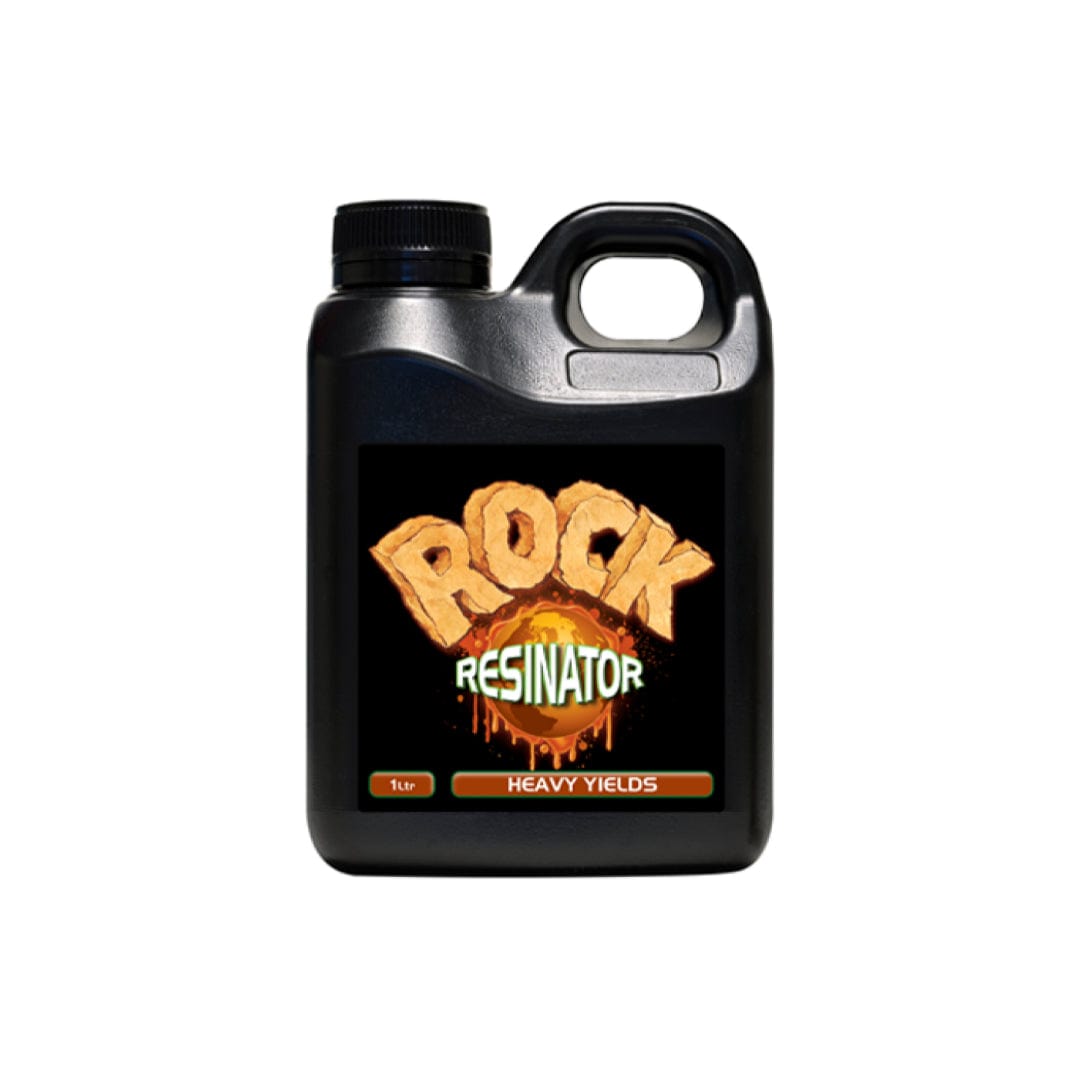
What is Rock Resinator and what does it do?
Rock Resinator is a bloom-phase PK additive designed to boost flower size, density, and resin production. It combines phosphorus, potassium, and organic compounds like amino and organic acids to support stronger aroma, stickier buds, and higher yields—assuming your lighting and feeding are on point.
When should I use Rock Resinator during flowering?
Start using Rock Resinator from week 2 of bloom and continue through to your flush or finishing window. It’s not meant for veg. Some growers run it to harvest, others stop a few days before flushing—depends on your style and finishing goals.
How much Rock Resinator should I use per litre?
Start at 1 mL per litre. Many growers move to 1.5–2 mL/L if the plant is healthy and thriving. Avoid jumping straight to 3 mL/L unless you’re experienced and monitoring EC and runoff closely. Reduce base nutrients slightly to keep total EC in check.
Can I use Rock Resinator in soil, coco, hydro, or living soil?
Yes—it works in all media types. In DWC and RDWC, keep your res clean, oxygenated, and avoid stacking with sterilizers like peroxide. For living soil or veggies, start light to avoid upsetting microbial balance or triggering salt stress.
Can Rock Resinator be mixed with other nutrients and additives?
Yes—but follow proper mixing order: water → base nutrients → Rock Resinator → other additives → pH last. Don’t mix concentrates directly. It works with Cal-Mag, silica (add first), and enzymes. Avoid stacking it with another PK booster unless doses are reduced and monitored closely.
What are the signs Rock Resinator is working?
Look for denser flowers, stronger aroma, increased resin production, and a stickier finish. You may also notice tighter flower stacking and more visual "frost" if genetics respond well.
What are the signs I’m overdoing Rock Resinator?
Tip burn, clawed or dark leaves, high runoff EC, or stalled growth are red flags. If you see these, reduce your dose, flush lightly if needed, and simplify your feeding to rebalance the root zone.
What if Rock Resinator isn’t delivering results?
Check your light intensity, genetics, base feed, EC, and pH. If those aren’t dialed in, bloom additives won’t perform as expected. Also verify you’re using it at the right stage and not in a stressed environment.
Does Rock Resinator affect pH or EC?
Yes—like any mineral additive, it can raise EC and slightly shift pH. Always mix fully, then check and adjust your final nutrient solution before feeding.
Can Rock Resinator cause nutrient lockout?
It can if overused, especially when combined with other bloom boosters. Stick to proper dosing, monitor runoff in coco/soil, and adjust your base feed to avoid stacking too much P/K or pushing EC too high.
Can Rock Resinator be used with flush products?
Yes—just don’t use both at the same time. Run Rock Resinator through the bloom cycle, then switch to your preferred flush routine when you’re ready to finish.
Will Rock Resinator clog irrigation lines or cause cloudy reservoirs?
Not usually—but proper mixing is essential. Always dilute into water, avoid concentrate-to-concentrate mixing, and keep your res clean. Cloudiness or slime usually comes from poor hygiene or warm, low-oxygen conditions.
Is Rock Resinator safe for beginners?
Yes—just keep it simple. Start at 1 mL/L, avoid stacking heavy PKs, and monitor EC. Most issues come from trying to do too much too fast. Simplicity and consistency are key.
Does Rock Resinator work well under LED lights?
It can perform very well under high-intensity LED setups—especially when the plant's metabolism and demand for P/K are high. Just make sure your base nutrition and environmental conditions are dialled in.
How should I store Rock Resinator, and what sizes are available?
Store it sealed, out of sunlight, and in a cool spot. Shake well before use. It’s typically available in 1L and 5L sizes—1L is great for small grows; 5L is better value for larger systems or frequent cycles.