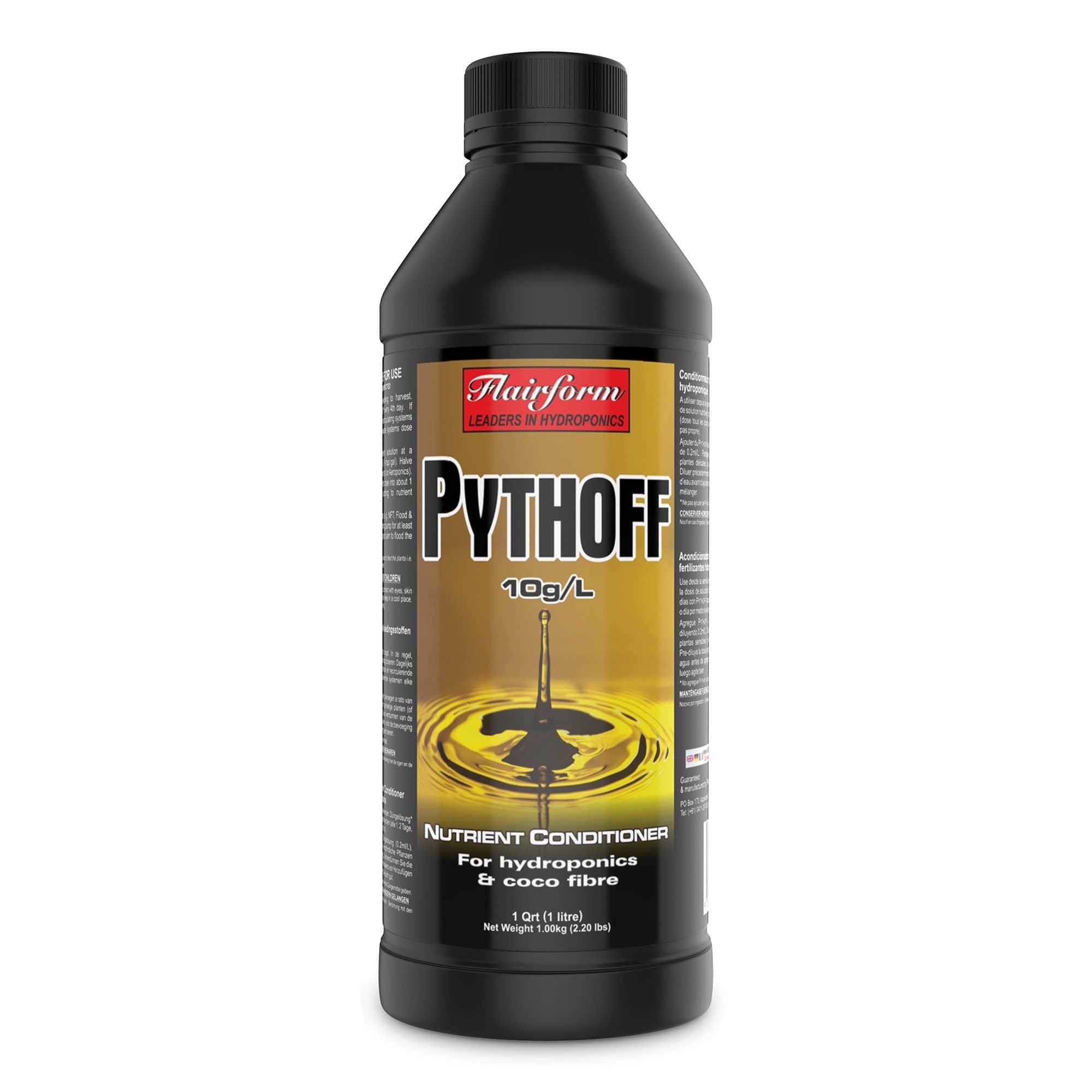
What is Pythoff and what does it do?
Pythoff is a non-systemic hydroponic water conditioner that sterilises your system by targeting pathogens, biofilm, and mineral buildup. It’s not a nutrient—it's designed to keep your root zone clean, support better nutrient uptake, and help prevent issues like root rot, blocked drippers, and slimy reservoirs.
What problems does Pythoff help with?
Pythoff is used to prevent root rot (especially pythium), brown roots, slime, biofilm in lines, mineral buildup, algae, and clogged drippers. It helps create a cleaner, healthier environment for root growth and nutrient delivery.
Can I use Pythoff in hydro, coco, and soil?
Yes—Pythoff works in DWC, RDWC, NFT, drip systems, and coco. It’s less suited to living soils or microbe-heavy setups. It’s also commonly used with edible crops due to its non-systemic nature.
Is Pythoff safe to use from seed to harvest?
Yes—Pythoff is safe to use throughout the entire grow cycle, including flowering. For seedlings and clones, use a lower dose and scale up as needed.
What’s the correct Pythoff dose and how often should I use it?
Start with 0.1–0.2 mL per litre (1–2 mL per 10L), dosed at each reservoir change. Avoid daily dosing unless you're treating an active issue. Overdosing can stress roots—if that happens, dilute or refresh your res.
Can I use Pythoff with beneficial microbes or compost teas?
No—Pythoff is a steriliser and will suppress microbial life, including the beneficials in teas or inoculants. Choose one approach: sterile (with Pythoff) or living (with microbes), not both.
Can I use Pythoff with hydrogen peroxide or other sterilisers?
No—don’t mix Pythoff with hydrogen peroxide or other sterilising agents. This can cause unpredictable reactions and plant stress. Keep your hygiene program simple and consistent.
Does Pythoff work with standard nutrient brands?
Yes—Pythoff is generally compatible with mineral-based nutrient programs. Always add nutrients first, then Pythoff, then adjust pH. Avoid combining with organic or biological additives unless you’re switching strategies.
Does Pythoff affect pH or EC?
Pythoff has minimal impact on pH and EC, but always check your solution after adding it—especially if your reservoir numbers are tightly controlled.
What’s the best way to mix Pythoff into my reservoir?
Pre-dilute Pythoff in water before adding it to your tank. Mix nutrients first, add Pythoff, circulate well, then pH last. This ensures even distribution and avoids shock to roots.
Can Pythoff fix root rot caused by warm water?
Pythoff helps reduce symptoms of root rot by controlling pathogens, but it won’t fix the cause. You still need to address warm water, low oxygen, or light leaks to stop root issues from returning.
Can I use Pythoff to clean my hydro system between grows?
Yes—Pythoff is ideal for cleaning tanks, lines, drippers, and pumps between runs. Sterilising between crops helps prevent diseases and buildup from carrying over to your next grow.
How can I tell if Pythoff is working?
You’ll notice cleaner-smelling reservoirs, less visible slime, whiter roots, and fewer clogged drippers. Healthier root growth and more stable feeding are also signs it’s doing its job.
What are the most common mistakes when using Pythoff?
Overdosing, mixing with hydrogen peroxide, trying to run beneficial microbes at the same time, or using it as a shortcut without fixing poor water temps or cleanliness. Keep your system dialled and your hygiene strategy consistent.
What should I do if Pythoff arrives damaged or leaking?
Take clear photos of the bottle and packaging right away and contact us. We’ll help sort a replacement quickly and make sure your grow isn’t delayed.