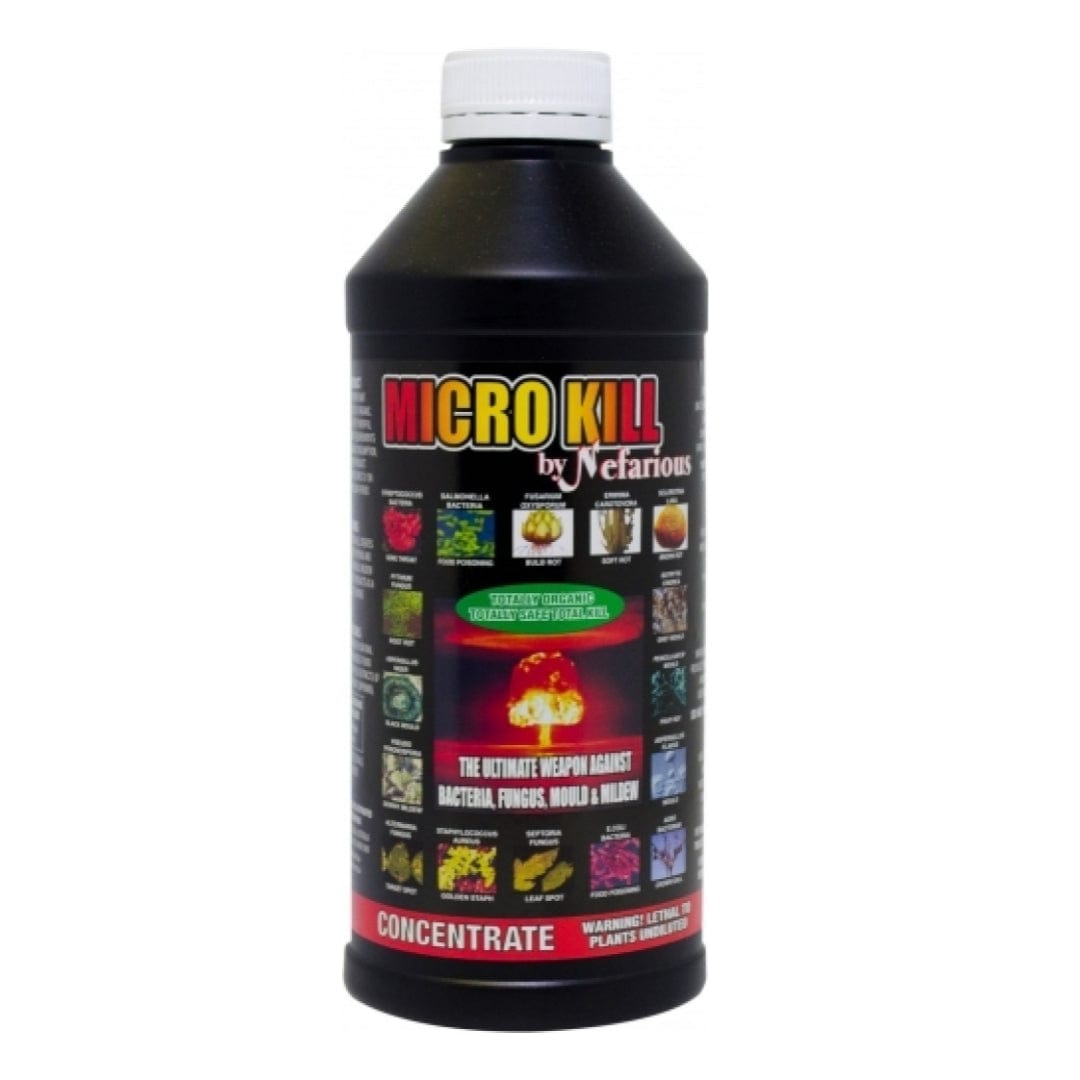
What is Nefarious Micro Kill and what does it control?
Nefarious Micro Kill is a plant-based microbial control spray that targets mould, mildew, fungi, and bacteria on plants and grow surfaces. It acts as both a fungicide and bactericide, offering broad-spectrum protection for indoor and outdoor gardens.
Is Nefarious Micro Kill safe for flowering plants, edibles, and seedlings?
Yes—Nefarious Micro Kill is safe to use during all plant growth stages, including flowering. It’s also suitable for edible crops, ornamentals, and seedlings, but always patch test delicate plants first.
Does Nefarious Micro Kill harm beneficial insects or microbes?
It’s considered non-toxic to beneficial insects when used as directed. However, it may affect microbial products like mycorrhizae—so re-inoculate after treatment if you rely on beneficial biology in your grow.
How does Nefarious Micro Kill work and how long does it last?
It works as a contact spray, forming a protective bio-film that helps shield plants from microbes for up to two weeks. Full coverage is essential since it doesn’t work systemically through the plant.
Do I need to spray leaf undersides with Nefarious Micro Kill?
Yes—spraying both the top and underside of leaves is crucial for effective mould and mildew control. Remove heavily infected leaves before treatment to help prevent spread.
How do I dilute Nefarious Micro Kill and can I use it undiluted?
Mix 1 part Nefarious Micro Kill with 9 parts water (1:9). This makes up to 10L of working solution per 1L bottle. For severe issues, undiluted use is possible—but patch test first to avoid plant stress.
When should I spray Nefarious Micro Kill for best results?
Spray early morning or late afternoon to avoid leaf stress. Indoors, spray with grow lights dimmed, then resume lighting once leaves are dry. Use a fine-mist sprayer for even coverage.
How often should I spray Nefarious Micro Kill?
Reapply every 7–14 days during high-risk periods. It’s excellent as a preventative measure—don’t wait for outbreaks to begin before using it regularly in humid or enclosed grow environments.
Can I use Nefarious Micro Kill on surfaces and grow media?
Yes—spray pots, tools, benches, trellises, and even soil or coco to help reduce microbial load. It can also be used as a light drench on media, but don’t overdo it on roots.
Can I mix Nefarious Micro Kill with neem, soaps, or nutrients?
It’s best used alone. Combining foliar sprays can cause reactions or plant stress. If you must use multiple products, space them out by at least a day and monitor for any negative effects.
Will Nefarious Micro Kill stop mould and mildew immediately?
It helps reduce microbial pressure quickly, but full results may take several days and follow-up sprays. Environmental fixes like airflow and humidity control are key for long-term prevention.
Does Nefarious Micro Kill smell or leave residue?
It has a mild scent, stronger at full strength. It doesn’t leave an oily residue but does form a protective barrier on leaves. Rinse your sprayer after each use to avoid nozzle clogging.
How should I store Nefarious Micro Kill?
Store the concentrate sealed, cool, and out of direct sun or heat. Avoid storing diluted solution—mix fresh for best potency and performance.
Do I need gloves or protection when using Nefarious Micro Kill?
Yes—while plant-based, it’s smart to wear gloves and avoid inhaling mist. Use eye protection, especially when spraying indoors or in enclosed areas.
What’s the biggest mistake people make with Nefarious Micro Kill?
Only spraying the tops of leaves or ignoring the environment that caused the issue. To get full benefit, treat the whole plant, nearby surfaces, and improve airflow and humidity control.