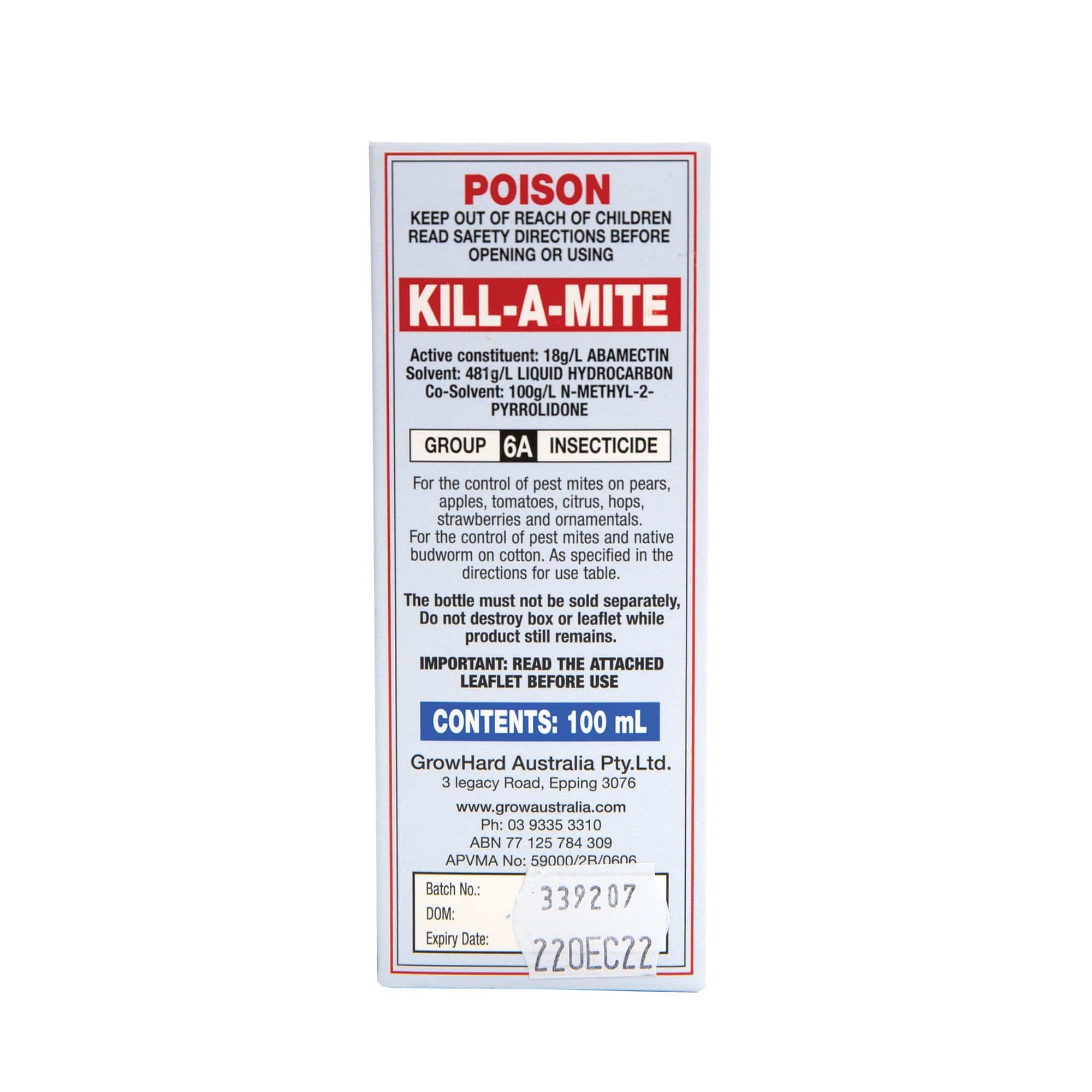
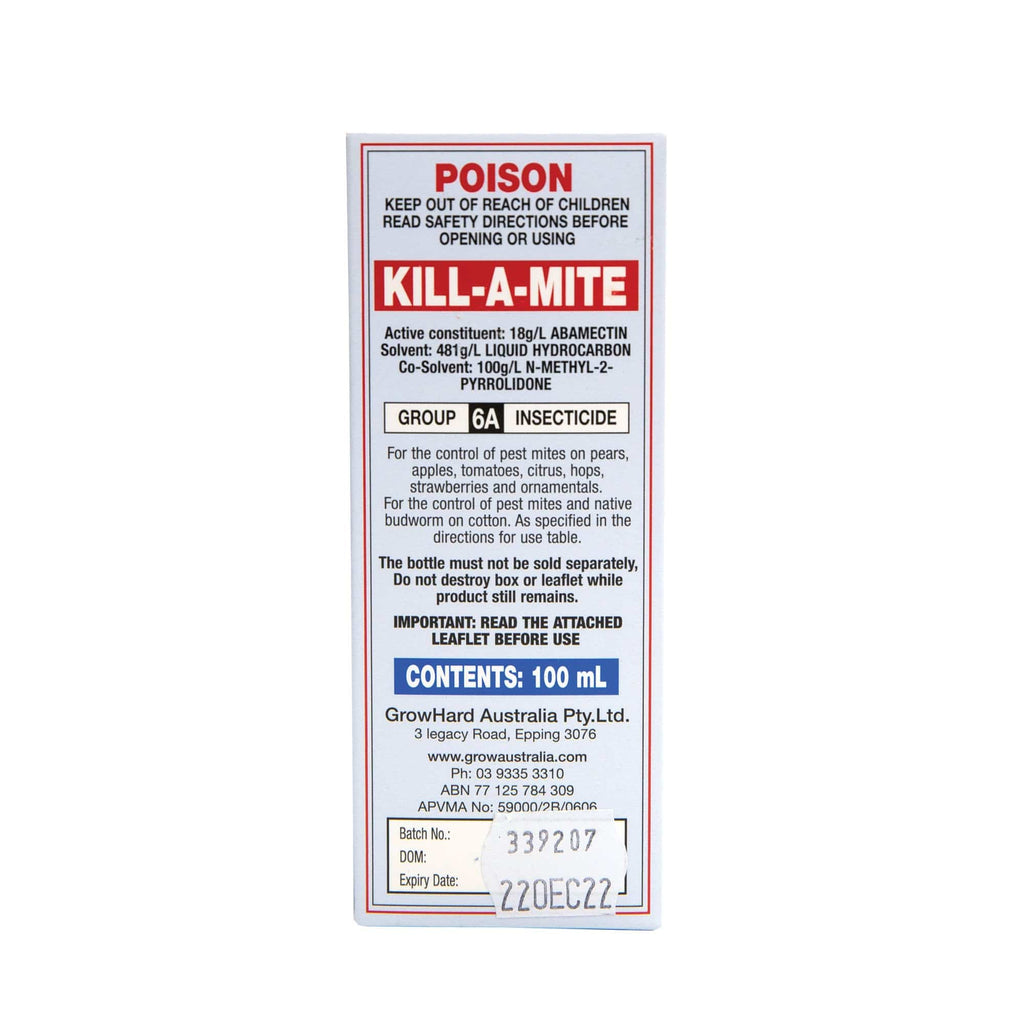
What is Kill-A-Mite and what does it treat?
Kill-A-Mite is a concentrated miticide containing abamectin (18 g/L) designed to control mites like spider mites, broad mites, russet mites, and leafminers. It's not organic—it's a professional-grade pesticide meant for serious infestations.
Does Kill-A-Mite work on spider mites, broad mites, and flat mites?
Yes, Kill-A-Mite is effective against a range of mites including two-spotted/spider mites, broad mites, russet mites, and flat mites when applied thoroughly and correctly.
Can I use Kill-A-Mite on indoor plants, ornamentals, edibles, or hydroponics?
Yes—Kill-A-Mite can be used on most plant types including indoor ornamentals, edibles, and hydroponics. Always check the label for withholding periods on food crops and test on sensitive species first.
Is Kill-A-Mite safe for pets, bees, or aquariums?
Keep pets away during spraying and until the plant is dry. Avoid spraying when bees are active. Do not use near fish tanks—pyrethroids can harm aquatic life. Always wear gloves and avoid contact with skin or eyes.
How do I know if I have mites, and should I treat even if I don’t see them?
Mite symptoms include stippling, leaf curl, bronzing, webbing, and distorted new growth. Many mites are microscopic—if the signs fit and other causes are ruled out, a treatment can confirm the issue.
How much Kill-A-Mite do I mix per litre of water?
The standard dilution is 1 mL per 1 litre of water. A 100 mL bottle makes about 100 litres of spray. Use a syringe or pipette to measure accurately and avoid overuse.
How should I apply Kill-A-Mite for best results?
Spray early morning or late afternoon, covering both tops and undersides of leaves. Spray until evenly coated but not dripping. Avoid spraying under strong light or when leaves are hot.
Do I need to spray Kill-A-Mite more than once?
Yes. A second application after 7 days is usually needed to catch newly hatched mites. Overusing one product can cause resistance, so rotate with other actives if needed.
Why didn’t Kill-A-Mite work for me?
Common issues: missed leaf undersides, skipped follow-up spray, or heavy infestation. If mites persist, rotate products and improve environmental hygiene and airflow.
What water should I use, and can I store mixed Kill-A-Mite?
Use clean or RO water if possible. Mix fresh each time and shake the solution occasionally while spraying. Store the bottle in a cool, dry place out of sunlight.
Do I need to clean equipment after using Kill-A-Mite?
Yes—rinse your sprayer thoroughly after use. If you spill concentrate, soak it up with absorbent material, clean with soap and water, and avoid draining it into waterways.
Can I mix Kill-A-Mite with oils, sulphur, or fertilisers?
Not recommended unless specifically allowed by the label. Combining with oils or sulphur can increase the risk of leaf burn. Stick to Kill-A-Mite + water unless tested otherwise.
Can I use Kill-A-Mite as a preventative spray or in an IPM routine?
Kill-A-Mite can be used preventatively, but it's best reserved for active issues. In IPM, use it strategically with monitoring, hygiene, and beneficial insects when possible.
Can I use Kill-A-Mite on edible plants and how long do I wait before harvesting?
Yes, it’s allowed on many food crops when label directions are followed. Always check and follow the specific withholding period for your plant before harvesting.
Will Kill-A-Mite fix existing leaf damage or stop spread to other plants?
It stops the pests, but damaged leaves won't recover. Isolate infested plants, treat nearby ones if needed, and clean your grow area to prevent reinfestation.