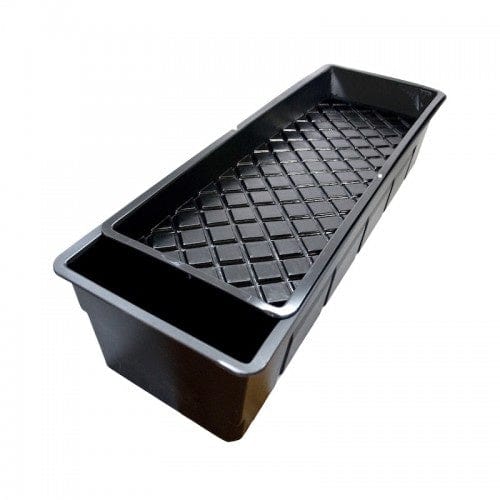
What is the Grow Tank NFT system and how does it work?
The Grow Tank NFT (Nutrient Film Technique) system uses a thin stream of nutrient-rich water that constantly flows over bare roots inside a planting channel, recirculating back to the reservoir. With minimal growing medium, it offers fast growth and high yields when managed well.
What size Grow Tank NFT should I choose for my grow space?
Grow Tank NFT comes in several lengths, all with a low 20cm height—ideal for tents with limited headroom. Choose based on your tent’s footprint and desired plant count, allowing extra room for maintenance access.
Does Grow Tank NFT include everything I need to start growing?
The system includes all core components, but you’ll need to supply your own propagation blocks (like rockwool or MAB Grow), nutrients, and optional plant supports. The system is designed for minimal-medium, “bare-root” growing.
Should the Grow Tank NFT pump run 24/7?
Yes—the pump should run continuously to keep the roots moist and oxygenated. NFT systems don’t hold much water at the roots, so any pump failure can stress plants quickly. A spare pump is highly recommended.
Do I need an air pump or air stone in the NFT reservoir?
While not required, some growers add an air stone for extra oxygenation. The moving film of nutrient solution already helps maintain dissolved oxygen levels.
Is Grow Tank NFT easy to maintain?
It can be, with daily checks. Monitor pH, EC, water level, and temperature. Keep the system cool, clean, and consistent—especially in hot grow rooms or greenhouses, where water temp and oxygen become critical.
What types of plants work well in the Grow Tank NFT system?
NFT works great for leafy greens, herbs, and fruiting or flowering plants. For best results, plan for fewer, larger plants with good training and support to avoid overcrowding and allow airflow.
What kind of nutrients and pH should I use with NFT?
Use clean, mineral-based hydroponic nutrients. Organic nutrients can clog lines. Maintain pH between 5.5–6.2 and check pH and EC daily. Top-ups are fine short term, but do a full reservoir change every 7–14 days.
How do I prevent algae or salt buildup in NFT channels?
Block light from the reservoir and channels to prevent algae. Because NFT has constant flow, salt buildup is reduced—but overfeeding or poor flow can still cause deposits. Clean regularly to prevent issues.
Does Grow Tank NFT need to sit level?
NFT channels need a gentle, even slope to ensure proper flow. If not level, you risk pooling, dry spots, or root stress. The goal is a steady, thin film—not a flood or a trickle.
When is a plant ready to move into the Grow Tank NFT system?
Transplant once the seedling or clone has a healthy root system that can handle continuous flow. Most propagation blocks work, as long as they support stable, vigorous roots.
How do I support larger plants in the NFT system?
Use plant supports like trellis netting, stakes, or a SCROG frame. NFT can produce big plants fast, so plan structural support early in your grow cycle.
Is Grow Tank NFT suitable for beginners?
Yes, if you’re attentive. The system is simple but not forgiving—daily monitoring is key. If you travel often, have backup plans in place for pump failures or high temps.
How should I clean the system and prevent clogs?
Flush and scrub the system between grows. Avoid thick additives, use clean water, and inspect the pump and channels for buildup. Keep a spare pump, hoses, and pH tools on hand for emergencies.
Does Grow Tank NFT help reduce waste and watering issues?
Yes—there’s no heavy soil or coco to discard, and the system provides constant moisture without overwatering. It's efficient and eco-friendly when run properly.