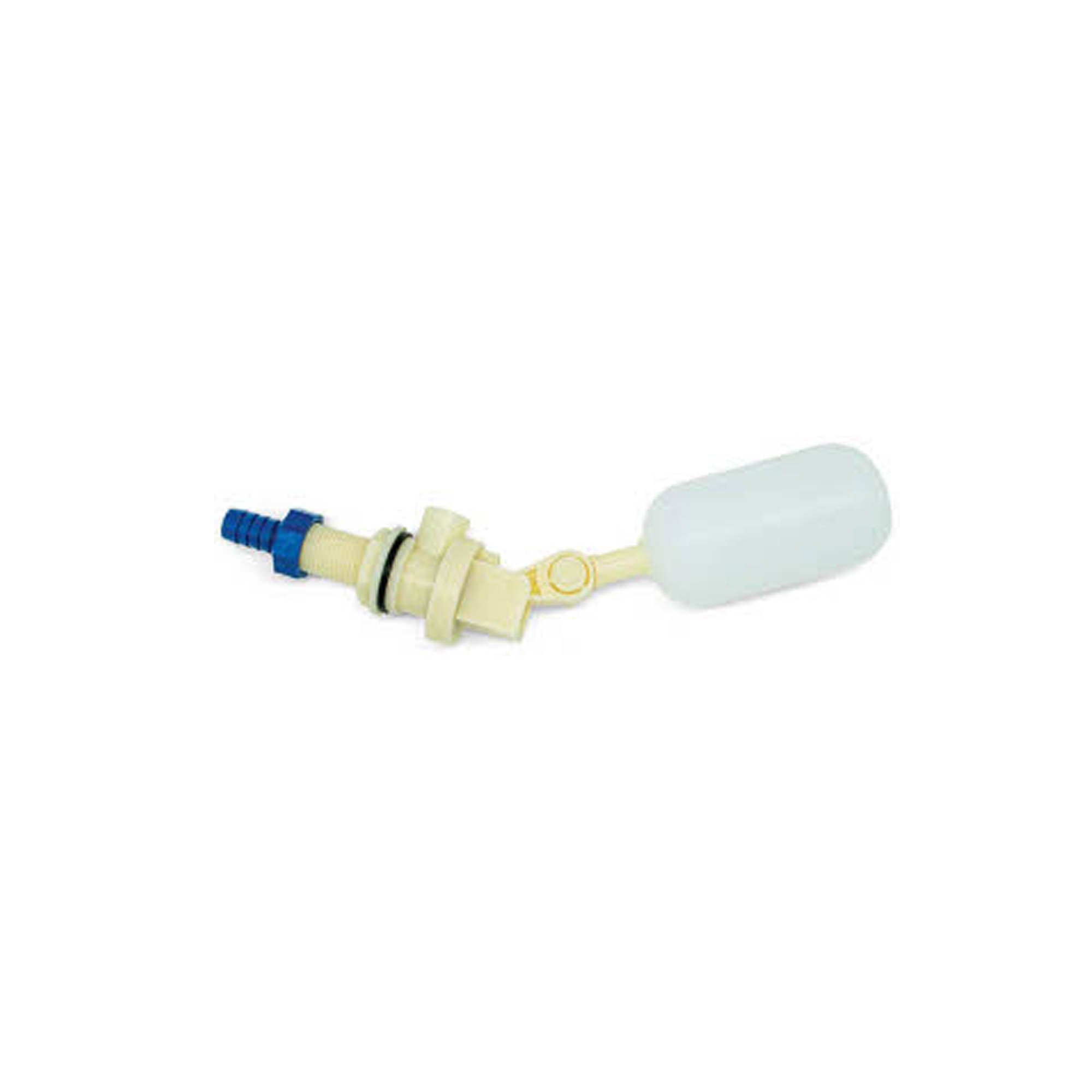
What does the Compact Float Valve do?
The Compact Float Valve automatically tops up your reservoir as water levels drop, then shuts off once the set level is reached. It's a mechanical, power-free solution that helps maintain stable levels in hydroponic and irrigation systems.
How do I adjust the water level on the Compact Float Valve?
You can adjust the shut-off height by loosening the nut and changing the float arm angle. Raise the float to shut off earlier (lower level) or lower it to shut off later (higher level). Always test after adjustment to confirm the correct waterline.
What size hose fits the Compact Float Valve?
It has a 13mm barbed inlet designed for 13mm hose. To use larger sizes like 19mm or 25mm, you’ll need reducers. A hose clamp is recommended for secure connection, especially with pressurized or pump-fed setups.
Where should I install the Compact Float Valve inside a reservoir?
Mount it through the side of the tank where the float has enough room (approx. 240mm length) to move freely. Avoid placing it near walls, lids, cables, or pumps that could obstruct the float’s movement.
How do I install the Compact Float Valve and prevent leaks?
Drill a clean, properly sized hole, deburr the edges, and use the supplied washer/gasket to seal. Don’t overtighten. Silicone is only needed if the surface is rough. PTFE tape is only for threaded plumbing connections—not the valve body seal.
Can I run the Compact Float Valve from a header tank or gravity feed?
Yes—gravity feed is a common and effective method. Just ensure the supply tank is higher than the reservoir and that the line has enough flow. An inline valve can help control refill speed and reduce splashing.
Is it safe to connect the Compact Float Valve to mains water?
It’s possible, but backflow prevention is essential to avoid contaminating your water supply. Use an air gap or approved backflow device, and follow local plumbing codes for any mains-connected setup.
Can I top up with nutrient solution using the Compact Float Valve?
You can top up with plain water or premixed nutrients. However, topping with nutrients may cause EC drift over time depending on plant uptake. If using organics or compost teas, expect more maintenance due to potential biofilm buildup.
Why is my Compact Float Valve overflowing or not refilling?
Overflowing is usually caused by float obstruction, debris in the valve, or high pressure. If it’s not refilling, check for a stuck float, kinked line, empty supply tank, or if it’s mounted too high for your desired waterline.
How do I clean the Compact Float Valve?
Turn off the supply, remove the valve, and rinse with warm water. Gently scrub off any debris or buildup around the seal. If using organics or warm nutrients, clean more often to prevent sticking or weeping.
Can I use the Compact Float Valve in outdoor or aquarium setups?
Yes—it works for ponds, aquariums, and outdoor reservoirs. Protect it from direct sun to extend life, and ensure clean water to avoid clogging. It’s also useful for overflow control in header tanks or automatic top-offs.
What’s a safe way to prevent flooding if the valve fails?
Use a limited-volume header tank and install an overflow outlet slightly above the shut-off level. These simple safeguards help prevent accidental overflows if the valve sticks open or the supply line fails.
What’s the most common mistake when installing the Compact Float Valve?
Installing it where the float arm can snag on tank walls, lids, tubing, or cords. Always check that the float moves freely, and never rely on the valve alone—use overflow protection for peace of mind.