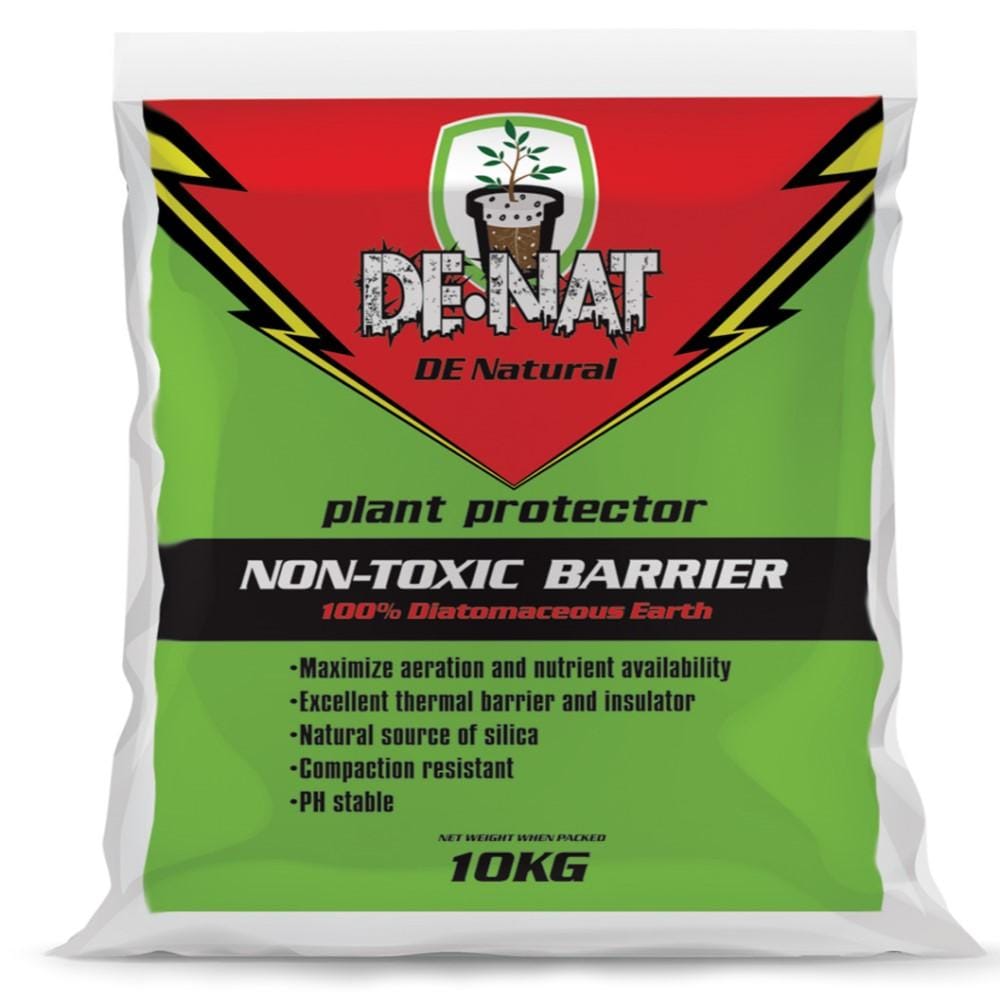
What is De-Nat Non-Toxic Barrier made from?
De-Nat is a premium diatomaceous earth top-dress made from fossilised diatoms, naturally rich in silica and calcium. It forms a non-toxic, physical pest barrier while supporting soil health, aeration, and mineral content.
How does De-Nat Non-Toxic Barrier control pests?
De-Nat works by creating a dry, abrasive surface that damages crawling pests like fungus gnats and ants. It’s not a chemical or pesticide—consistent dry coverage helps disrupt pest life cycles over time.
Is De-Nat Non-Toxic Barrier safe for edible and indoor plants?
Yes—De-Nat is organic and safe for edible crops, indoor plants, flowering plants, and living soil. Just keep the dust out of flowers and avoid direct contact with pollinators or pets during application.
How do I apply De-Nat Non-Toxic Barrier for best results?
Top-dress an even 1–3cm dry layer across the entire soil surface. Don’t leave gaps, and avoid covering it with mulch if pest control is your main goal. The barrier must stay dry and intact to work effectively.
Do I need to reapply De-Nat after watering?
Often, yes. Top-watering can break the layer—check weekly and top up if needed. Bottom-watering helps keep the layer drier and more effective over time.
Can I mix De-Nat Non-Toxic Barrier into potting soil?
Yes—De-Nat can replace perlite or be blended at 10–20% by volume to improve structure in coco, peat, or living soils. It boosts porosity, resists compaction, and supports long-term root health.
How does De-Nat Non-Toxic Barrier improve soil performance?
When mixed into media, it enhances aeration, water distribution, and thermal stability. It can support microbial activity by improving oxygen flow and soil structure, especially in compact-prone mixes.
Will De-Nat Non-Toxic Barrier harm beneficial insects or microbes?
Used on the soil surface or in media, it won’t harm beneficial microbes. However, it can affect crawling insects, including predators, so avoid using it where you want insect movement or pollinator access.
Can De-Nat Non-Toxic Barrier reduce the need for spraying?
Yes—it’s often used to lower reliance on foliar sprays by reducing soil-surface pest pressure. For best results, combine with sticky traps and improve watering habits to dry out the top layer.
How much area does a 10kg bag of De-Nat cover?
One 10kg bag covers around six 30L pots, four 50L pots, or two 95L pots when applied at the recommended 1–3cm top layer thickness.
Is De-Nat Non-Toxic Barrier safe to use around kids and pets?
Yes, it’s non-toxic—but avoid creating airborne dust and keep it out of reach during application. Wear a dust mask and avoid contact with eyes or prolonged skin exposure if handling large volumes.
What’s the best way to store De-Nat Non-Toxic Barrier?
Keep it sealed, dry, and away from humidity to maintain its free-flowing texture and effectiveness. Store it in a cool, covered area.
Why isn’t De-Nat Non-Toxic Barrier working against fungus gnats?
Common reasons include the layer being wet, broken, or patchy. Ensure full dry coverage, fix watering issues, and consider combining with sticky traps for full life-cycle interruption.
What’s the biggest mistake people make with De-Nat Non-Toxic Barrier?
Letting the layer stay wet or broken, which stops it from acting as an effective barrier. Keep it dry, intact, and reapply as needed after watering or rainfall.
Can De-Nat Non-Toxic Barrier help with thermal insulation?
Yes—it’s known to help buffer temperature fluctuations in the root zone, supporting more consistent conditions in both indoor and outdoor containers.