
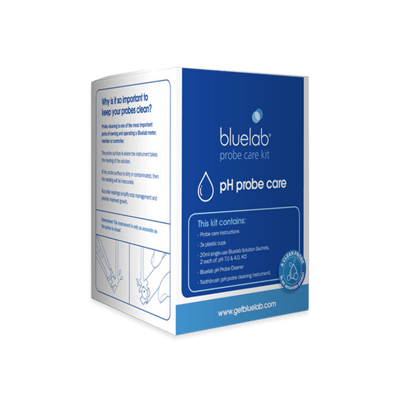

Bluelab pH Pen Care Kit

Save 5%

Price:
Sale price$36.00 Regular price$38.00

Pickup available at Bellambi

Usually ready in 24 hours

Description

Maintaining the accuracy and extending the lifespan of your Bluelab pH Pen is essential for precise measurements.

The Bluelab Probe Care Kit – pH provides all the necessary tools to service, clean, and calibrate your pH probes, ensuring consistent and reliable readings.

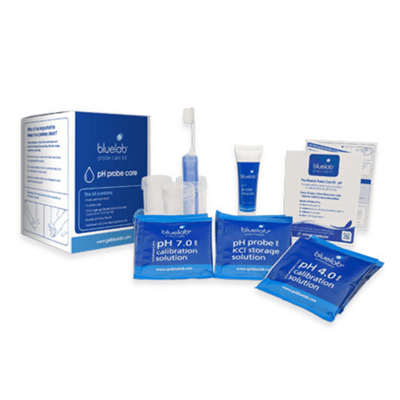
Kit Contents:

  • Probe Care Instructions: Detailed guidelines to assist you in properly maintaining your pH probe.

  • Bluelab Solution Sachets (20ml each): Two single-use sachets each of pH 7.0, pH 4.0, and KCl storage solutions for calibration and storage purposes.

  • Plastic Cups (3): Convenient containers for mixing and using the solutions during the cleaning and calibration process.

  • Bluelab pH Probe Cleaner: A specialized cleaning solution designed to effectively clean your pH probe without causing damage.

  • Bluelab Toothbrush (pH Probe Cleaning Instrument): A soft-bristled brush tailored for gently cleaning the probe's delicate components.

Maintenance Recommendations:

Bluelab advises servicing your pH equipment monthly. Regular maintenance involves cleaning the probe, hydrating it in KCl storage solution, and calibrating it using the provided pH 4.0 and pH 7.0 solutions. This routine ensures consistent accuracy and extends the lifespan of your device.

Usage Tips:

  • Cleaning: After each use, rinse the probe tip under fresh tap water. For thorough cleaning, use the Bluelab pH Probe Cleaner and the provided toothbrush to gently remove any contaminants.

  • Hydration: If the probe has been allowed to dry out, rehydrate it by soaking the tip in KCl storage solution for at least 24 hours before use.

  • Calibration: Calibrate the pH pen by first immersing the probe in pH 7.0 solution, followed by pH 4.0 solution, ensuring the device provides accurate measurements.

Why Regular Maintenance is Crucial:

Regular cleaning and calibration prevent inaccuracies caused by probe contamination or drift. By adhering to a consistent maintenance schedule, you ensure reliable readings, which are vital for effective nutrient management and overall plant health.

Secure & Encrypted Payments

Logos for Google Pay, Airwallex, and PayPal.

Estimate shipping

Frequently Asked Questions (FAQ)

What is the Bluelab pH Probe Care Kit used for?

The Bluelab pH Probe Care Kit is designed to clean, hydrate, and calibrate pH probes so readings stay fast, stable, and accurate. It helps fix common issues like slow response, drifting numbers, and inconsistent results caused by dirty probes, dry storage, or overdue calibration.

What’s included in the Bluelab pH Probe Care Kit?

The kit typically includes pH 7.0 and pH 4.0 calibration sachets, KCl storage solution sachets, probe cleaner, plastic cups, a soft toothbrush, and care instructions. Together, these cover proper cleaning, calibration, and wet storage for pH probes.

Does the kit include both calibration and storage solutions?

Yes. It includes pH 7.0 and pH 4.0 buffers for calibration, plus KCl storage solution to keep the probe tip hydrated between uses. Both are essential for accurate readings and long probe life.

Is the Bluelab pH Probe Care Kit only for Bluelab probes?

It’s designed for Bluelab probes, but the care principles are standard for most pH probes. It can be used on other brands unless the manufacturer specifies a different storage solution or care method.

Can I use this kit with Bluelab pH pens and the Leap™ pH Probe?

Yes. The kit works with Bluelab pH pens, handheld meters, monitors, controllers, and the Bluelab Leap™ pH Probe. All pH probes need the same basics: clean sensing surfaces, proper calibration, and wet storage.

Why is the KCl storage solution so important?

KCl storage solution keeps the probe’s glass and junction hydrated, which is critical for fast response and accuracy. Storing probes dry or in plain water (especially RO or distilled) can permanently damage probe chemistry.

How do I clean a pH probe using the care kit?

Rinse the probe with clean water, use the probe cleaner as directed, gently brush if needed with the included toothbrush, then rinse thoroughly. Cleaning removes salt buildup and biofilm so the probe can read correctly.

Do I need to calibrate after cleaning the probe?

Yes. Cleaning changes how the probe responds, so calibration should always follow. Best practice is clean, rinse, then calibrate using pH 7.0 first and pH 4.0 second.

Can I reuse calibration solutions or dip directly into sachets?

No. Always pour a fresh amount into a clean plastic cup, use it once, and discard it. Reusing or pouring solutions back into containers contaminates them and quietly ruins accuracy.

How often should I use the Bluelab pH Probe Care Kit?

About every 30 days is a good baseline. Use it sooner if you measure daily, run organic nutrients, notice slow or drifting readings, or after events like probe drying, heavy buildup, or drops.

Can the kit revive a dried-out pH probe?

Sometimes. Soaking the probe tip in KCl storage solution for around 24 hours, followed by cleaning and calibration, can restore performance—unless the probe has been dry too long or is physically damaged.

How do I know when a pH probe needs replacing?

If the probe repeatedly fails calibration, drifts badly, or stays very slow even after cleaning and a full KCl rehydration soak, it’s usually at the end of its usable life.

Do organic nutrients mean I need probe care more often?

Yes. Organic and biologically active systems tend to foul probes faster, which means more frequent cleaning and calibration checks are usually needed to keep readings reliable.

Can I restock parts of the Bluelab pH Probe Care Kit separately?

Yes. Calibration buffers, KCl storage solution, and probe cleaner are usually sold separately, so you can replace only what you use most often without buying a full kit each time.

What’s the simplest best-practice routine with the Bluelab pH Probe Care Kit?

Clean the probe, rinse, calibrate with pH 7 then pH 4, rinse again, and always store the probe tip wet in KCl storage solution. Skipping any of these steps is the most common cause of bad pH readings.

You may also like

Recently viewed