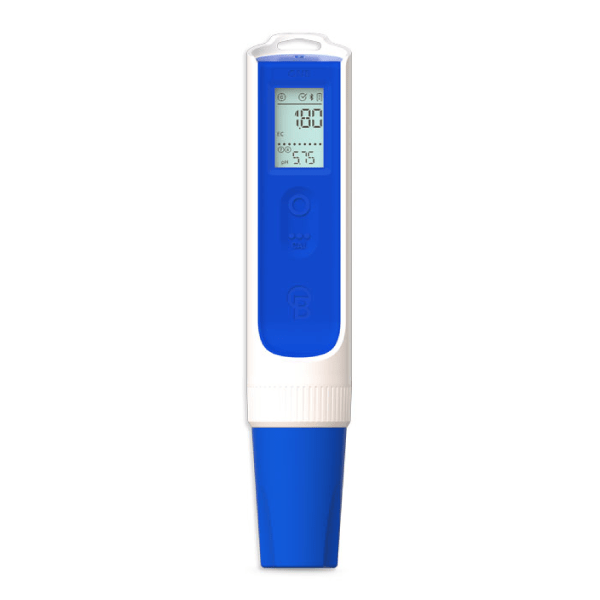
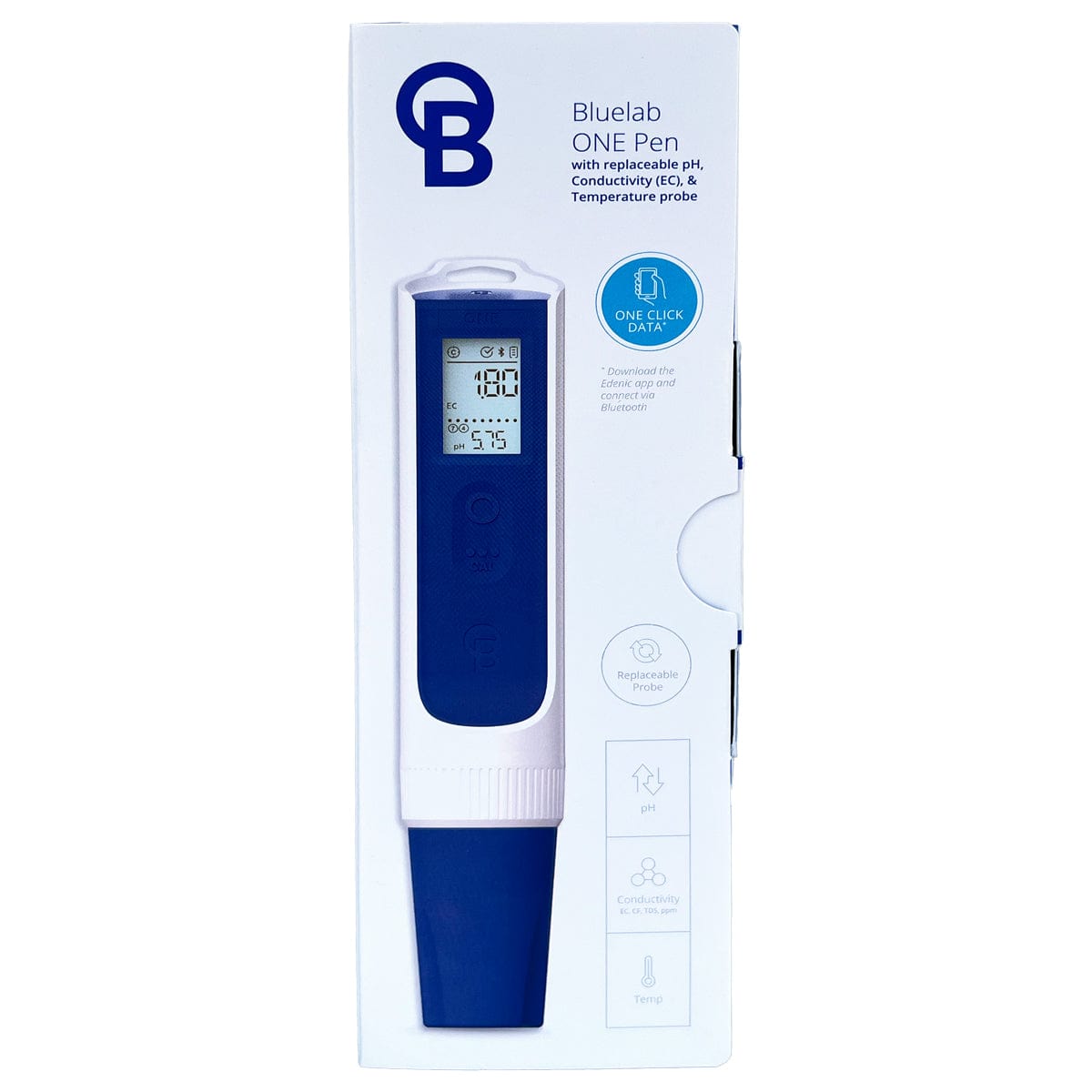
What does the Bluelab One Pen measure?
The Bluelab One Pen measures pH, EC (electrical conductivity), and temperature in nutrient solutions. It can also display PPM/TDS using selectable conversion modes. For consistent results, EC is the most accurate measurement for nutrient strength.
Can I use the Bluelab One Pen in reservoirs or sample cups?
Yes — it’s ideal for testing nutrient tanks, top-up buckets, and runoff samples. It's not designed for direct soil or coco testing; use a root-zone meter for that. Don’t leave it submerged full-time — it's made for handheld spot checks.
Does the Bluelab One Pen show temperature too?
Yes — it measures temperature to help you monitor solution conditions. Temperature affects nutrient uptake and can impact both pH and EC readings, so it's important to track alongside your other measurements.
What’s special about the Bluelab One Pen probe?
The probe combines pH, EC, and temperature sensing in one unit and is fully replaceable. That means when the probe wears out, you don’t have to replace the entire pen. It also includes a probe health indicator for added reliability.
Does the Bluelab One Pen connect to an app?
Yes — it connects via Bluetooth to the Edenic app, which allows you to log and track readings over time. The app is optional, but it's great for spotting trends and diagnosing plant issues with real data.
How do I calibrate the Bluelab One Pen?
For pH, use a 2-point calibration with pH 7.0 and pH 4.0 solutions. EC is calibrated using a standard solution like 2.77 EC. Calibrate monthly, or more often if you test daily, use organics, or see drifting values.
Why is my Bluelab One Pen reading slowly or drifting?
Common causes include a dirty or dry pH bulb, temperature differences, air bubbles, or old calibration solutions. Hydrate the bulb in KCl, clean the probe, and recalibrate to restore accurate readings.
How do I clean and store the Bluelab One Pen probe?
Clean the probe with pH probe cleaner and a soft brush. Always store the pH bulb in KCl storage solution — never dry or in plain water. If the probe dries out, soak it in KCl for 24 hours, then recalibrate.
Can I reuse calibration solutions or dip into the bottle?
No — always pour a fresh amount into a clean cup and discard after use. Reusing or dipping directly into bottles contaminates the solution and leads to inaccurate calibration.
What’s the right order for mixing nutrients and testing with the Bluelab One Pen?
Mix all nutrients first, stir thoroughly, then measure EC. Once EC is stable, adjust pH if needed and measure again. pH often shifts naturally after mixing, so measure after everything is fully combined.
Is the Bluelab One Pen accurate with organic nutrients?
Yes — but organics tend to foul probes faster. Clean and calibrate more frequently to maintain reliable readings when using organic or “living” nutrient systems.
Can the Bluelab One Pen handle high EC levels?
It’s designed for typical nutrient ranges, but very high EC or thick additives can slow response time. For troubleshooting, you can dilute a small sample — just remember dilution affects the actual reading.
Is the Bluelab One Pen waterproof and durable?
Yes — it’s water-resistant and built for grow room conditions. It can survive splashes and accidental drops into tanks, but avoid soaking the battery area or using it as a permanent submersion probe.
What batteries does the Bluelab One Pen use?
The pen typically uses AAA batteries. If readings seem erratic or calibration fails unexpectedly, try changing the batteries and recalibrating before assuming probe failure.
Is the Bluelab One Pen good for beginners?
Absolutely. Just follow the basics: rinse the probe between tests, calibrate pH monthly, keep the pH bulb stored wet, and clean when needed. Most issues come from skipping those simple steps.