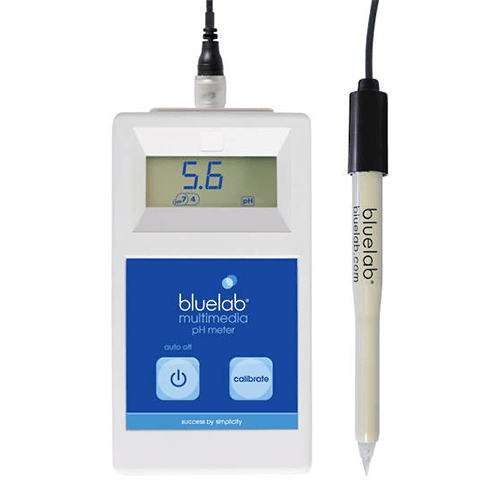
What does the Bluelab Multimedia Meter measure?
The Bluelab Multimedia Meter measures pH in both growing media (like soil, coco, rockwool, potting mixes) and liquid nutrient solutions. It does not measure EC—use a separate conductivity meter for that. It’s perfect for hydro systems, houseplants, and chunky aroid mixes too.
What is the Bluelab Leap™ pH Probe and why is it important?
The Leap™ pH Probe is a spear-tip sensor that reads pH directly in moist media, unlike standard glass probes. It's reinforced for root-zone testing and offers more accurate insights than relying on runoff or feed pH alone.
How do I take accurate pH readings in soil or coco?
Test when media is moist (after watering or feeding), insert the probe gently into the root zone—not just the surface—and take 2–3 readings per pot. For chunky media, use a pilot hole to avoid damaging the probe or roots.
Do I need to calibrate the Bluelab Multimedia Meter before first use?
Yes. Calibrate using fresh pH 7.0 and pH 4.0 buffer solutions. Rinse the probe between buffers, and don’t reuse the calibration fluid. The meter includes a 30-day calibration reminder on the screen.
How often should I calibrate the Bluelab Multimedia Meter?
Monthly is a good rule. If you're measuring daily, using organics, or seeing drifting or slow readings, calibrate more often. Temperature swings and dirty probes can also affect reading accuracy.
How should I store the Bluelab Leap™ pH Probe?
Always store the probe tip wet in KCl storage solution using the provided cap. Never store it dry or in RO/distilled water—both can damage the sensor and reduce accuracy over time.
What should I do if the pH probe dries out?
Soak the tip in KCl storage solution for 24 hours to rehydrate. After soaking, calibrate and test performance. A white crust on the tip or cap is normal—it’s dried KCl and can be gently rinsed off.
How do I clean the Bluelab Leap™ pH Probe?
Use an approved pH probe/electrode cleaner, soak as directed, rinse thoroughly, then recalibrate. Always rinse between readings and avoid scrubbing the glass tip—it’s sensitive and can be damaged.
Can organic nutrients or raw concentrates damage the probe?
Yes. Organic media can foul the sensor faster, and undiluted pH adjusters or nutrient concentrates can cause damage. Always mix concentrates into water first and rinse the probe after use.
Why is pH different in the media compared to the reservoir?
The reservoir shows what you're feeding; the media shows what roots are experiencing. Root zones can drift due to salt buildup, uneven watering, or microbial activity—media readings are often more telling.
How long does the Bluelab Leap™ pH Probe last?
With proper cleaning, calibration, and wet storage, the Leap™ pH Probe can last well over a year. Signs it needs replacing include constant drift, failed calibration, or slow readings even after cleaning.
Is the Bluelab Leap™ pH Probe replaceable?
Yes. The Leap™ pH Probe can be replaced without buying a new meter. It's connected via a standard BNC connector and is easy to swap when needed.
What’s the warranty for the Bluelab Multimedia Meter and Leap™ pH Probe?
The Bluelab Multimedia Meter typically includes a 5-year warranty on the meter body and a 6-month warranty on the pH probe, which is considered a consumable component.
Is the Bluelab Multimedia Meter portable and durable?
Yes. It’s designed to be handheld and rugged for real grow conditions. A carry case is recommended to protect it during transport or storage.
What’s the most common mistake users make with this meter?
Letting the pH probe dry out or skipping calibration. Both can lead to inaccurate readings, even if the meter itself is working fine. Clean, calibrate, and store it wet for best results.