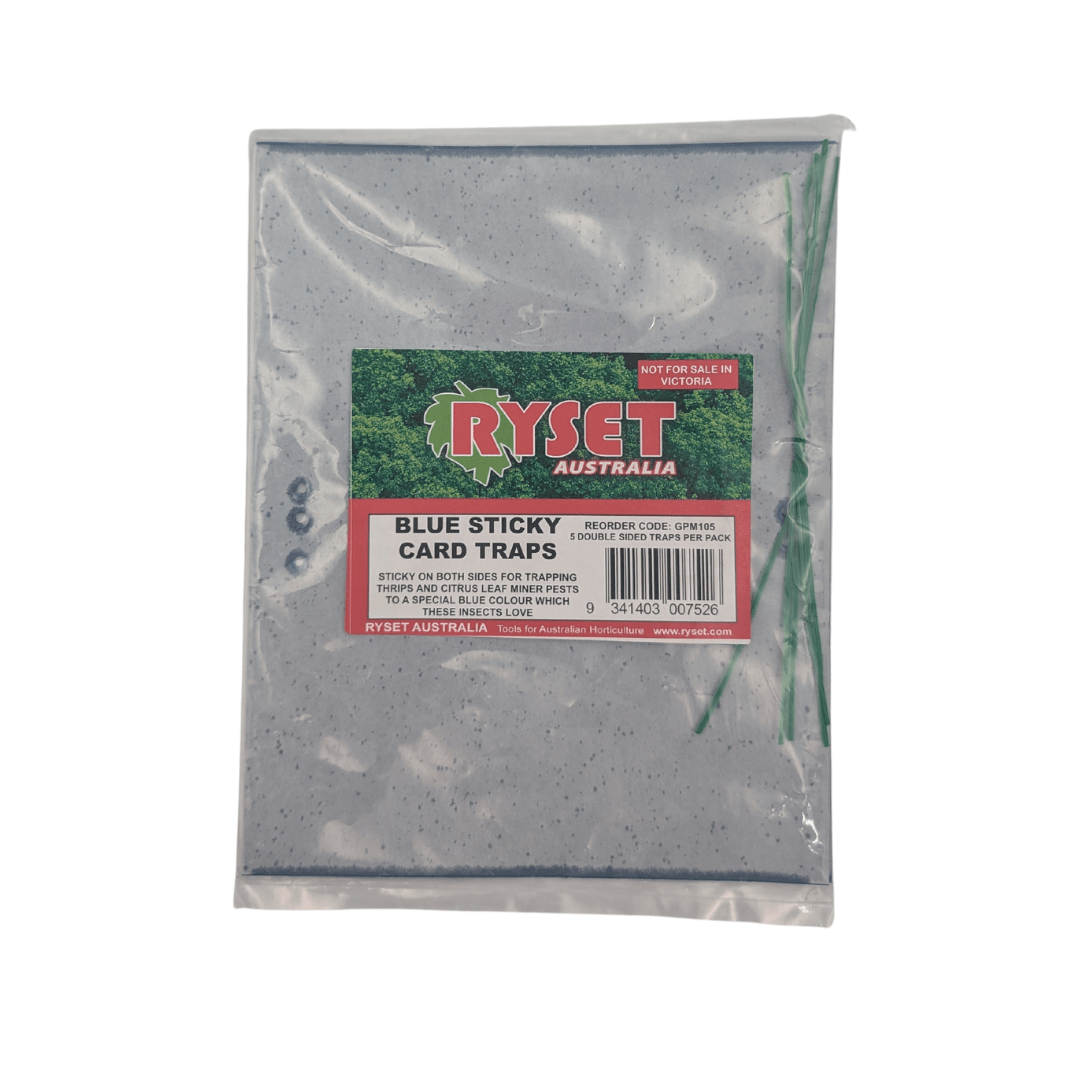
What pests does the Blue Sticky Pest Trap target?
Blue Sticky Pest Trap is designed for thrips and citrus leaf miner adults. It helps reduce flying adult populations and works best as a monitoring tool or part of an IPM plan. It doesn’t catch larvae or control existing leaf damage, but it helps break the pest cycle.
Why is Blue Sticky Pest Trap blue instead of yellow?
Blue traps are more attractive to thrips, making them ideal for thrips-heavy problems. Yellow traps attract a wider range of flying pests, so some growers use both types depending on their goals. Blue Sticky Pest Trap is less likely to attract beneficial insects, but placement still matters.
Where should I place Blue Sticky Pest Trap for best results?
Hang traps at plant canopy height or just above, near new growth, flowers, or pest hotspots. Keep them close to plants but avoid direct contact with leaves. Adjust trap height as plants grow and use more traps in areas with higher pest pressure.
Can I use Blue Sticky Pest Trap indoors or outdoors?
Yes—it's suitable for both. Indoors, it's great for houseplants, grow tents, and hydro setups. Outdoors, it works well near citrus, herbs, or flowers but may need more frequent replacement in dusty, wet, or windy conditions.
What size are the traps and how sticky are they?
Each trap is 250mm x 100mm, sticky on both sides, and comes with a hanging wire. The glue is non-drying and very tacky—avoid skin or surface contact. If stuck, use oil to remove from skin or trim affected leaves gently.
Is Blue Sticky Pest Trap safe around plants, kids, and pets?
Yes—it’s non-toxic and pesticide-free, making it safe for use around edible plants and houseplants. Keep traps out of reach of children and pets to avoid accidental contact with the adhesive.
How do I know if Blue Sticky Pest Trap is working?
Check weekly. You'll start seeing tiny, dark or dash-shaped insects stuck to the card. A reduction in new plant damage over time means it’s doing its job. No catches? Try repositioning closer to plant tops or pest entry points.
How long do Blue Sticky Pest Traps last?
The traps remain sticky for weeks, but dust, debris, and pest build-up reduce effectiveness. Replace when full or dusty—typically every 2–4 weeks, sooner outdoors or in high-pressure areas.
Can Blue Sticky Pest Trap be reused or cleaned?
No—once the surface is full or dusty, it’s best to replace the trap. Used traps should be wrapped in paper or cardboard before disposal to avoid accidental contact with pets, wildlife, or surfaces.
Is Blue Sticky Pest Trap safe to use on edible plants?
Yes—since it's a physical trap, not a chemical spray, it's safe to use near herbs, fruit, or vegetables. Just avoid direct contact with edible parts and wash produce as usual before eating.
Why isn’t Blue Sticky Pest Trap approved for use in Victoria?
Victoria has strict regulations on glue traps to prevent harm to wildlife. If you live in Victoria, don’t use Blue Sticky Pest Trap unless you're certain it complies with local legal requirements and is used in a controlled environment.
Can I use Blue Sticky Pest Trap alongside beneficial insects?
Yes—but place traps away from areas where beneficials are released. While it’s less attractive to many beneficials, flying insects can still get caught if traps are placed in high-traffic areas.
How many Blue Sticky Pest Traps should I use?
It depends on your space and pest pressure. Start with a few near hotspots or problem plants. For monitoring, fewer traps are fine. For control, increase quantity around damage zones or entry points.
Does Blue Sticky Pest Trap come in different pack sizes or subscriptions?
This product page lists a 5-pack option. Subscription or recurring purchase may be available to help maintain ongoing pest monitoring—check your replacement needs before subscribing.