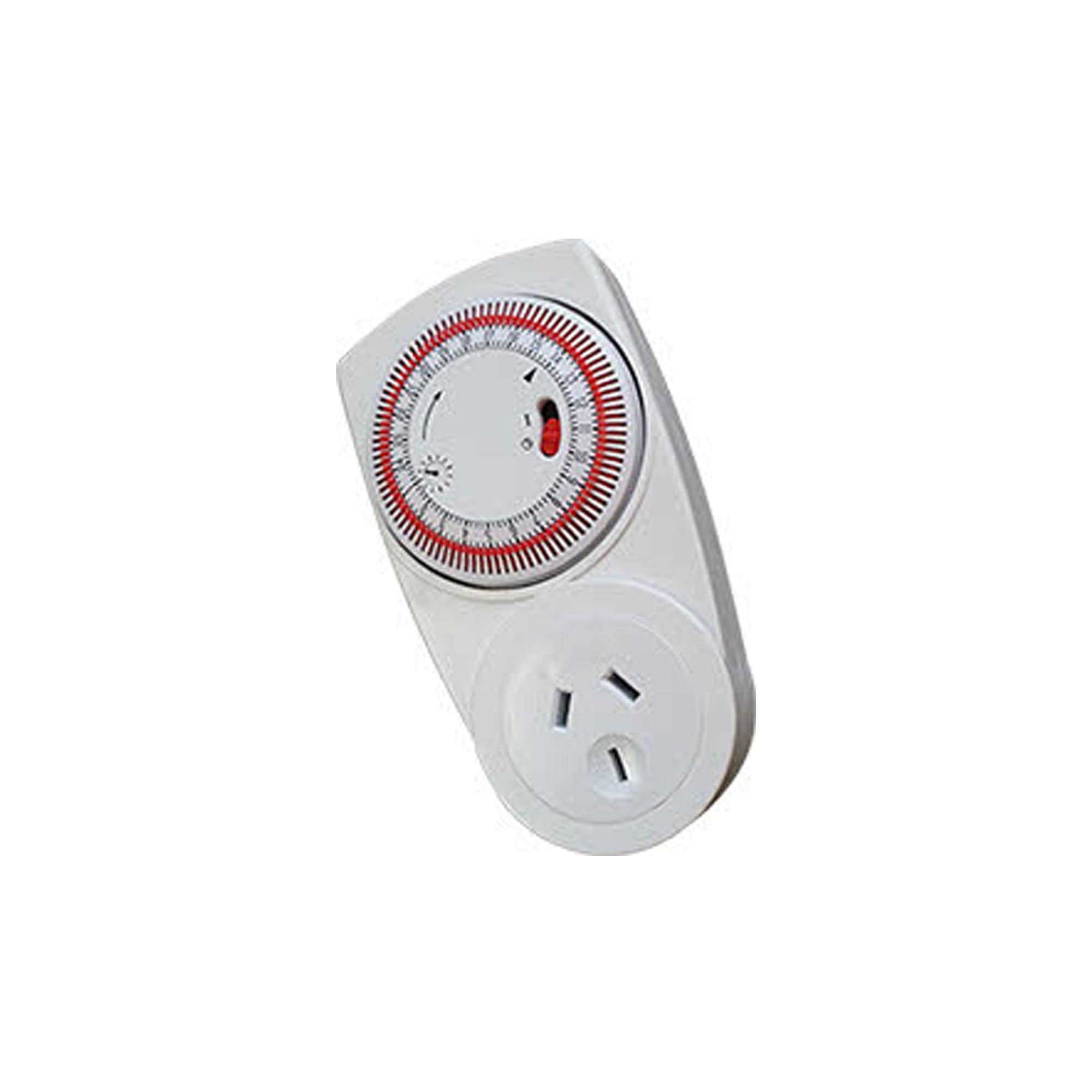
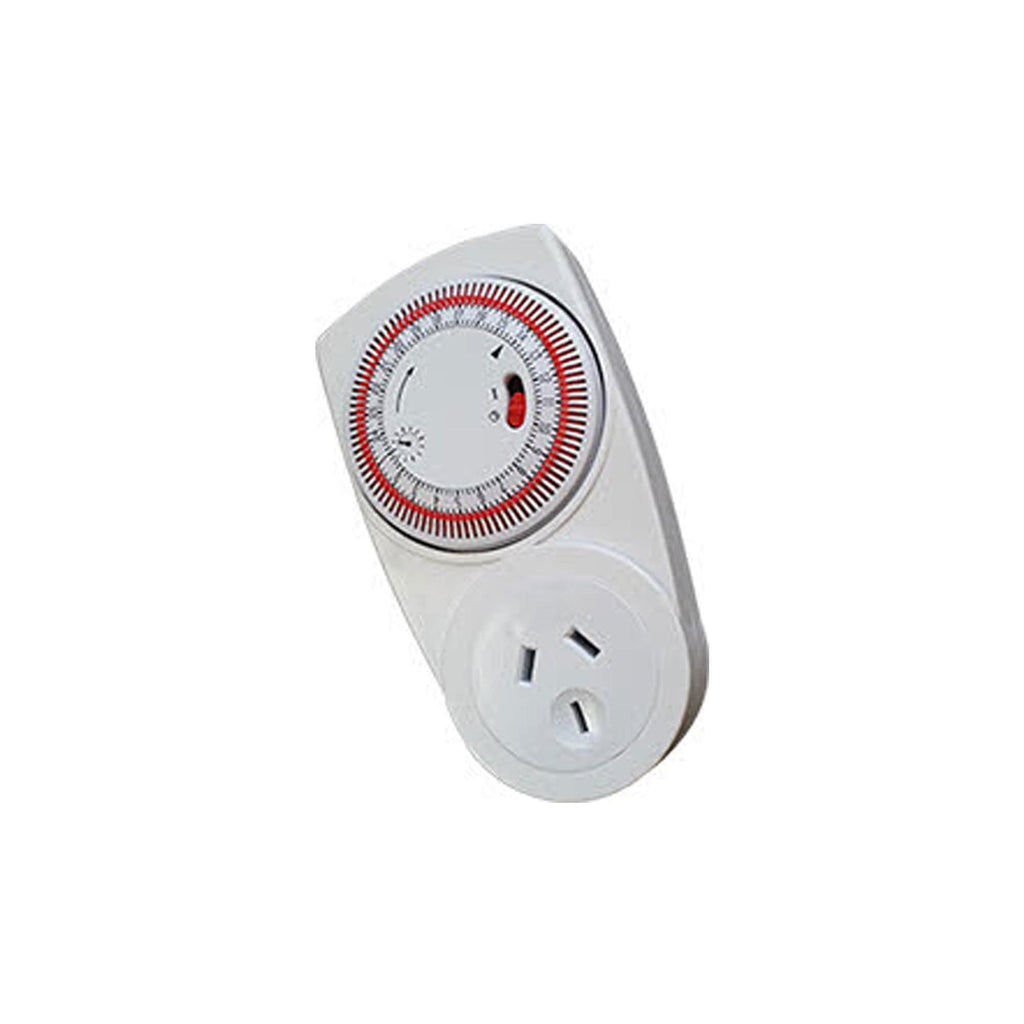
What is the Analogue Light Timer and how does it work?
It's a plug-in mechanical timer that switches power on/off based on a 24-hour schedule. Set the current time on the dial, then push down the segments for your desired “on” times. It repeats the same schedule daily—no apps, no programming frustration.
Can I use the timer for grow lights, fans, or other equipment?
Yes—it's commonly used for grow lights, fans, pumps, and heat mats. Just ensure the device stays well under the 10A rating. High-surge items like HID ballasts or compressors may require a heavy-duty timer or contactor.
What kinds of schedules can the timer handle?
You can set on/off cycles in 15-minute increments—up to 48 per day. That covers common grow schedules like 18/6, 12/12, 20/4, or split cycles throughout the day or night.
Does the Analogue Light Timer have a manual override switch?
Yes—it includes a manual override so you can turn devices on/off without changing your programmed schedule. Just remember to switch it back to "TIMER" mode afterward.
How much power can the Analogue Light Timer handle?
The max load is 10 amps (about 2400W on Australian mains). Always leave a buffer—especially for motors or devices with high start-up current. It doesn’t include surge protection.
Can I use it for watering automation or CO₂ control?
Only if you're using compatible gear within the 10A limit (like small pumps or solenoids). For CO₂ or critical watering, a dedicated controller is usually more reliable.
Can I plug a power board into the timer—or use it on one?
You can, but total load must stay under 10A. Avoid stacking timers, power boards, or running multiple high-draw devices. Keep your setup clean and safe.
Can I use the timer in a grow tent or outdoors?
It's best used indoors or in dry areas. For grow tents, place it outside the tent to avoid humidity damage. It’s not weatherproof, so don’t use it outdoors unless fully protected.
Does the Analogue Light Timer tick or make noise?
Yes—it has a quiet clock-like tick, which may be noticeable in silent rooms. If you're noise-sensitive, keep this in mind for bedroom or overnight setups.
Does the timer need batteries?
No—it runs off mains power. However, it will stop during power outages and lose track of time. You’ll need to reset the dial if the power cuts out.
Does the timer adjust for daylight savings time automatically?
No—it's a basic mechanical timer, so you’ll need to manually rotate the dial forward or back when daylight savings begins or ends.
Why isn’t my timer switching properly?
Check that the current time is set correctly, the override isn’t left on, and your device is switched on. You can test the program by slowly rotating the dial and watching it click on/off.
Is it safe for frequent switching or sensitive devices?
It can handle frequent cycles, but constant high-load switching may reduce its lifespan. Sensitive electronics usually work fine, but avoid pushing it near max capacity or using it with high inrush devices.
Can this timer help reduce electricity usage?
Yes—by automating on/off times, it prevents overuse of lights, fans, or heaters. It’s also great for security lighting to make your home look occupied while you’re away.
What’s the best way to test the timer before first use?
Set a short “on” period a few minutes ahead on the dial, plug in a lamp, and confirm it turns on/off as expected. Once verified, you can program your full schedule confidently.