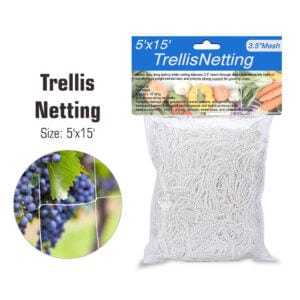
What is Trellis Mesh Netting used for?
Trellis Mesh Netting is designed to support climbing plants vertically or horizontally. It helps improve airflow, light access, and canopy shape—boosting yield and reducing disease risk. It's commonly used in veggie patches, flower beds, greenhouses, and indoor grows.
What mesh sizes are available, and how do I choose?
Choose from 3.5" mesh for tighter support and more climbing points, or 6" mesh for easier reach-through and faster harvesting. Use 3.5" for peas and flowers, 6" for cucumbers or chunkier vines. Beans can go either way depending on your preference.
Can Trellis Mesh Netting be used vertically or horizontally?
Yes—use it vertically for climbing plants like beans and cucumbers, or horizontally as a support grid for flowers or top-heavy crops. You can also stack multiple layers as plants grow for added support.
What plants is Trellis Mesh Netting good for?
It works well for tomatoes, peas, beans, cucumbers, climbing flowers, and even espalier-style training. It's also great for balconies, pots, greenhouses, and indoor canopy control when mounted securely.
How do I install Trellis Mesh Netting and keep it tight?
Anchor it to sturdy stakes or posts, space them close enough to avoid sagging, and use twine, clips, or zip ties for fastening. Pull it tight before securing, and add edge tie points—not just corners—for best tension.
How do I train plants to grow on Trellis Mesh Netting?
Guide vines gently through or onto the mesh early. Most plants will climb naturally once they start. Tucking or tying can help early growth. Training vertically also helps keep fruit off the soil for cleaner harvests.
Is Trellis Mesh Netting weatherproof and durable?
Yes—it’s made to withstand sun and rain and is UV-resistant for outdoor use. Like all synthetic netting, it may weaken over time, but with care it holds up well. Heavy fruits may need extra ties or sling support.
Is Trellis Mesh Netting safe around pets and wildlife?
Yes, when installed tightly on a frame. Loose netting can be a hazard, so keep it tensioned and secure. It's not a substitute for fencing or proper pest netting but may deter some animals when used correctly.
Can Trellis Mesh Netting be cut or resized?
Yes—cut it to fit your setup. If fraying occurs, use tape on the edges or melt them gently if it's synthetic. You can run it along one long row or cut it into shorter sections for small beds or frames.
Is Trellis Mesh Netting reusable?
Absolutely. Rinse off debris, wash with mild soap, let it dry fully, and store it coiled and tied to prevent tangling. With proper care, you can use it for many seasons.
How do I store Trellis Mesh Netting without tangling?
Roll it neatly and secure it in two or three spots with string or ties. Store it clean and dry. Avoid balling it up—future-you will thank past-you.
What’s the coverage area of Trellis Mesh Netting?
Each net covers 1.5m × 4.5m, or 6.75 square meters. That’s enough for a full row, a large section of a flower bed, or a full grow tent wall if used indoors.
Can Trellis Mesh Netting replace all plant ties?
It replaces many—but not all. For heavy fruit or stubborn branches, a few extra soft ties can help keep things supported exactly where you want them.
Can Trellis Mesh Netting be layered for more support?
Yes—stacking layers is common in flower beds and tall crops. Just match the layer height to plant growth stages so the net supports them as they reach new heights.
What’s the most common mistake with Trellis Mesh Netting?
Installing it too loose. A floppy net won’t support much, lets stems flop, and can rub branches in wind. Pull it tighter than you think you need, and anchor it well to get real support.