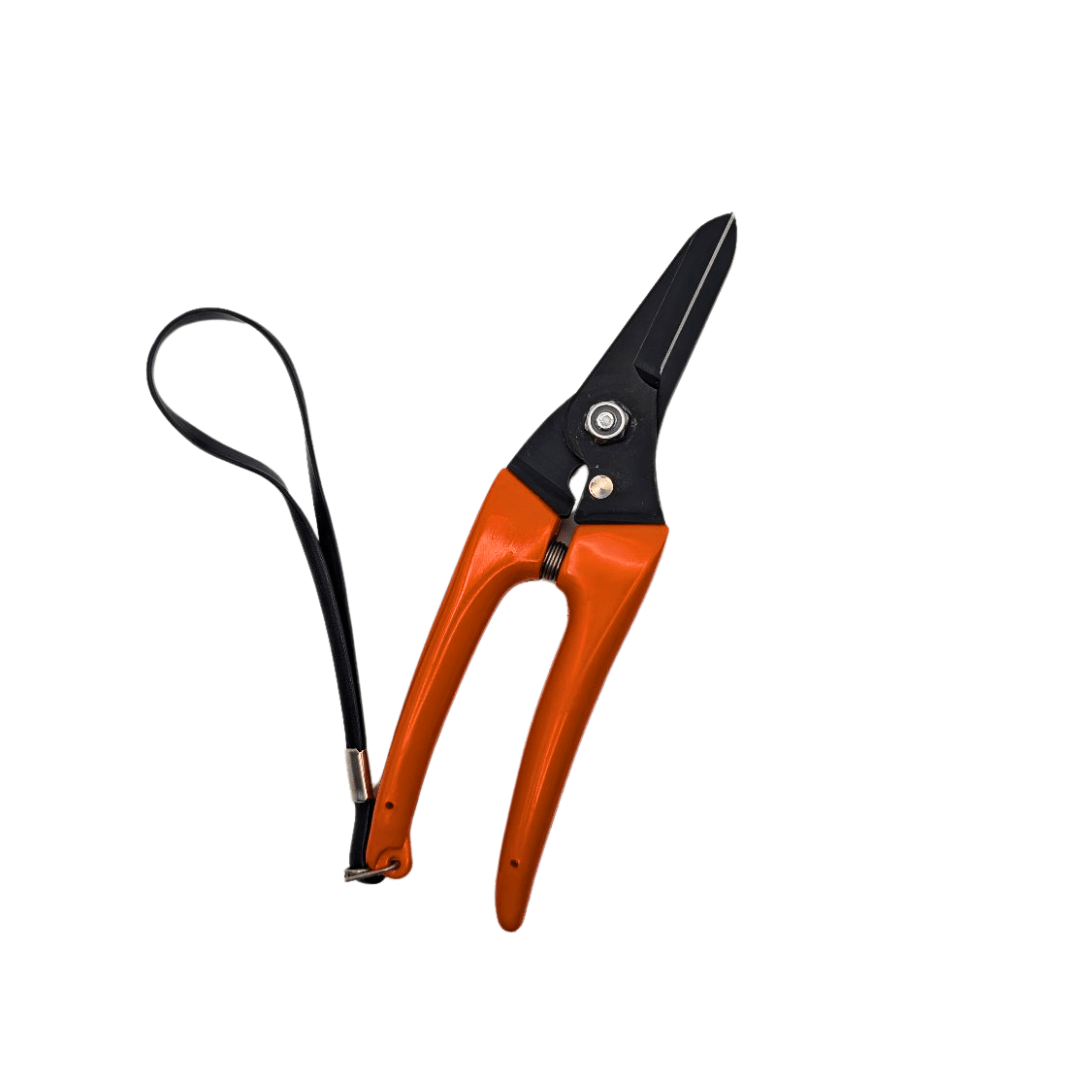
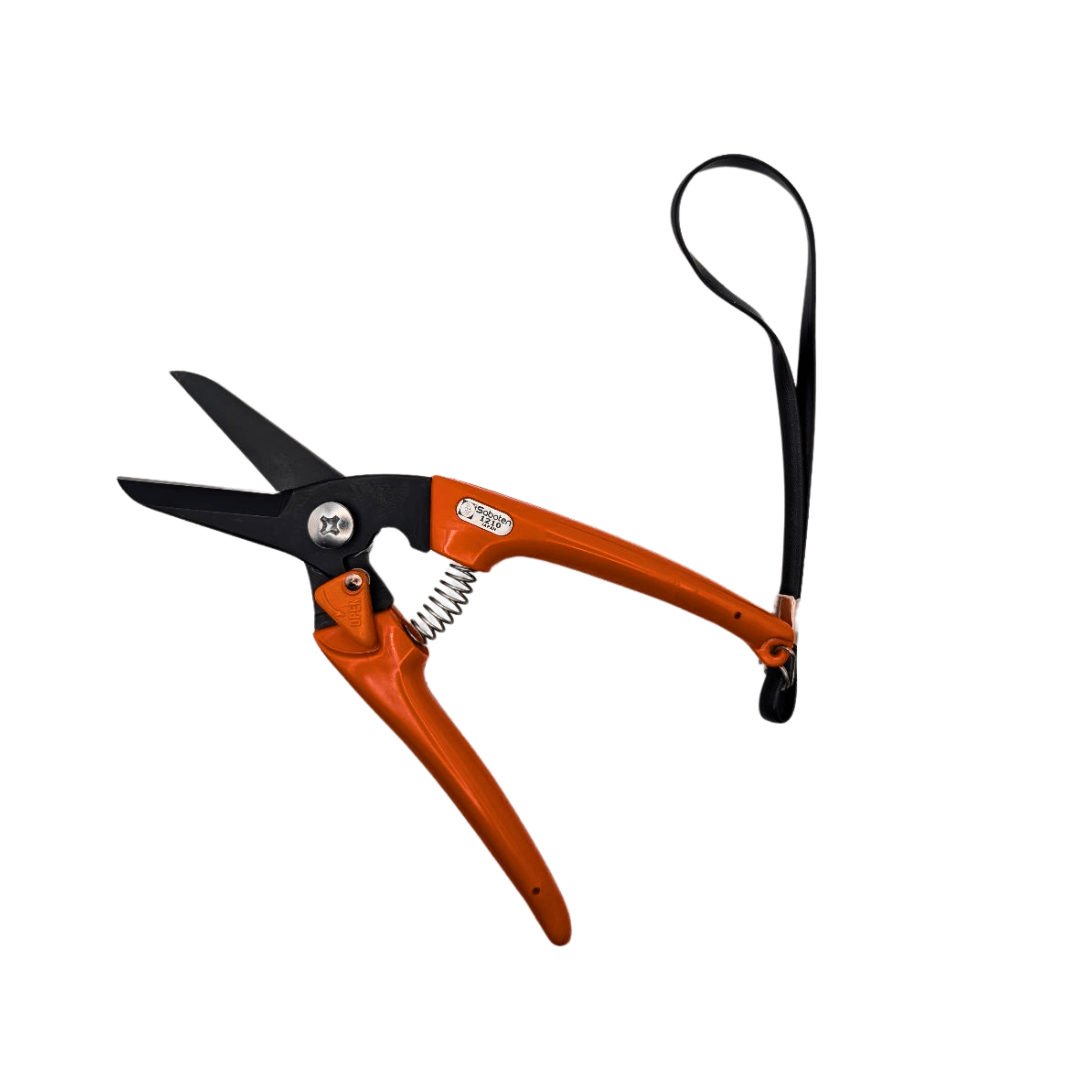
What are Saboten Classic Pruning Shears Bypass – No. 1210 used for?
Known as the “Slimmer Trimmer,” Saboten No. 1210 is a lightweight, scissor-style bypass shear made for clean, precise cuts on soft stems, flowers, herbs, bonsai, and small green branches. It’s a go-to tool for detail-focused gardeners and indoor plant lovers.
What type of pruning is Saboten No. 1210 not designed for?
Saboten No. 1210 isn’t built for thick woody branches, roots, wire, or heavy-duty tasks. If you’re squeezing hard, twisting, or the branch bends instead of cutting, switch to a tougher tool like loppers or anvil pruners.
Can Saboten No. 1210 be used for fruit picking, herbs, or bonsai?
Yes—its slim blades are perfect for snipping fruit stems, trimming herbs cleanly, and fine bonsai or floral shaping. It’s also commonly used for ikebana and dense flower clusters where larger pruners feel too bulky.
Is Saboten No. 1210 comfortable to use for long trimming sessions?
Yes. It features a spring-assisted opening, soft grip handles, and a lightweight build. It’s well-suited to small hands, reduces fatigue, and includes a strap for security during use. Most users (including left-handers) find it easy to control.
What are the blades made from, and what’s the Teflon-S coating for?
The blades are high-carbon steel with a Teflon-S coating that reduces sap buildup and rust risk. This makes cuts smoother and cleanup easier. The coating can wear over time, especially with abrasive scrubbing.
How do I get clean cuts with Saboten No. 1210?
Seat the stem deeper in the blades, make one smooth squeeze, and avoid twisting. For propagation, a 45° angle cut is often preferred. Clean blades and proper technique help prevent crushing or ragged cuts.
How should I clean and care for the blades?
Wipe off sap after use. For sticky residue, use rubbing alcohol and a soft cloth. Avoid abrasive pads, harsh solvents, or dishwashers, as they can damage the non-stick coating. Always dry the tool fully before storing.
Do I need to disinfect Saboten No. 1210 between plants?
Yes—especially if disease is suspected. Wipe blades with isopropyl alcohol and let them dry before moving to the next plant. Clean tools help reduce the risk of spreading plant pathogens.
How do I sharpen Saboten No. 1210?
Use a fine sharpening stone or file to follow the existing bevel. Don’t aggressively grind the flat blade surfaces, and avoid pull-through sharpeners. Light maintenance keeps the edge clean without affecting blade alignment.
Why do the shears feel stiff or hard to open?
Sap buildup around the pivot is common. Clean the area, dry it, then apply a small drop of light oil. Open and close the blades a few times to restore smooth action.
How should I store Saboten No. 1210?
Wipe the blades clean and dry, lock them closed, and store in a dry spot away from other tools. High-carbon steel can rust if left wet or in humid conditions.
Can Saboten No. 1210 cut wire or zip ties?
No—cutting wire, plastic ties, or gritty materials can damage the edge quickly. Use Saboten No. 1210 strictly for soft plant material to preserve blade sharpness and longevity.
Does Saboten No. 1210 have spare parts or replaceable blades?
No replaceable blades are specified. Treat it as a precision tool: clean after use, oil as needed, and sharpen lightly when cuts start to tear. Proper care helps it last longer without needing spares.