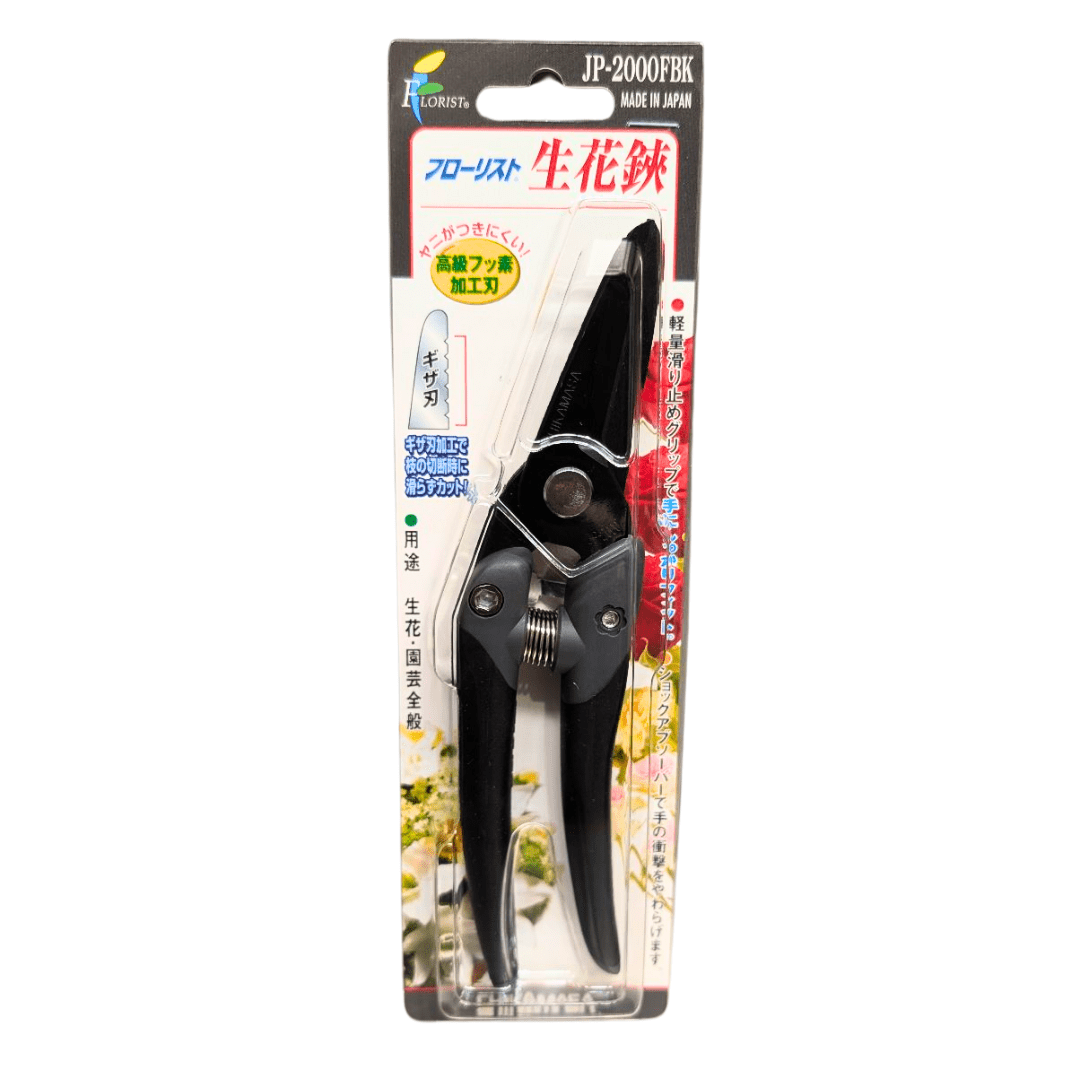
What is the Chikamasa JP-2000FBK Florist Shear used for?
This tool is designed for precise cutting of fresh flowers, plant stems, herbs, and soft garden growth. It’s ideal for bouquet prep, deadheading, harvesting, propagation, and houseplant trimming. Florists and home gardeners alike use it for fast, clean cuts where control matters.
What makes the Chikamasa Florist Shear different from basic florist scissors?
It features a serrated blade to grip stems without slipping, a fluorine coating to reduce sap buildup, and a sharp carbon steel edge for clean cuts. These features help you work faster with less mess or frustration—especially during long sessions.
Can the Chikamasa JP-2000FBK cut thick or woody branches?
It’s best for soft stems and light garden tasks. If you’re squeezing hard, twisting, or the stem bends without cutting—switch to proper secateurs or loppers. This tool excels at precision, not heavy-duty pruning.
What are the blades and handles made from?
The blades are fluorine-coated carbon tool steel, and the handles are tough PA+GF plastic with a soft elastomer grip. The 195mm overall length and lightweight design (145g) make it comfortable for both small and gloved hands.
Is the Chikamasa Florist Shear ergonomic and ambidextrous?
Yes—it has a symmetrical handle that suits both left- and right-handed users. The lightweight build and soft grip reduce hand fatigue during repetitive cutting, making it ideal for florists and gardeners working long hours.
How do I get the cleanest cuts with the Chikamasa Shear?
Seat the stem deeper into the blades—not just the tips—and squeeze in one smooth motion. Avoid twisting mid-cut. If cuts are rough, check for sap buildup or signs that the blade needs sharpening.
Why does the blade sometimes slip or chew stems?
Common causes include dried sap on the blade, dull edges, or trying to cut stems that are too thick or woody for this style. Clean the blades and use it within its comfort zone for best results.
How should I clean and care for the Chikamasa Shear?
Wipe down after use, clean off sap with rubbing alcohol, and dry thoroughly. Avoid abrasive scrubbers to protect the coating. Add a drop of light oil at the pivot occasionally. Never clean in a dishwasher—hand cleaning only.
Can I sharpen the blades, and how do I know when to do it?
Yes, but go lightly—especially near the serrations. If you notice crushing, snagging, or more effort required even after cleaning, it’s time for a touch-up. Avoid aggressive sharpening to maintain edge integrity.
Does the Chikamasa JP-2000FBK have a safety lock?
Some versions may not include a lock. Always store closed and out of reach of children. Use a sheath or separate compartment to protect the blades and avoid accidental damage or injury.
Should I disinfect the blades between plants?
Yes—especially when propagating or cutting from multiple plants. A quick wipe with isopropyl alcohol helps reduce disease transmission and keeps your plant collection healthier.
Can I use the Chikamasa Shear in wet or humid conditions?
You can, but always dry it afterward. While the coating helps, carbon steel can still rust if left wet. Proper drying and storage are key to long-term performance.
Is the Chikamasa JP-2000FBK made in Japan?
Yes—Chikamasa tools are manufactured in Japan and are known for their precision, quality, and durability, making them a trusted choice for professional florists and serious gardeners.