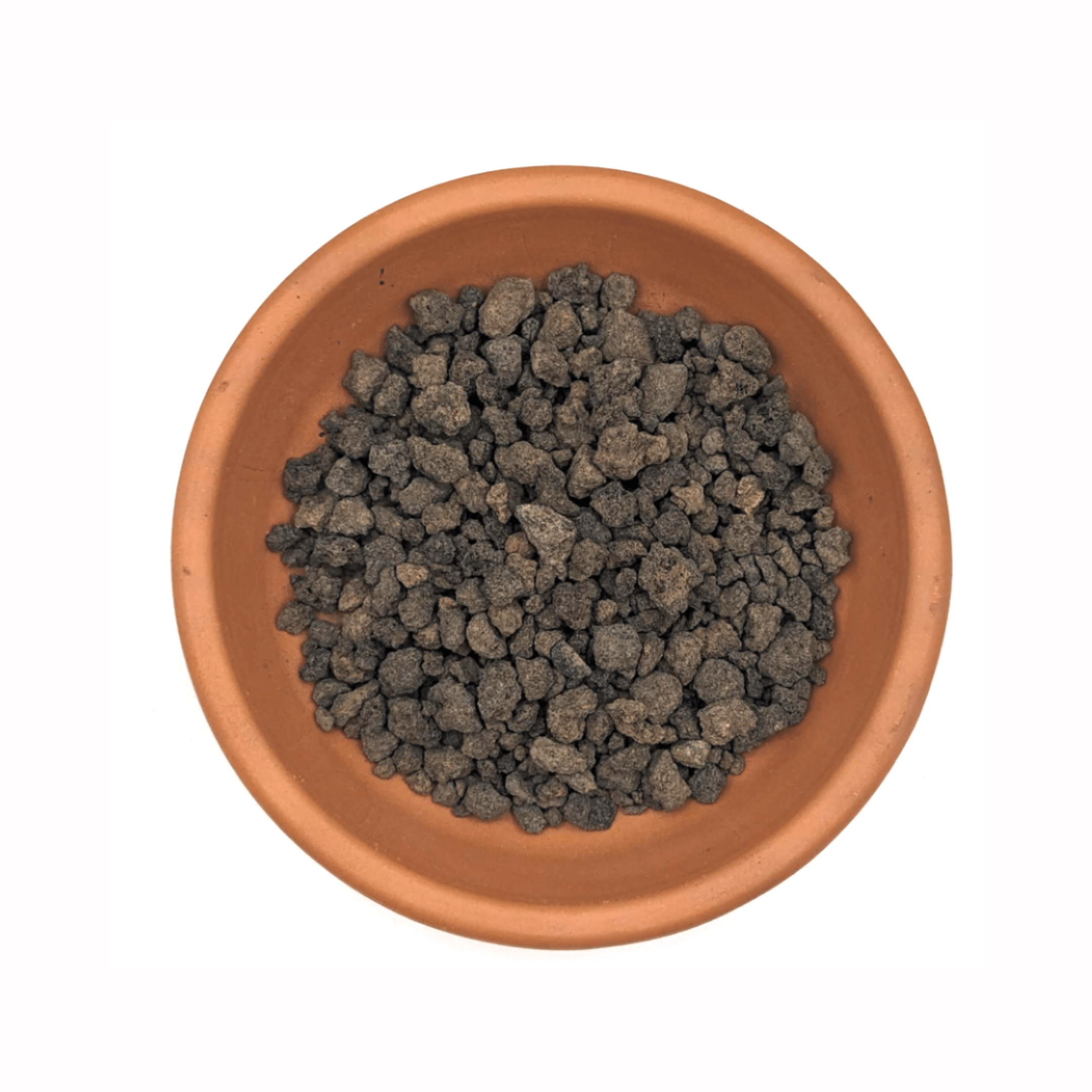
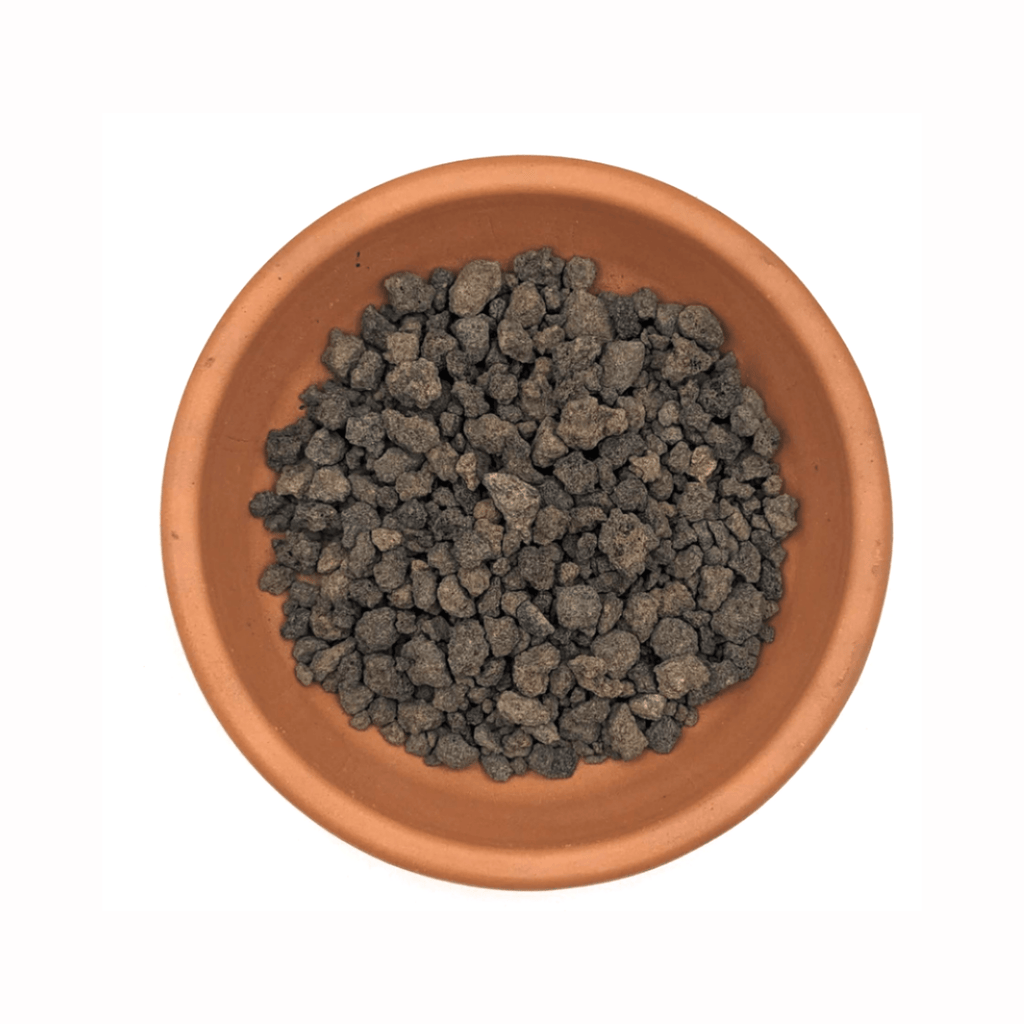
What is Quincan 3–5mm and what is it made of?
Quincan 3–5mm is a charcoal-grey volcanic gravel (scoria) with a porous, lightweight structure. The 3–5mm particle size makes it ideal for mixing into soil or using as a top-dress. It's naturally formed and contains tiny air pockets that support healthy root environments.
What are the main benefits of using Quincan in potting mixes?
Quincan improves drainage, boosts airflow, and reduces soil compaction. It also holds a small amount of moisture in its pores, helping maintain even hydration without waterlogging—great for preventing root rot and keeping soil structure stable.
Which plants benefit most from Quincan?
Quincan is ideal for cacti, succulents, bonsai, orchids, aroids (like Monstera and Philodendron), bromeliads, and many tropicals. It suits any plant that prefers airy, well-draining soil with good root oxygen.
How should I use Quincan in a potting mix?
Blend Quincan into your base mix at 10–30% by volume to improve aeration and drainage. For moisture-loving plants, use a lower percentage. Overuse can dry the mix too quickly, so adjust ratios to match plant needs and environment.
Can I use Quincan as a top-dress or mulch?
Yes—Quincan makes an excellent top-dress. It keeps pots tidy, reduces splashback, slows surface drying, and may help deter fungus gnats by keeping the soil surface less appealing for egg-laying.
How does Quincan compare to pumice or perlite?
Like pumice, Quincan is porous and airy but denser and darker in colour. Compared to perlite, it won’t float or migrate, making it more stable in mixes. Many growers prefer its natural look and weight for long-term structure.
Does Quincan help with drainage and soil compaction?
Absolutely. Quincan keeps the potting mix open and breathable, which improves drainage and prevents compaction. It’s best mixed throughout the soil, rather than layered at the bottom of pots.
Can I use Quincan in terrariums, passive watering, or hydro setups?
Yes—Quincan suits arid or open-style terrariums and passive watering systems like semi-hydro. It's not ideal as a standalone hydroponic medium but works well when paired with proper drainage and watering controls.
Does Quincan contain nutrients or affect pH?
Quincan is inert—it doesn’t contain nutrients or significantly shift pH. However, like other media, salts from fertilisers can build up over time, so occasional flushing is recommended if used in high-fertility setups.
Can I reuse Quincan? How do I clean it?
Yes—Quincan is fully reusable. Rinse thoroughly to remove dust or old debris. If sterilising, soak in hot water or use your preferred method. Dry fully before storing in a sealed container or bag.
Is Quincan safe for pets and indoor use?
Yes—Quincan is non-toxic, but it can scratch surfaces and shouldn't be ingested. Rinse before use to reduce dust, and consider wearing a mask when handling dry material if you’re dust-sensitive.
Does Quincan add weight to pots?
Yes—more than perlite, but less than gravel. This extra weight can help stabilise top-heavy pots, making it a good choice for tall plants or bonsai trees.
Is Quincan good for chunky mixes like aroid or bonsai blends?
Yes—Quincan pairs well with bark, coir, perlite, or pumice in chunky mixes. It adds durable structure and airflow. A basic chunky mix might include indoor potting soil, Quincan, and bark—adjusted to match your plant’s needs.
What’s a common mistake when using Quincan?
Using it to “fix” overwatering habits. Quincan helps with drainage, but if your pot doesn’t drain well or you water too frequently, problems like rot can still occur. Good watering habits matter too.
What’s the best way to use Quincan for healthy plant growth?
Rinse it first, mix 10–30% into your soil, use pots with drainage, and water based on your plant and environment—not a fixed schedule. Quincan supports roots, but success still depends on smart plant care.