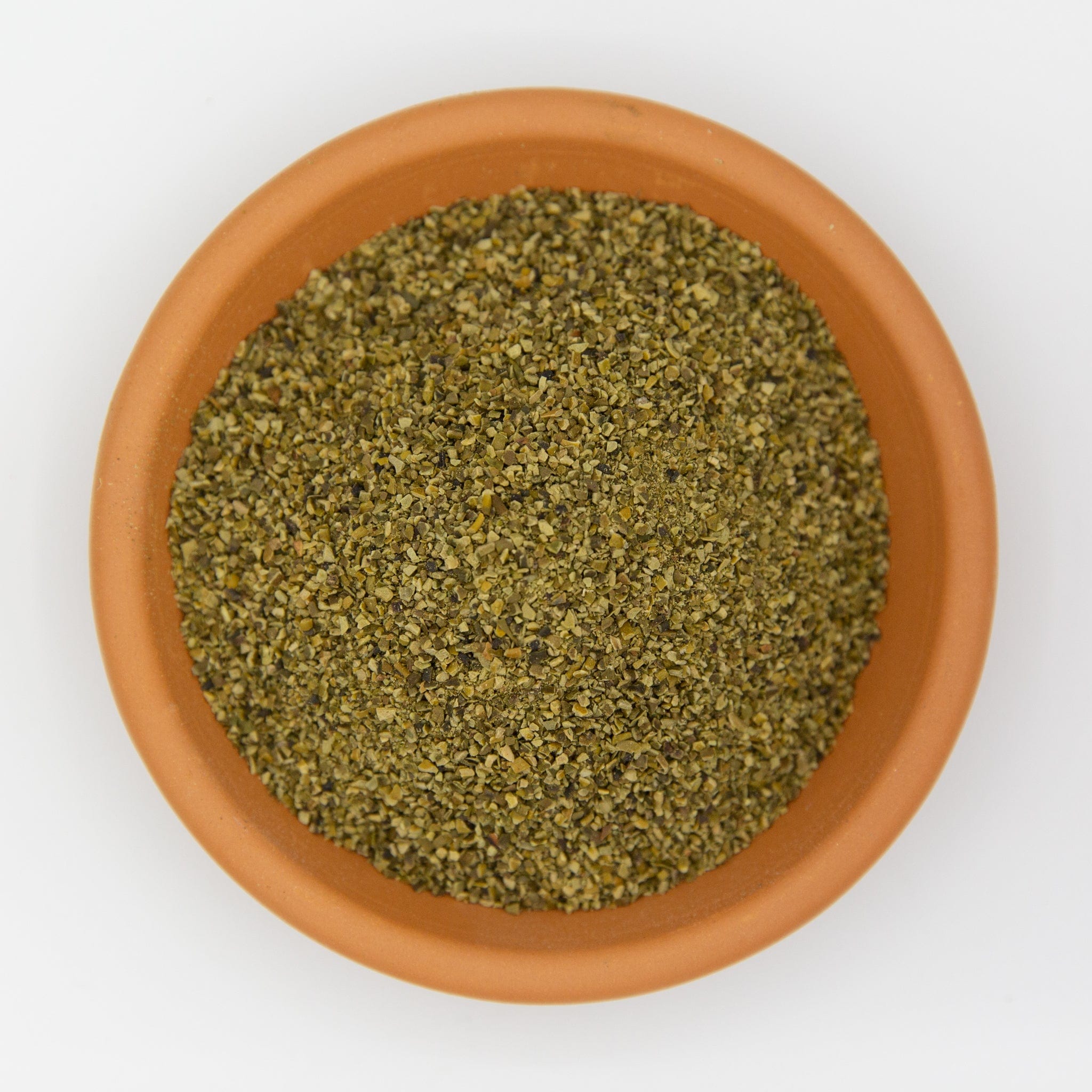
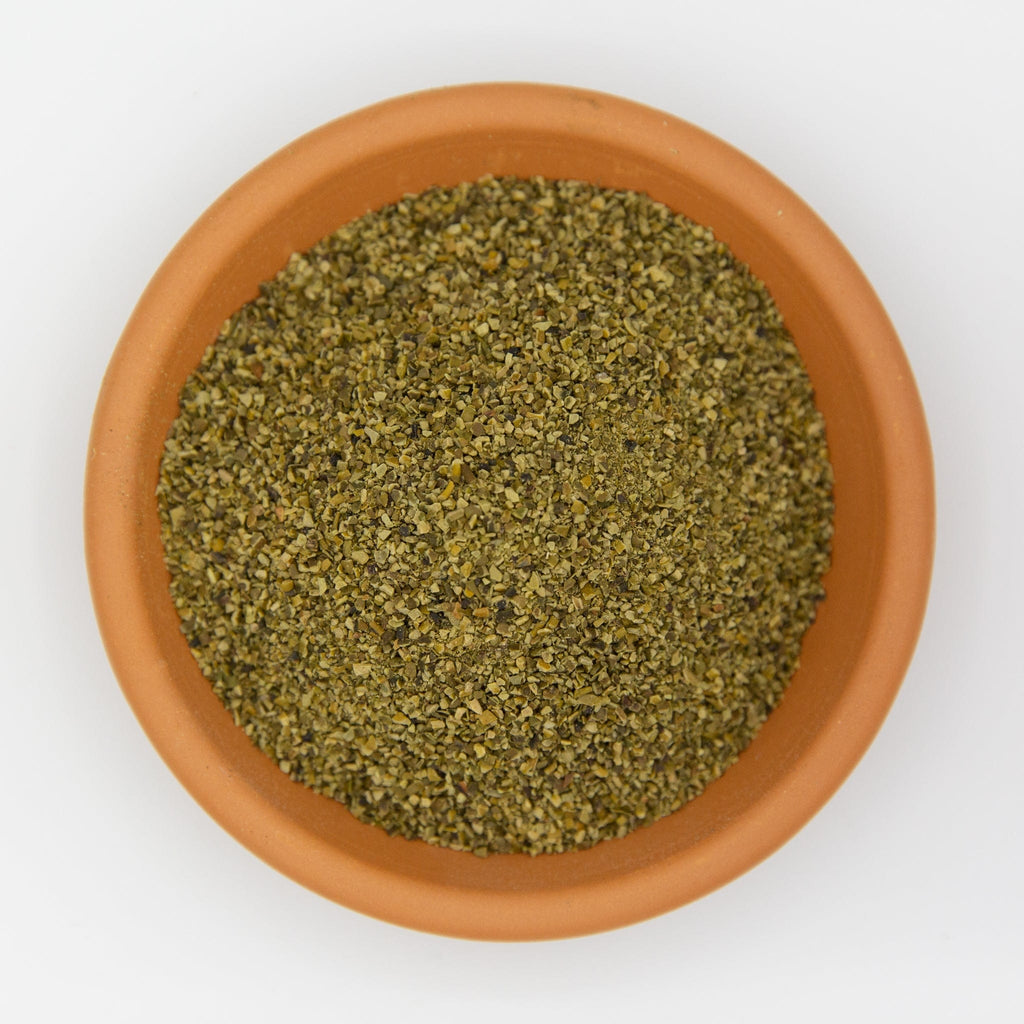
What exactly is this Kelp / Seaweed Meal?
A certified-organic, 100% dried and milled seaweed (kelp) soil amendment. It’s a slow-release “multivitamin” for soil biology with 80+ minerals, natural growth compounds, and organic carbon that feeds microbes and supports plant resilience.
What’s the NPK and full analysis?
Approx. NPK is 0.87-0.13-1.44. Typical composition per the product spec: S 1.03%, Ca 1.94%, Mg 1.24%, Na 5.24%, Fe 307 ppm, Mn 8 ppm, Zn 36 ppm, Cu 2.09 ppm, Co 0.21 ppm, B 73.7 ppm, Mo 0.5 ppm, Organic Carbon 31.3%.
How much should I use in soil mixes?
Use ½ cup per 30 L of potting mix as a baseline. Blend evenly before planting.
What’s the top-dress rate for garden beds?
About 1 cup per square metre. Scratch it into the top 2–5 cm and water in well.
How often should I reapply?
Every 8–12 weeks during active growth. Kelp meal breaks down slowly, so think “steady trickle,” not weekly feeds.
Can I use Kelp / Seaweed Meal on lawns? How much?
Yes. Apply ~200–400 g per 10 m² (light to moderate feed), brush in and water thoroughly. Repeat each season.
Is Kelp / Seaweed Meal safe for pots and indoor plants?
Yep—just go lighter. Mix 1–2 teaspoons per litre of potting mix, or top-dress 1–2 teaspoons for a 150–200 mm pot and water in. Repeat every 2–3 months.
Will Kelp / Seaweed Meal burn my plants?
Very unlikely. The analysis is mild, and it releases gradually. Overapplication can imbalance soil minerals, so stick to the rates above.
Does Kelp / Seaweed Meal work for seedlings?
Use sparingly. Mix a teaspoon per litre into seed-starting media or water in a very light “kelp tea.” Too much can be a bit salty for tender roots.
Is Kelp / Seaweed Meal okay for Australian natives (phosphorus-sensitive plants)?
Generally yes—the phosphorus is very low (0.13%). Start at half-rate and observe, especially with very P-sensitive species.
Can I make a DIY liquid/tea from this Kelp / Seaweed meal?
Yes. Simple method: 1 heaped tablespoon per litre of water, aerate or stir daily for 24–48 hours, then strain. Use the liquid within a week. Don’t seal it airtight (you want aerobic, not smelly anaerobic).
For a separate aerated recipe that lists kelp meal as an optional booster, see our 24-hour compost tea brewing guide.
Tea vs. top-dressing—what’s better?
Top-dressing feeds soil life for months; tea gives a faster “biostimulant” nudge. Many growers do both: small, regular teas plus seasonal top-dress.
How is kelp meal different from liquid seaweed products?
Meal = whole-food, slow-release minerals + carbon (alginates, mannitol) that build soil structure and microbe habitat. Liquids = fast, soluble extracts rich in growth compounds. They’re complementary rather than either/or.
For a deeper comparison of dry meal, liquid seaweed and soluble kelp formats, see our kelp meal and seaweed fertiliser guide.
Does Kelp / Seaweed Meal change soil pH?
Not in any dramatic way. It’s near-neutral to slightly alkaline and mainly influences biology and structure more than pH.
What about sodium—will Kelp / Seaweed Meal salt my soil?
Kelp naturally contains sodium (~5%). At recommended rates and with normal watering, it’s fine. Avoid heavy, repeated overdosing—especially in pots with poor leaching.
Is Kelp / Seaweed Meal good for compost?
Excellent. Add a handful per 20–30 L of compost material to boost trace minerals and microbial activity.
Can I combine Kelp / Seaweed Meal with other amendments?
Absolutely. It pairs well with worm castings, fish hydrolysate, rock dusts, guanos, and balanced organic blends. Kelp “fills the micronutrient gaps” and supports biology.
Does kelp meal help with stress (heat, drought, transplant)?
Yes. The natural compounds in kelp support root growth and stress tolerance. Use a light top-dress or a mild tea around stressful events.
For a broader look at plant-based feeding options that include kelp meal, see our animal-free fertiliser guide for Australian gardens.
How long until I see results?
Biology-first inputs are cumulative. Expect subtle improvements in vigor within 2–3 weeks; fuller soil/structure benefits build over 1–3 months.
Is Kelp / Seaweed Meal safe around pets, poultry, and beneficial wildlife?
When used as directed in gardens, yes. Keep the bag out of reach—some animals may try to eat it. Poultry keepers commonly supplement feed with kelp; in the garden, avoid letting animals gorge on the dry product.
Can I use Kelp / Seaweed Meal in hydroponics?
The meal itself isn’t soluble—so not ideal for recirculating systems. If you want kelp benefits in hydro, use a clean, hydro-safe liquid seaweed extract instead.
Will Kelp / Seaweed Meal attract pests or smell bad?
It has a mild “sea” aroma that dissipates quickly after watering in. It doesn’t attract pests when applied at normal rates and covered/lightly incorporated.
Is Kelp / Seaweed Meal certified organic?
Yes—this product is certified organic and made from 100% pure seaweed meal.
What size should I buy?
For balcony or houseplants, 500 g–1 kg goes a long way. For veggie beds and lawns, 2.5–5 kg bags are more economical per square metre.
How do I store Kelp / Seaweed Meal and what’s the shelf life?
Keep it cool, dry, and sealed. Stored properly, it’s stable for 2+ years. If it clumps, just break it up—effectiveness isn’t reduced.
Can I overdo the kelp meal? What are the symptoms?
Yes—like any input. Signs of excess include overly dark, lush growth with weaker stems or minor tip burn in pots due to salt build-up. Back off the rate and water thoroughly.
Is Kelp / Seaweed Meal suitable for flowering/fruiting crops?
Definitely. The balanced potassium and trace elements support flower set and fruit quality. Pair with a balanced phosphorus source if your soil test calls for it.
Will Kelp / Seaweed Meal replace my base fertilizer?
Think of it as a cornerstone amendment and biostimulant—not a complete feed. Combine with compost and a balanced organic nutrient plan for best results.
Any quick application recipes?
• Top-dress boost: ½–1 cup per m² + 1–2 cm compost, water in
• Pot refresh: 1–2 tsp per 150–200 mm pot, scratch in, water
• Kelp tea (general tonic): 1 tbsp/L, steep 24–48 h, strain; drench or foliar at 1:10 dilution
Will Kelp / Seaweed Meal help heavy clay or sandy soil?
Over time, yes. Alginates and organic carbon improve aggregation in clay (better drainage) and water-holding in sand (less dry-out), via microbial glues and better soil structure.
Is there a best time of day/season to apply?
Any season outside extremes works. Early morning or late afternoon avoids foliar stress if you’re spraying a diluted tea. For top-dressings, apply before rain or irrigation.
Can I use Kelp / Seaweed Meal with natives, edibles, ornamentals, and lawns alike?
Yes—universally useful. Adjust rates to plant sensitivity and container vs. in-ground situations.
Does Kelp / Seaweed Meal help with chlorosis or micronutrient deficiencies?
It’s a great broad-spectrum trace source. For acute deficiencies, also address pH and use a targeted chelated product while kelp builds the baseline.
Any red flags—when should I NOT use Kelp / Seaweed Meal?
Avoid dumping large amounts into poorly draining pots or sealed hydro systems. If your water or soil already has high sodium, use lighter rates and leach periodically.
What makes the Kelp / Seaweed Meal different?
It’s pure, certified-organic seaweed meal with a published analysis (including 80+ minerals) and practical rates for Aussie conditions, plus pack sizes that suit hobbyists through to keen gardeners.