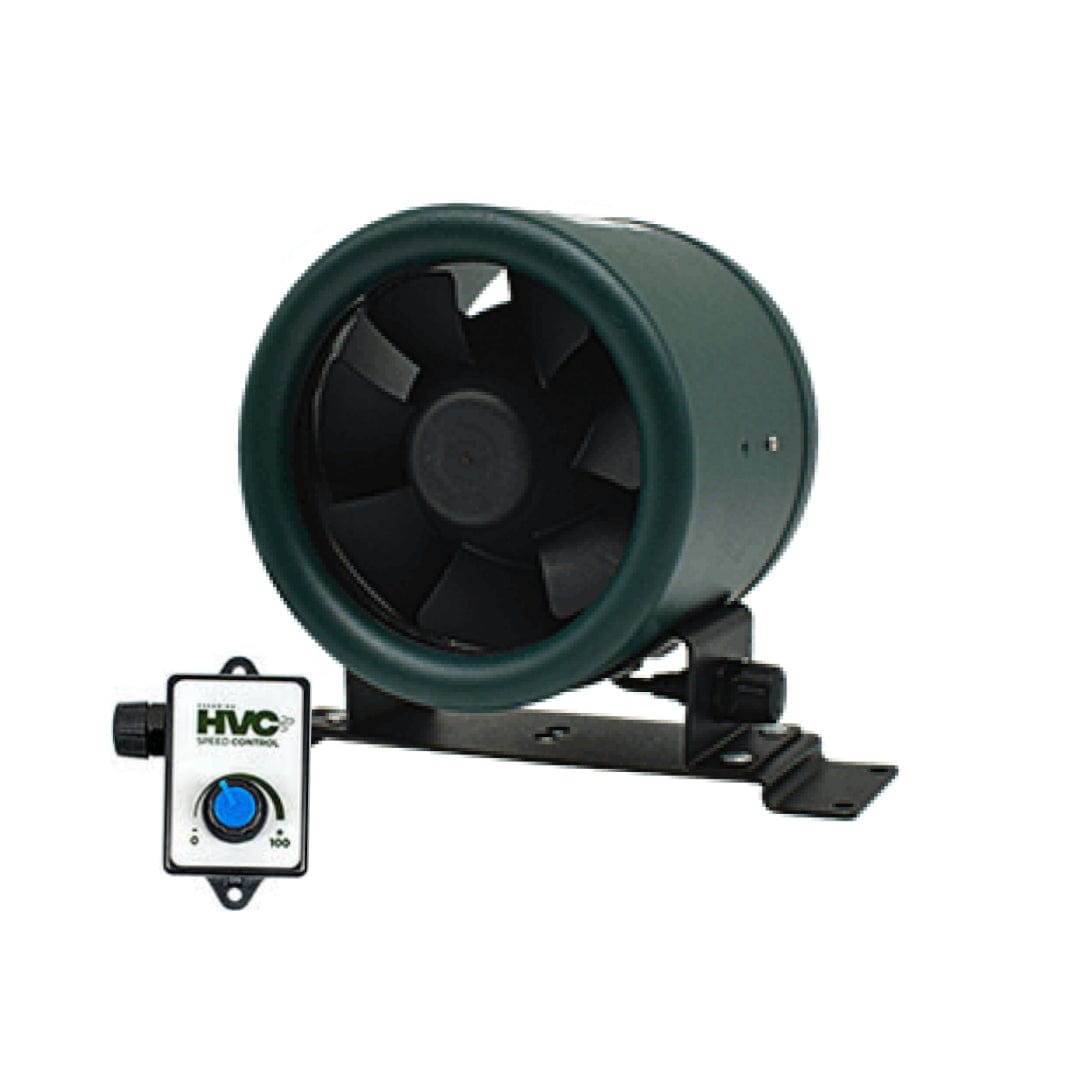
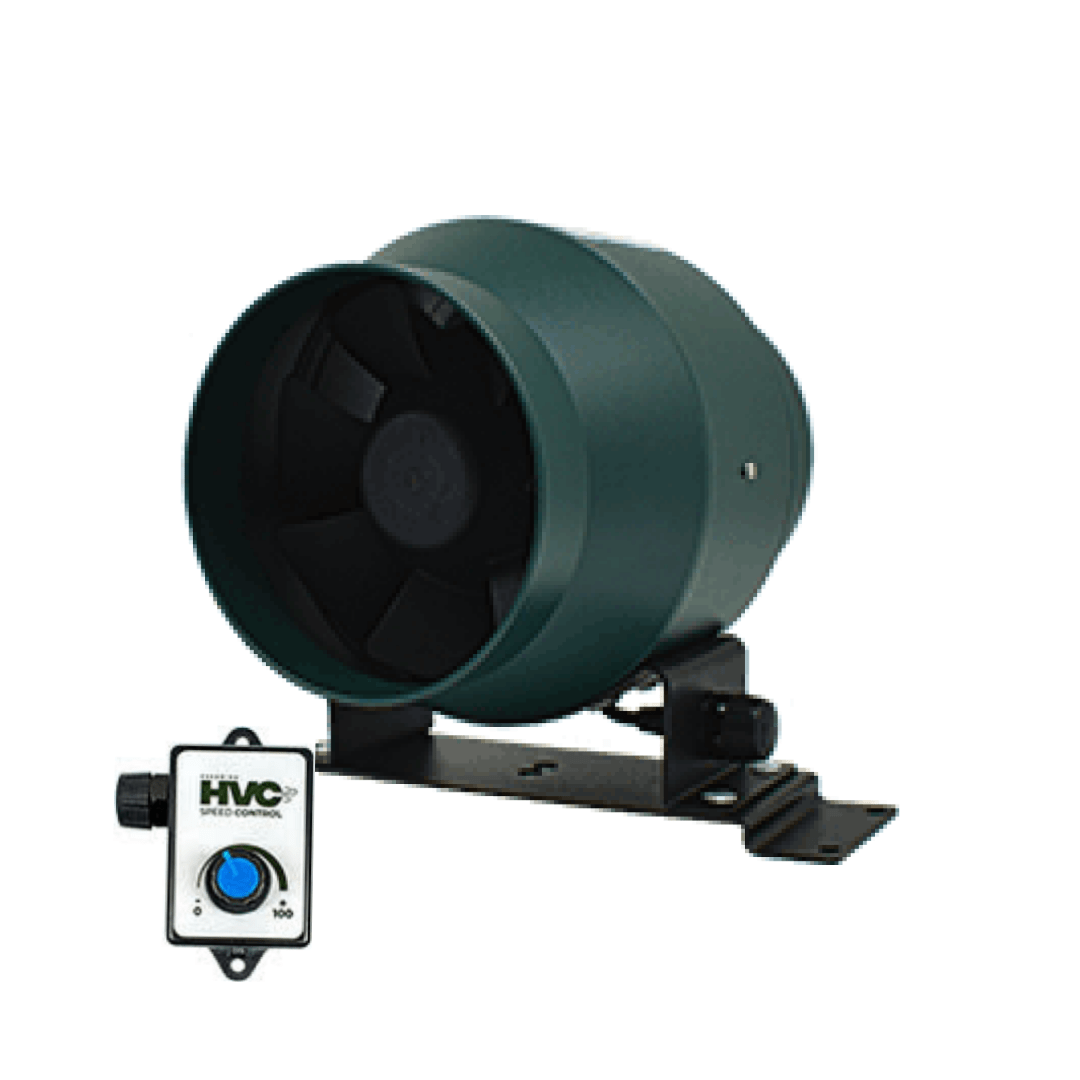
What is the Headwind HVC Dimmable EC Fan and how does it work?
It’s a mixed-flow inline EC fan designed for intake or exhaust ventilation in grow tents, homes, and other enclosed spaces. The included speed controller lets you fine-tune airflow to manage temperature, humidity, and odour control more efficiently.
Which fan sizes are available and how much airflow do they provide?
The Headwind HVC Dimmable EC Fan comes in 100mm, 125mm, 150mm, and 200mm sizes. Airflow ranges from 275 m³/h (100mm) to 1205 m³/h (200mm). Choose based on room size, filter use, and duct length — sizing up helps with resistance and future-proofing.
How noisy is the Headwind HVC Dimmable EC Fan?
It’s designed to run quietly, especially at lower speeds. However, noise can increase with higher RPMs, poor ducting, or restrictive filters. Using acoustic ducting, smooth bends, and mounting isolation helps reduce both hum and vibration.
Does the fan come with a speed controller?
Yes. Each fan includes a separate, plug-in speed controller, allowing you to mount the fan where needed and keep the dial accessible. For automation, you’ll need a compatible EC fan controller — not a basic AC dimmer.
Can I automate fan speed based on temperature?
Out of the box, it’s manual only. To automate based on temperature or humidity, pair it with an EC-compatible climate controller. Avoid using AC fan dimmers or incompatible smart plugs, as they can damage the motor or cause instability.
Where and how should I install the fan?
You can mount it inside or outside your grow tent, horizontally or vertically, as long as it’s secure and not exposed to water. Some models include brackets; otherwise, use straps or isolation mounts to reduce noise and vibration.
What ducting should I use with the fan?
Match ducting to fan size: 100mm, 125mm, 150mm, or 200mm. Avoid reducing duct size unless necessary, and use proper reducers if you do. Smooth ducting and fewer bends improve performance and reduce noise.
Can I use this fan with a carbon filter or silencer?
Yes, it's commonly paired with carbon filters for odour control. Just note that filters and silencers add resistance, so expect lower real-world airflow than the fan’s free-air rating. Slower speeds often help with noise.
Is the Headwind HVC fan suitable for home, office, or hydroponic setups?
Absolutely. It’s designed for climate control in various environments — grow tents, hydroponics, kitchens, drying rooms, and general room ventilation — as long as the fan size matches your space and needs.
How do I clean and maintain the fan?
Turn off and unplug the fan before cleaning. Remove dust from the impeller and housing to maintain performance. Check monthly if in a dusty space. Pre-filters on carbon filters help reduce buildup over time.
Why is my fan airflow weaker than expected?
Check for restrictive filters, long or bent duct runs, undersized ducting, or air leaks. Also ensure the speed controller isn’t set too low. Using a slightly larger fan at a lower speed can improve airflow and reduce noise.
Can the fan run 24/7?
Yes, it’s designed for continuous operation if installed and maintained properly. Many users run a low baseline speed around the clock, increasing speed when lights are on or when temperatures rise.
Can I use the fan with timers or smart plugs?
You can use a timer or smart plug for basic on/off control, but avoid frequent cycling. For smart automation, ensure the controller supports EC fans specifically. Never use AC dimmers unless rated for EC compatibility.
What should I do if the fan won’t start or the controller stops working?
Ensure the fan is plugged into a working outlet, the controller dial is turned up, and connections are se