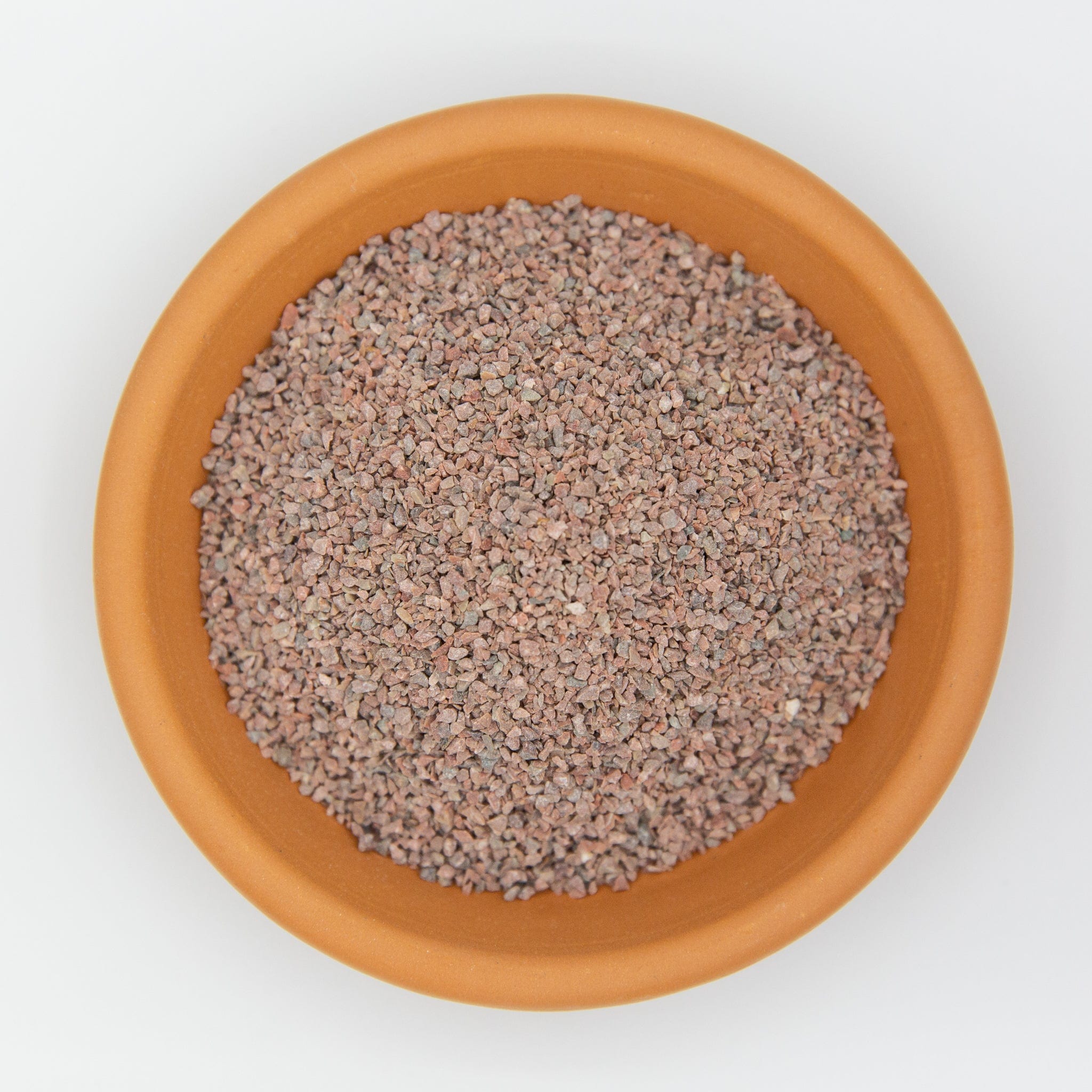
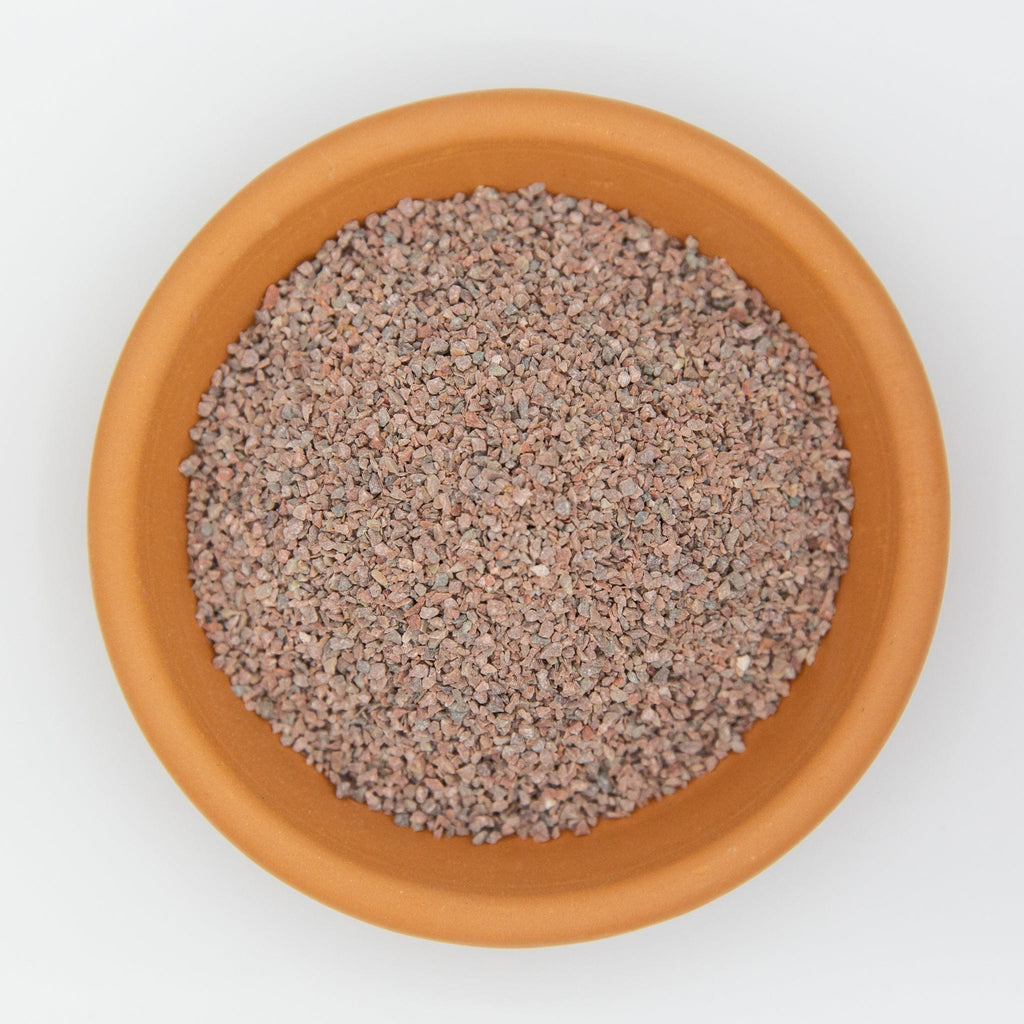
What is Zeolite 0.7–2mm?
Zeolite 0.7–2mm is an all-natural, inert mineral soil conditioner that improves drainage, aeration, and nutrient holding in potting mixes—especially for cactus, succulents, bonsai, and other fine-rooted plants.
What does “0.7–2mm” mean for Zeolite 0.7–2mm?
That’s the particle size. This fine grade is ideal for plants with smaller root systems because it fills gaps well without turning the mix into mud.
What is Zeolite 0.7–2mm actually made from?
Zeolite 0.7–2mm is a naturally occurring mineral (often clinoptilolite-type zeolite) that has a porous structure and high nutrient-holding capacity.
Is Zeolite 0.7–2mm organic?
Zeolite 0.7–2mm is a natural mineral and inert (not synthetic fertiliser). In most gardening contexts it’s considered compatible with organic growing styles.
Does Zeolite 0.7–2mm contain nutrients?
Not like a fertiliser does, but zeolite can hold onto nutrients from your feeds and release them back gradually, which helps plants access what you’ve already applied.
What is “CEC” and why does Zeolite 0.7–2mm mention it?
CEC (cation exchange capacity) is basically how well a material can grab nutrients like ammonium, potassium, calcium, and magnesium and then release them slowly. Zeolite 0.7–2mm has a high CEC, which helps reduce nutrient waste.
How does Zeolite 0.7–2mm help stop nutrients leaching out of pots?
Instead of nutrients washing straight through the mix with every watering, zeolite holds onto a chunk of them and releases them back over time.
Does Zeolite 0.7–2mm improve drainage or water retention?
Both. Zeolite improves drainage by keeping the mix open, but it also holds a bit of moisture inside its pores—so plants get more stable moisture without waterlogging.
Will Zeolite 0.7–2mm help prevent root rot?
It can seriously reduce the risk by improving airflow and stopping soggy, compacted soil—but you can still get root rot if watering and pot drainage are way off.
Is Zeolite 0.7–2mm good for cactus?
Yes—cactus roots love oxygen and hate sitting wet. Zeolite 0.7–2mm helps keep the root zone airy while holding nutrients more evenly.
Is Zeolite 0.7–2mm good for succulents?
Yep. It improves drainage and makes moisture more “even” instead of wet/dry extremes.
Is Zeolite 0.7–2mm good for bonsai?
Yes—bonsai mixes need structure that doesn’t collapse over time. Zeolite 0.7–2mm stays stable and helps keep water + nutrients available without suffocating roots.
Why is Zeolite 0.7–2mm ideal for fine root systems?
Because the smaller particles distribute evenly through the mix and support delicate roots without leaving big air gaps that dry too fast.
Can Zeolite 0.7–2mm be used for succulent seed raising?
Yes—this finer grade is commonly used for seed raising and early stages because it holds moisture evenly while still staying airy.
Can Zeolite 0.7–2mm be used as a top-dress?
Yes. A thin top-dress can reduce splashback, keep pots looking tidy, and help the surface dry a bit more evenly.
Will a Zeolite 0.7–2mm top-dress help with fungus gnats?
It can help by making the surface less “soft and wet,” but fungus gnats are mostly a moisture-management issue—if the pot stays wet constantly, they’ll still show up.
Do I need to rinse Zeolite 0.7–2mm before using it?
A quick rinse is a good idea. It removes mineral dust so your first watering is cleaner and your mix doesn’t get “sludgy” at the start.
Is dust from Zeolite 0.7–2mm harmful?
Not to plants. It’s just annoying to work with, and breathing any fine dust isn’t fun—rinsing fixes most of it.
Can Zeolite 0.7–2mm change soil pH?
Zeolite is generally quite stable/inert. It’s not usually a major pH driver compared to your water, fertiliser, and organic matter in the mix.
How much Zeolite 0.7–2mm should I use in pots?
There’s no single perfect ratio, but a common range is roughly 10–30% of your mix by volume (more for rot-prone plants, less for thirsty plants).
How much Zeolite 0.7–2mm should I use in garden beds?
A practical guideline is about 500g to 2kg per square metre, then work it into the soil—more for heavy, compacted soils and less for already-free draining soils.
Can I use Zeolite 0.7–2mm in no-till gardening?
Yes—Zeolite 0.7–2mm doesn’t break down, so it’s great for long-term/no-till setups where you want structure that lasts.
Does Zeolite 0.7–2mm break down over time like bark or compost?
No. Zeolite 0.7–2mm stays structurally intact long-term, so your mix won’t collapse and suffocate roots as quickly.
Is Zeolite 0.7–2mm reusable?
Yes. You can reuse it—just rinse it well and remove old roots/debris. If you’re reusing after disease issues, sanitising is smart.
How do I clean Zeolite 0.7–2mm for reuse?
Soak and rinse thoroughly, agitate to remove fines, pick out roots, then let it drain. If you need extra hygiene, sanitise and rinse again.
Can Zeolite 0.7–2mm be mixed with other mineral ingredients?
Absolutely—Zeolite 0.7–2mm plays nicely with pumice, scoria, perlite, coarse sand, lava rock, and other gritty components.
Can Zeolite 0.7–2mm be mixed with organic ingredients?
Yes—mixing zeolite into compost, coir, peat, or bark-based mixes helps stop compaction and improves nutrient efficiency.
Does Zeolite 0.7–2mm work with slow-release fertilisers?
Yes—zeolite can help hold nutrients in the root zone, which pairs well with both slow-release and liquid feeding programs.
Can Zeolite 0.7–2mm reduce how often I fertilise?
Sometimes. It won’t replace fertiliser, but it can make fertiliser more efficient by reducing leaching and smoothing out nutrient availability.
Can Zeolite 0.7–2mm be “charged” with nutrients before use?
Yes—some growers pre-soak zeolite in a mild nutrient solution so it starts off loaded with useful ions instead of acting like a “blank sponge.”
If I “charge” Zeolite 0.7–2mm, how strong should the feed be?
Keep it mild. You’re aiming to lightly load it, not create a salty concentrate that can stress roots.
Can Zeolite 0.7–2mm hold onto ammonium (nitrogen)?
Yes—zeolite is known for binding ammonium, which can help reduce nitrogen losses and release it more gradually.
Does Zeolite 0.7–2mm help with potassium availability?
Zeolite is often used because it can hold and exchange potassium, helping keep it available in the root zone instead of washing out.
Will Zeolite 0.7–2mm make a potting mix dry out faster?
It depends on your overall mix. It increases airflow and drainage, but it also holds moisture inside its pores—so many people find it creates “even moisture” rather than rapid dry-outs.
Can Zeolite 0.7–2mm help with hydrophobic soil?
It can help long term by improving structure, but if your mix is already hydrophobic, you’ll still need to re-wet properly (slow watering in passes works best).
Is Zeolite 0.7–2mm safe for sensitive, nutrient-light cactus species?
Yes—because zeolite itself isn’t a hot fertiliser. It helps manage moisture and nutrients more steadily, which is often exactly what sensitive plants want.
Can Zeolite 0.7–2mm be used for propagation mixes?
Yes—especially for fine-rooted cuttings and seedlings where you want moisture consistency without soggy conditions.
Is Zeolite 0.7–2mm good for shallow bonsai pots?
Yes—shallow pots are prone to temperature swings and fast dry-outs. Zeolite helps stabilise moisture while keeping plenty of oxygen around roots.
Can Zeolite 0.7–2mm clog drainage holes?
It can if your drainage holes are tiny and you’re using lots of fines. Using mesh over holes is a simple fix, especially in bonsai pots.
Should I use Zeolite 0.7–2mm as a “drainage layer” at the bottom of pots?
Better to mix Zeolite 0.7–2mm through the whole pot. A bottom-only layer doesn’t usually improve drainage the way people think.
Can Zeolite 0.7–2mm help reduce compaction in potting mixes?
Yes—zeolite particles keep the mix open, so it stays fluffy and breathable longer.
Will Zeolite 0.7–2mm make soil heavier?
Yes, a bit. That can be a bonus for stabilising top-heavy plants and bonsai.
Does Zeolite 0.7–2mm affect watering frequency?
Often, yes. Many growers find they water a little less unpredictably because moisture is more evenly distributed in the pot.
Can I use Zeolite 0.7–2mm in very humid climates?
Yes—humid climates make it easier for pots to stay wet too long, so the extra aeration and structure can be a big help.
Can I use Zeolite 0.7–2mm in very hot climates?
Yes—just remember pots can dry fast in heat. Zeolite helps moisture consistency, but you’ll still need to match watering to conditions.
Is Zeolite 0.7–2mm safe around beneficial microbes?
Yes—zeolite can support a more stable root environment, and its nutrient-holding ability can indirectly help microbial activity by reducing nutrient washout.
Can Zeolite 0.7–2mm be used in aquariums or ponds?
Zeolite is commonly used as a filtration media in some contexts, but Zeolite 0.7–2mm here is sold as a horticultural soil amendment—so use it for plants unless you know exactly what you’re doing.
How do I store Zeolite 0.7–2mm?
Keep Zeolite 0.7–2mm dry and sealed so it doesn’t get dusty everywhere or pick up random debris.
What’s the biggest mistake people make with Zeolite 0.7–2mm?
Treating it like a fertiliser instead of a structure/nutrient-buffering tool. Zeolite 0.7–2mm makes your mix smarter—it doesn’t magically feed plants on its own.
What’s a simple “best practice” way to use Zeolite 0.7–2mm?
Rinse it, mix it through your cactus/succulent/bonsai blend (start around 10–30% by volume), water based on plant needs (not a schedule), and enjoy a root zone that stays airy and more nutrient-efficient.