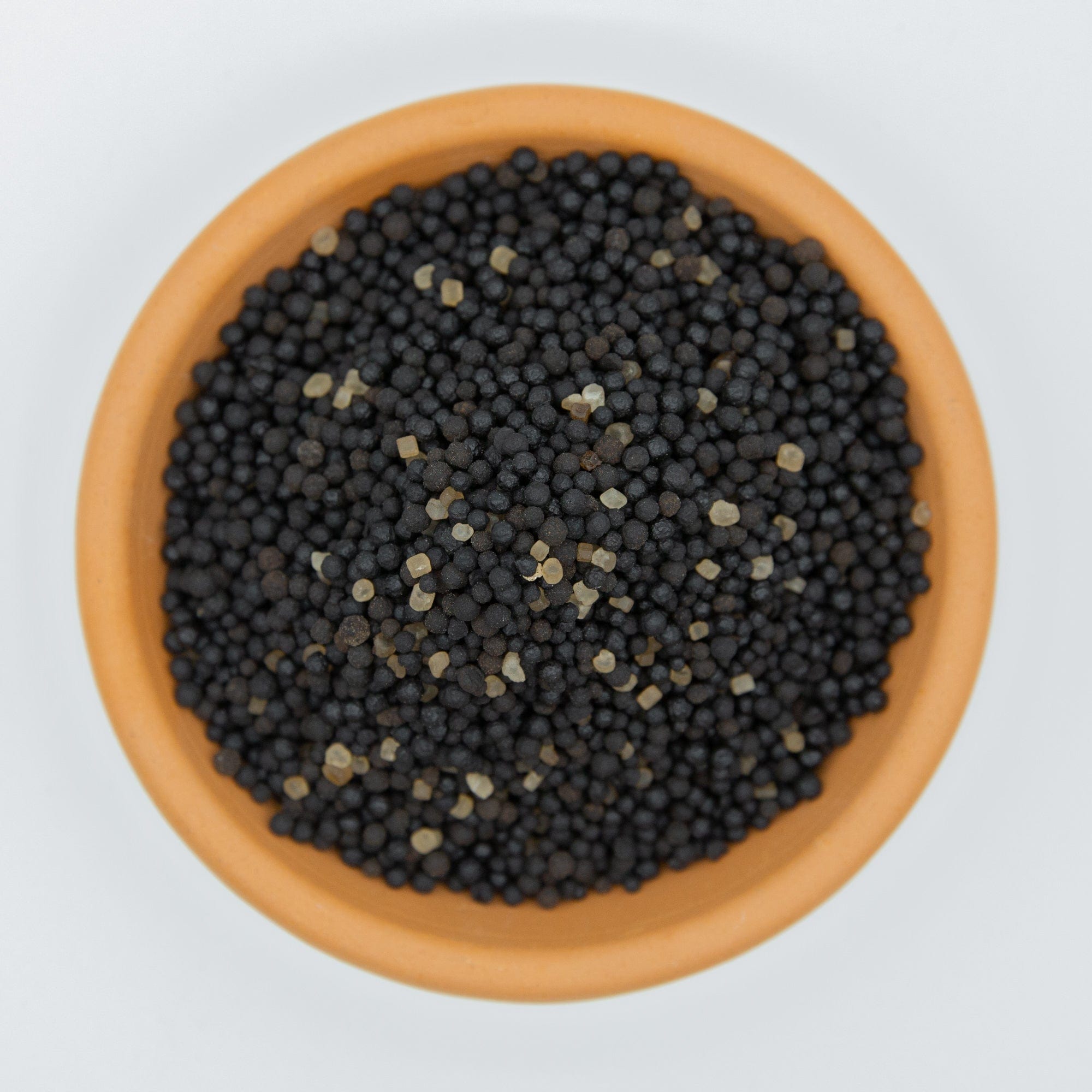
What exactly is Onyx?
Onyx is a plant-based, molasses-derived granular fertiliser (2–3 mm prills) with high amino acids and potassium. It feeds plants and stimulates soil life at the same time.
What’s the NPK of Onyx?
11-0-3.
Is Onyx organic?
Yes—it's made from processed plant molasses and organic inputs. It’s designed for organic cultivation and living soils.
What does Onyx actually do for my plants?
It boosts seed germination and root growth, improves nutrient uptake, supports beneficial soil microbes, and helps plants handle stress (heat, drought, salinity).
Is Onyx a fertiliser or a biostimulant?
Both. It supplies nutrients (N & K + traces) and acts as a biostimulant via amino acids and natural sugars that kickstart soil biology.
What’s inside Onyx that helps soil life?
Natural sugars and amino acids from molasses feed bacteria and fungi that drive nutrient cycling and soil structure.
Will Onyx burn my plants?
Used at the label rate and watered in, it’s gentle. It’s not a hot, high-salt synthetic—so burn risk is low.
What are the recommended application rates?
25–50 g per m² for turf and garden beds, or about a small handful per square metre. For potting mixes, ~30 L of mix per standard dose on the label.
How often should I apply Onyx?
For lawns and beds, every 4–6 weeks through active growth. For pots, re-apply lightly each month or after heavy watering cycles.
When should I apply Onyx during the year?
Any time during the growing season. It’s especially handy before/after stressful weather or mowing.
Do I need to water it in?
Yes—light irrigation after application (or time it before rain) helps prills dissolve and move into the root zone.
Can I top-dress pots with Onyx?
Absolutely. Sprinkle evenly on the surface and water in.
Can I mix Onyx into fresh potting soil?
Yes—blend lightly through the top 5–10 cm or incorporate when you’re building new mixes.
Is Onyx good for lawns?
Excellent. The 2–3 mm prills spread cleanly, green up turf, and support recovery from heat or high foot traffic.
What spreader setting should I use on the lawn?
Aim to hit 25–50 g/m². Do a small test strip, weigh your output, and adjust the dial until you’re on target.
Is Onyx OK for seedlings and new transplants?
Yes—use the lower end of the rate and water in gently. It supports establishment without blasting them.
Can I use Onyx for compost tea?
Yes—Onyx is a common tea input. Brew lightly; don’t over-concentrate nitrogen.
Can I combine Onyx with fish hydrolysate or amino acids?
Yes—many growers pair Onyx with fish aminos. It’s a solid combo for soil biology and steady nutrition.
What about pairing with kelp or mycorrhizae?
Great fit. Kelp adds growth hormones and trace elements; mycorrhizae boost root exploration. Apply mycorrhizae at transplant and keep Onyx as a gentle feed.
Does Onyx play nicely with Dr Greenthumbs TurboDirt and dry amendments?
Yep. Use Onyx as a monthly top-dress for steady N/K and biology support between heavier feed cycles.
Is Onyx suitable for hydroponics?
No—it’s a granular, organic product intended for soil and soilless media, not recirculating systems.
Will the sugars attract ants or fungus gnats?
If left dry on the surface, maybe. Water in immediately so it dissolves below the surface—problem solved.
Does Onyx affect soil pH?
Minimal effect. It’s not designed as a pH corrector; use it for nutrition/biology, not pH shifts.
How fast will I see results?
Biological products work progressively. You may see turf colour and vigour improve within 7–14 days, with compounding gains over repeated applications.
Can I over-apply Onyx?
Don’t. More isn’t better. Stick to 25–50 g/m² and watch plant response before increasing.
Is Onyx safe around pets and kids after application?
Yes, once watered in and the surface is dry. Store the product out of reach and follow common-sense hygiene.
What does Onyx smell like?
Mild sweet/molasses note. It fades quickly after watering.
Will Onyx stain paving or decks?
It can leave marks if prills sit and get wet on hard surfaces. Blow or sweep strays back onto the soil and water in.
Does Onyx increase thatch?
No—healthy microbial activity tends to help break down thatch over time.
Can I use Onyx in native gardens?
Yes, but go light on banksias/grevilleas and other P-sensitive natives (Onyx is low P, but always start cautiously).
Good for veggies and fruiting plants?
Yes—steady N, useful K, and amino acids are ideal for leafy growth and fruit set, without harsh spikes.
Is Onyx vegan?
It’s plant-derived from molasses, with no manure or fish in the base granule.
How does Onyx compare to liquid molasses?
Liquids feed microbes too, but Onyx adds measured N/K plus prill convenience and slower release. They can be used together.
Can I use Onyx right before a heatwave?
Yes—apply and water in 24–48 hrs prior to stress for best effect.
Does Onyx help with drought stress?
It supports root growth and microbial activity that improve water use and resilience.
Will Onyx fix compacted soil?
Not by itself. Onyx feeds biology that aids aggregation, but pair with aeration and organic matter for compaction issues.
What’s the shelf life?
Stored cool and dry with the bag sealed, 18–24 months is typical. Keep moisture out to prevent clumping.
How should I store Onyx?
Cool, dry place, sealed. Avoid humid sheds and direct sun.
Can I blend Onyx with other granulars in my spreader?
Yes—match prill sizes if possible for even distribution, and trial a small batch first.
Is Onyx compatible with synthetic fertilisers?
Yes. Many users run a lower synthetic program and layer Onyx to drive biology and resilience.
Will Onyx change the taste/aroma of produce?
Biologically active soils often mean better flavour and aroma due to improved nutrient balance. Onyx supports that outcome.
Is there any phosphorus in Onyx?
Functionally zero on the label (11-0-3). Trace amounts may occur naturally from plant materials.
What’s the best way to start if I’m unsure?
Apply 25 g/m², water in, observe for 2–3 weeks. If plants want more, step up to 40–50 g/m² next round.
I only have containers. How do I dose Onyx?
For a 30 L pot, use the standard label guidance (the “30 L of potting soil” reference) and scale down proportionally: ~1 g per litre of mix as a light monthly top-dress.
Can I use Onyx indoors on houseplants?
Yes—use a teaspoon or two per medium pot, scratch in lightly, and water in to avoid attracting pests.
Will Onyx help after mowing, pruning, or transplant shock?
Yes—apply at label rates right after the stress event and water in.
Any signs I’ve applied too much?
Excessive, soft leaf growth or algae on soil surface. Back off the rate and increase watering-in depth.
What if I miss watering after I spread Onyx?
Water at your next chance. Until then, avoid foot traffic on lawns so prills don’t crush into hard surfaces.
Is there a minimum soil temperature for use?
It works whenever microbes are active. In cold soils, expect slower results; resume regular cadence in spring.
Can I brew Onyx overnight for a stronger tea?
Keep tea brews short and aerated; avoid long, anaerobic steeps. Light brew = fewer issues.
Is there any chlorine sensitivity?
Chlorinated water can suppress microbes. If possible, dechlorinate or water in with rain/filtered water for best biological effect.
What makes Onyx different from straight compost or manure?
Consistency (known NPK), clean prill handling, and a targeted amino/sugar profile for reliable biological lift without bulk.
Can I use Onyx alongside your Root Roids™ (mycorrhizae)?
Yes—apply Root Roids™ at transplant, then use Onyx for steady feeding that supports the fungal network.
Does Onyx help with nutrient lockout?
Indirectly—healthier roots and biology improve nutrient exchange and buffering, which reduces lockout risk.
Will Onyx raise soil potassium too high over time?
Not at label rates. If you’re stacking multiple K sources, monitor leaf tissue or run a soil test annually.
Is Onyx safe for worms?
Yes—biologically friendly inputs like molasses feed the soil food web, including earthworms.
Any final pro tips?
Apply just before rain, keep your mulch layer consistent, and pair with quality compost/ewc for compounding gains. Consistency beats one-off heavy dumps.