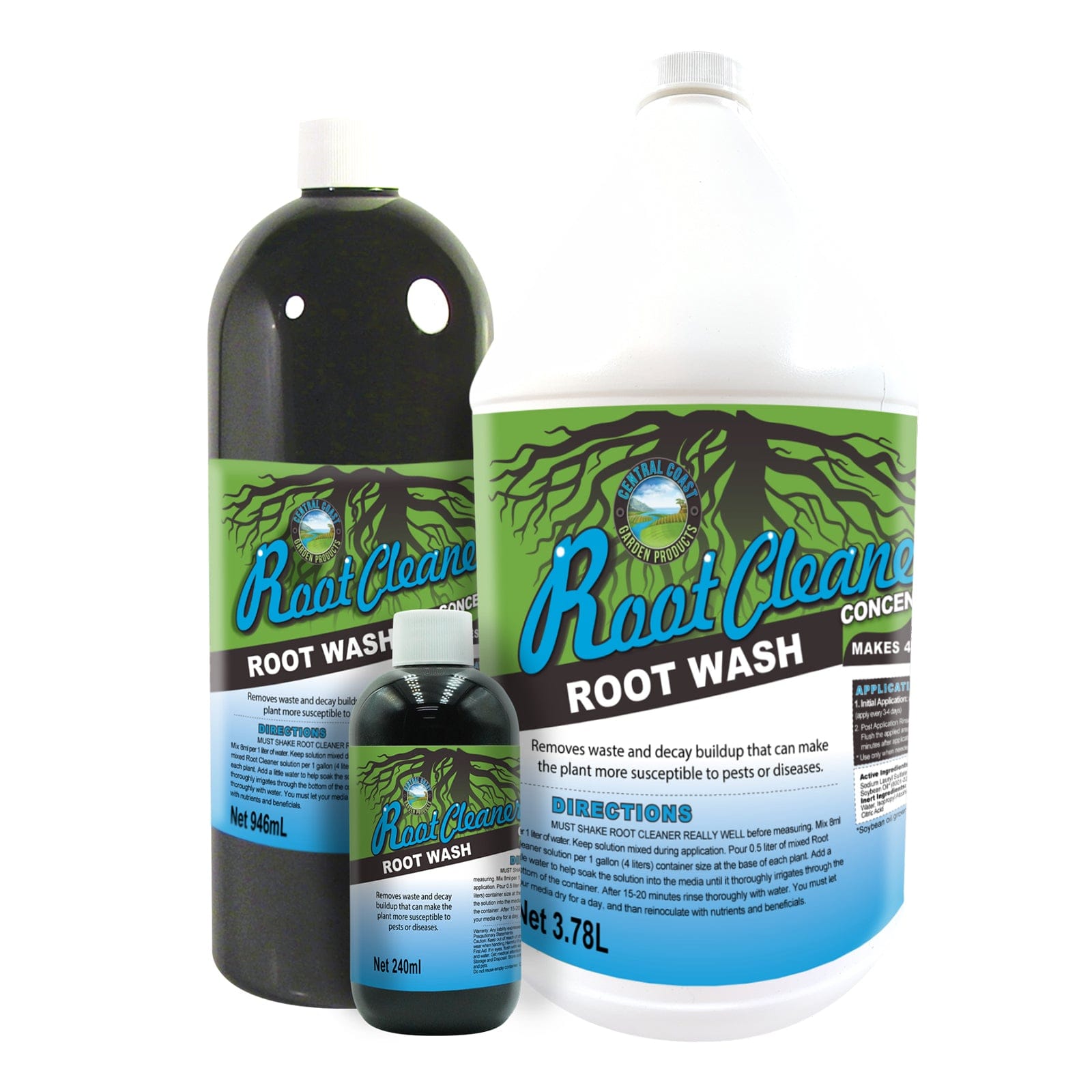
What is Root Cleaner and what does it do?
Root Cleaner is a soil drench designed to clean up the root zone by targeting soil-borne pests and root pathogens. It’s not a fertiliser or microbial product—it helps restore root health by disrupting pests and problem organisms that thrive in wet or compacted media.
What pests and diseases does Root Cleaner help with?
Root Cleaner is commonly used for fungus gnat larvae, root aphids, thrips in the root zone, and early signs of root rot. It helps knock back pests and suppress pathogens like pythium, but works best alongside proper environmental adjustments like better drainage and airflow.
Can I use Root Cleaner in coco, fabric pots, or edible gardens?
Yes—Root Cleaner is suitable for soil, coco, soilless mixes, and container setups like fabric pots. It’s also used on food crops when applied correctly and rinsed as directed. It’s not intended for hydro reservoirs or constant use in recirculating systems.
How do I apply Root Cleaner to potted plants?
Mix as directed (typically 30 mL per gallon), drench the root zone thoroughly until you see runoff, and rinse 15–30 minutes later. Don’t treat it like a feed—apply evenly, then flush to remove debris and reset the medium.
How often should I apply Root Cleaner, and at what strength?
Follow label directions for your situation. One treatment rarely solves the issue—most pest cycles require repeat drenches over 1–3 weeks. Always shake the bottle well before mixing and avoid increasing strength unless specified.
Can I mix Root Cleaner with nutrients or other additives?
No—Root Cleaner is a standalone product. Don’t mix it with feeds, enzymes, neem, peroxide, or beneficial microbes. Treat, rinse, and then reintroduce other inputs after the root zone has stabilized.
How fast does Root Cleaner work?
Many growers see fewer gnats and perkier plants within a few days, especially if root stress was a limiting factor. Full pest suppression can take several treatments depending on life cycles and grow conditions.
Can Root Cleaner burn roots or stress plants?
Used correctly and rinsed as directed, Root Cleaner is designed to be tough on pests, not roots. However, like any strong drench, overuse or poor drainage can stress plants—especially if they’re already struggling.
How do I stop pests from coming back after using Root Cleaner?
Fix the environment. Let soil dry between waterings, avoid standing water, improve drainage, and monitor with sticky traps. Root Cleaner cleans the zone, but healthy moisture cycles prevent repeat issues.
Should I reintroduce microbes after Root Cleaner?
Yes—Root Cleaner acts as a reset. Once the rinse is done and your root zone stabilises, you can reapply beneficial microbes or mycorrhizal inoculants to help rebuild soil biology.
How should I store Root Cleaner and what size do I need?
Store sealed in a cool, dry place out of sunlight. Don’t let it freeze or overheat. The 236ml and 960ml bottles are the same formula—choose based on how many plants you’re treating or how often you’ll use it.
Is Root Cleaner safe around kids, pets, or food crops?
It’s safe when used and stored responsibly. Don’t ingest, inhale, or spray around eyes. Keep out of reach of children and pets, and rinse produce before eating as a general precaution.
How do I know if I really need Root Cleaner?
If you see gnats, root pests, or persistent root rot signs, Root Cleaner can help. But if your only issue is overwatering or compacted soil, fix drainage first—Root Cleaner works best when paired with environmental correction.
What’s the biggest mistake people make with Root Cleaner?
Using it without fixing the conditions that caused the problem—like soggy soil or poor airflow. Think of Root Cleaner as a reset tool, not a silver bullet. Your dry-back and oxygen strategy finish the job.
What kind of results should I expect from using Root Cleaner?
Expect reduced pest activity, better root health, and improved plant vigor within 1–2 weeks. It's not instant, but when used properly with environmental fixes, it’s a powerful part of your root care strategy.