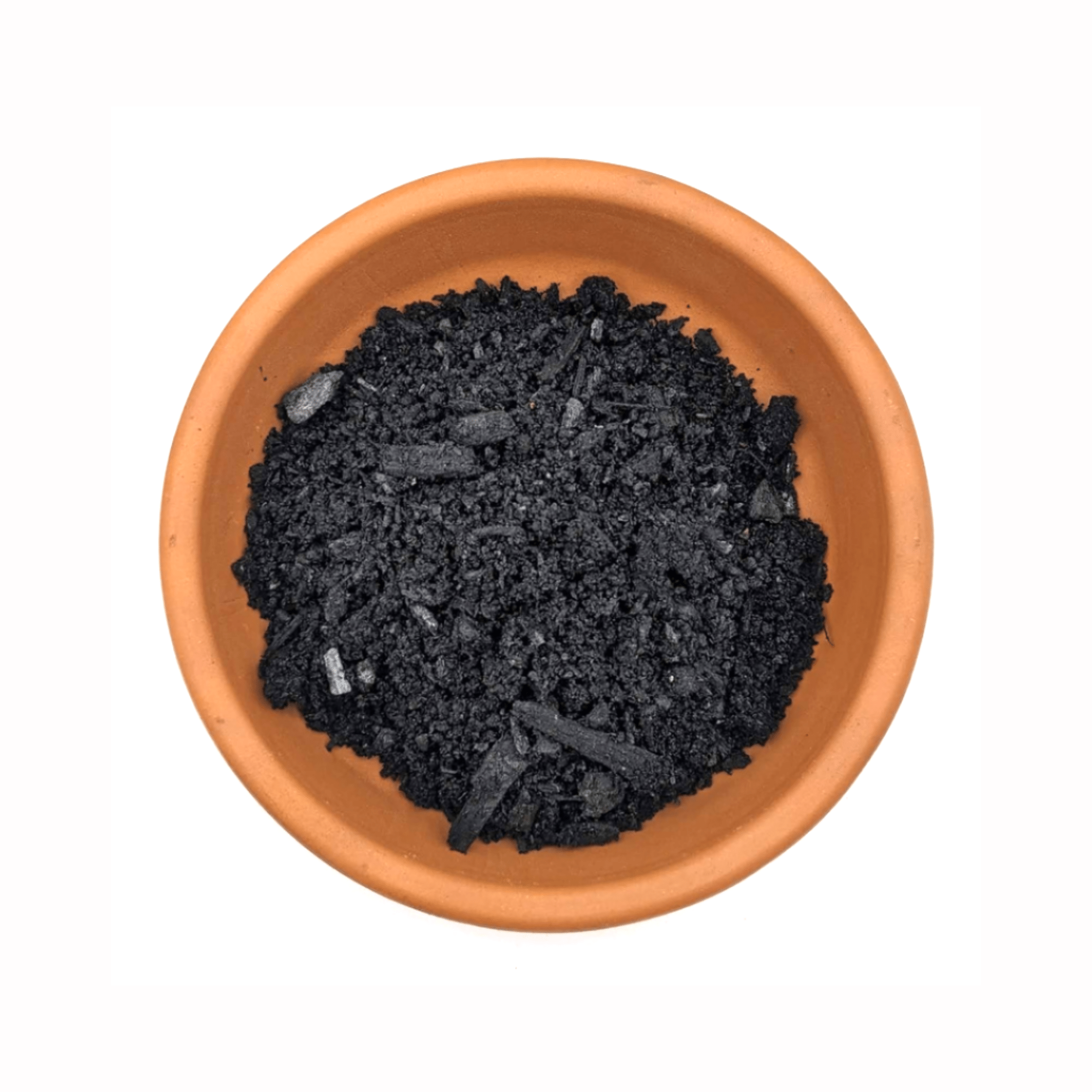
What is Biochar (Nutrient Retention & Microbe Home) and what is it made from?
It’s a carbon-rich soil amendment made from renewable Queensland Spotted Gum that’s been heated in low oxygen to create stable biochar. The result is a long-lasting carbon structure designed to improve soil function rather than directly feed plants.
Is Biochar a fertiliser, or does it replace feeding?
No. Biochar is a soil conditioner, not a fertiliser. It works by holding nutrients and moisture in the root zone, which can make feeding more efficient, but plants still need compost, amendments, or nutrients as normal.
For gardeners comparing plant-, mineral- and biology-based soil inputs, our animal-free fertiliser guide for Australian gardens explains where biochar fits within a broader feeding program.
What does Biochar actually do in soil?
It improves nutrient retention, helps regulate moisture, supports better soil structure, and provides a porous habitat for beneficial microbes. Together, these effects create a more stable and resilient root-zone environment.
For more context on how biochar fits alongside organic matter, microbes and minerals in a wider restoration plan, see our guide to rebuilding biologically active garden soil.
Is Biochar better for clay soil or sandy soil?
Both. In sandy soils it improves water and nutrient holding. In clay soils it can help improve aeration and structure over time, especially when combined with compost and active soil biology.
Can Biochar help with root growth, transplant shock, or drought stress?
Indirectly, yes. By improving aeration, moisture consistency, and nutrient availability, biochar often supports healthier root development and smoother transplanting, particularly in pots and fast-draining soils.
Where can I use Biochar (gardens, pots, lawns, trees)?
It’s suitable for veggie gardens, ornamentals, raised beds, pots, indoor plants, lawns, and around trees. Containers and raised beds often benefit the most because they lose water and nutrients quickly.
Can I use Biochar in compost or living soil mixes?
Yes. Adding biochar to compost or living soil mixes helps retain nutrients, reduce losses, and pre-load the biochar with microbes, making it far more effective once applied to soil.
Do I need to charge Biochar before using it?
Strongly recommended. Fresh biochar can temporarily absorb nutrients. Charging it with compost, worm castings, compost tea, or a mild nutrient solution fills its pores first and avoids short-term nutrient dips.
How much Biochar should I use, and can I overdo it?
A safe starting point is about 5–10% by volume in potting mixes or a moderate incorporation into garden beds. Yes, using too much can affect water behavior, pH, and nutrient balance, so moderation matters.
Should I mix Biochar into soil or just top dress it?
Mixing it into the root zone gives faster results. Top dressing works too, but benefits appear more slowly unless it’s incorporated and watered in.
Does Biochar affect soil pH or acid-loving plants?
Biochar can be mildly alkaline. For pH-sensitive or acid-loving plants like blueberries, apply lighter rates, monitor soil pH, and avoid heavy applications.
For a deeper look at soil pH, nutrient availability and testing, see our soil pH testing guide.
Can Biochar be used with compost, fertilisers, coco, or microbes?
Yes. It works well with compost, worm castings, mulch, mycorrhizae, and both organic and synthetic fertilisers. In coco coir, small charged amounts can help buffering and microbial stability.
What doesn’t Biochar replace or work well for?
It’s not a direct substitute for perlite or pumice in very airy mixes, and it’s not meant to be added directly to hydroponic reservoirs. It works best in soil and substrate systems.
Is Biochar safe to handle, store, and use around pets?
It can be dusty and may stain, so dampen before use and wear gloves if needed. Once mixed into soil and watered in, it’s generally safe for pets and worms. Store sealed and dry; it doesn’t expire.
What sizes are available, and which should I choose?
It’s available in 1L and 2.5L sizes. The 1L size suits small pots or spot treatments, while 2.5L is better for mixing larger batches, raised beds, or multiple containers.